India lays out red carpet for Olympic heroes; felicitated in grand ceremony by government
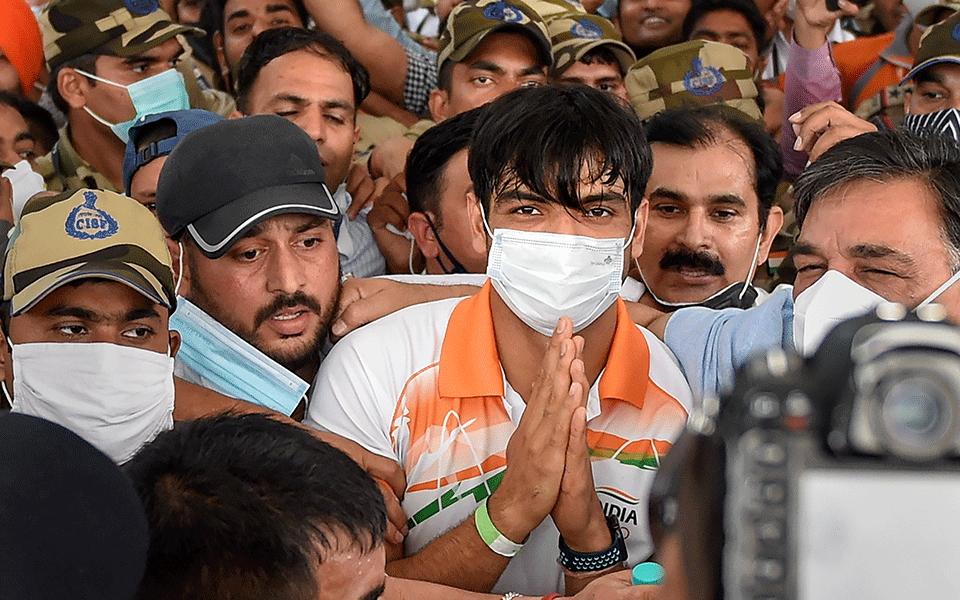
New Delhi: India's Olympic medal-winners were accorded a grand welcome by the government in a dazzling felicitation ceremony here on Monday with sports minister Anurag Thakur saying that their journey is an "incredible story of resilience and sporting excellence".
Gold medal winning javelin thrower Neeraj Chopra was the cynosure of all eyes in the ceremony at a five star hotel here, held a couple of hours after the seven podium finishers made their way out of the airport amid utter chaos.
At the felicitation ceremony, they were presented mementos and shawls by the minister. Both the bronze-winning men's hockey team and fourth-place finishing women's team cut cakes after arriving at the hotel.
While Chopra added the golden sheen to the campaign, the silver medals came from weightlifter Mirabai Chanu and wrestler Ravi Kumar Dahiya.
The bronze medals, apart from the men's hockey team, were claimed by boxer Lovlina Borgohain, shuttler P V Sindhu, and wrestler Bajrang Punia.
"I am very happy to be back home. I knew India is very happy but after coming back here, to get this love first hand, it feels really nice. I would try to do my best for more such medals," Borgohain said.
Sindhu and Chanu did not attend the ceremony as they had arrived earlier and are currently at their home bases.
"I only tried to give my best," said Punia, who fought through his semifinals without any protective gear on his injured knee.
Among those present on the occasion to felicitate the medal winners also included Union Minister of Law and Justice Kiren Rijiju, Secretary (Sports) Ravi Mittal and Director-General of Sports Authority of India Sandip Pradhan.
"Tokyo 2020 was an Olympic Games of many firsts for India. The success of Team India at the Olympics is a reflection of how New India desires and aspires to dominate the world even in sports," Thakur said.
"The Olympic Games showed us that with self-discipline and dedication we can be champions. Team India excelled and inspired while Indians cheered and celebrated all around.
"Truly sports is a great unifier as our athletes come from villages and cities, north to south, from east to west. Their journey is an incredible story of resilience and sporting excellence," he added.
There were many firsts in India's campaign, including the biggest ever 128-member athlete contingent, seven Olympic Medals, first Olympic gold medal in an athletics event, two successive medals in consecutive Games by Sindhu, and a medal(bronze) by the Indian men's team in hockey after a gap of 41 years.
Also, the women's hockey team achieved its best ever fourth place finish in the Games.
"We will continue to support our sports persons and we endeavour to make India a sporting powerhouse," Thakur said.
The minister also lauded some close finishes including the fourth place finish by golfer Aditi Ashok.
Thakur's predecessor Rijiju praised the performances of all the athletes and reiterated that India will be a force to reckon with by the 2028 Olympics.
"This is just the beginning because India's resurgence in sport is visible now and I am confident that by 2028 Olympics India will be a force to reckon with, Rijiju mentioned.
Let the Truth be known. If you read VB and like VB, please be a VB Supporter and Help us deliver the Truth to one and all.
Trump says EU has until July 4 to approve last year's trade deal or it will face higher tariffs
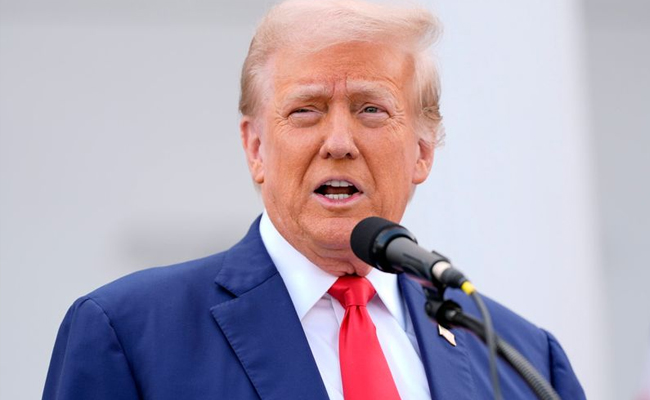
Washington (AP): President Donald Trump has said in a social media post that goods from the European Union would face higher tariff rates if the 27-member bloc fails to approve last year's trade framework by July 4.
The announcement on Thursday appeared to be a deadline extension after the president said last Friday that EU autos would face a higher 25 per cent tariff starting this week. Trump made the updated announcement after what he described as a "great call" with European Commission President Ursula von der Leyen.
Still, the US president was displeased that the European Parliament had yet to finalize the trade arrangement reached last year, which was further complicated in February by the US Supreme Court ruling that Trump lacked the legal authority to declare an economic emergency to impose the initial tariffs used to pressure the EU into talks.
"A promise was made that the EU would deliver their side of the Deal and, as per Agreement, cut their Tariffs to ZERO!" Trump posted. "I agreed to give her until our Country's 250th Birthday or, unfortunately, their Tariffs would immediately jump to much higher levels."
It was unclear from the post whether Trump was implying that the tariff rates would jump on all EU goods or the increase would only apply to autos.
His latest statement indicates he might be backing away from his earlier threat on EU autos by giving the European Parliament several more weeks to approve the agreement.
Under the original terms of the framework, the US would charge a 15 per cent tax on most goods imported from the EU.
But since the Supreme Court ruling, the administration has levied a 10 per cent tariff while investigating trade imbalances and national security issues, aiming to put in new tariffs to make up for lost revenues.