India likely to record normal monsoon this year: Skymet
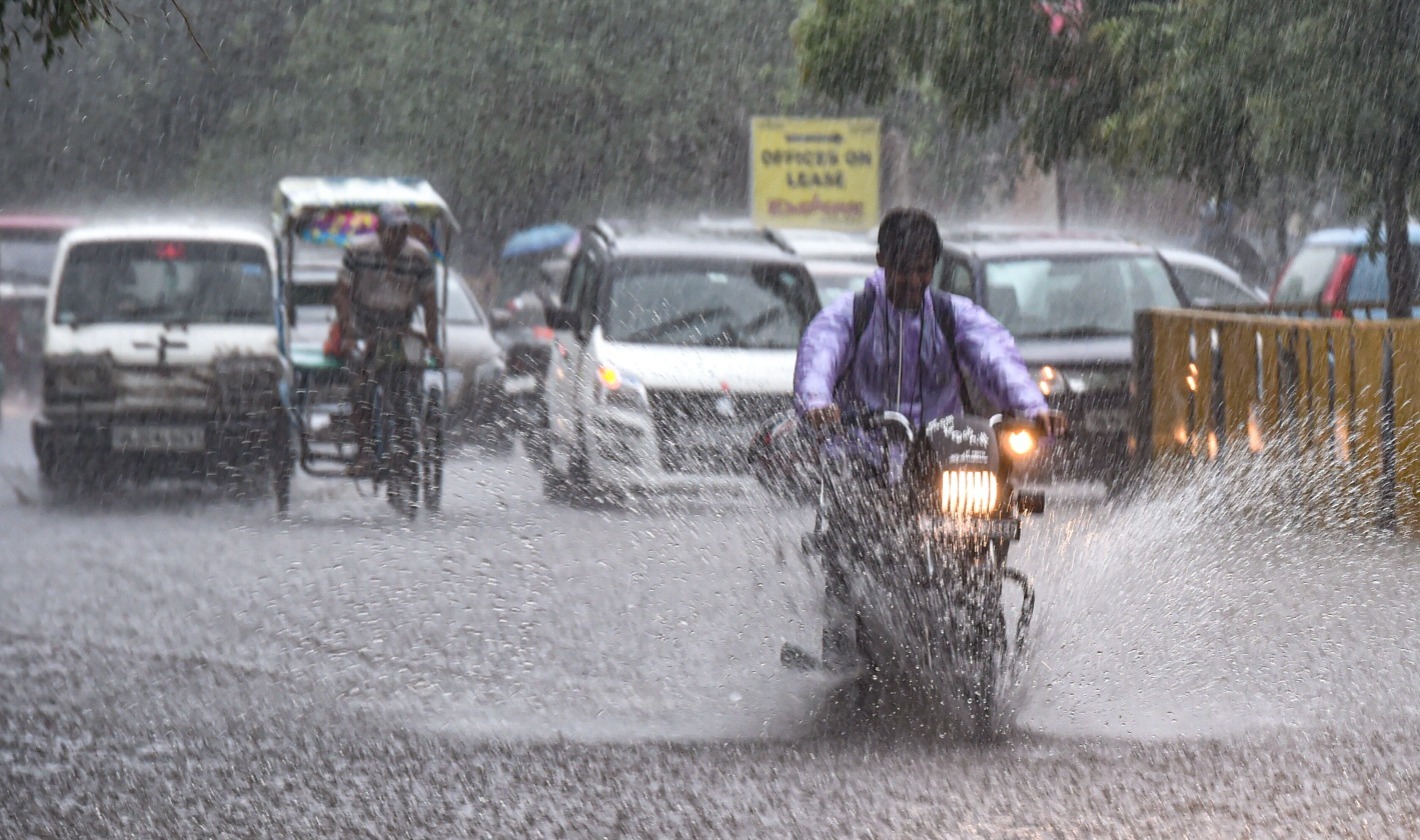
New Delhi (PTI): India is likely to experience a normal monsoon this year, private weather forecasting agency Skymet said on Tuesday and predicted more rainfall in the second half of the season.
Scientists at the India Meteorological Department (IMD) have also detected early signs of a favourable monsoon season this year with fading El Nino conditions and reduced snow cover over Eurasia. The Met office will issue a monsoon forecast later this month.
However, normal cumulative rainfall does not mean uniform temporal and spatial distribution of rain across the country, with climate change further increasing the variability of the rain-bearing system.
Climate scientists say the number of rainy days is declining while heavy rain events -- more rain over a short period -- are increasing, leading to frequent droughts and floods.
Skymet said the upcoming monsoon is expected to be "normal", accounting for 102 per cent (with an error margin of 5 per cent) of the long-period average (LPA) of 868.6 mm for the four months from June to September.
Rainfall between 96 per cent and 104 per cent of the LPA is considered normal.
Skymet expects sufficiently good rains in the south, west, and northwest regions. The core monsoon rain-fed zones of Maharashtra and Madhya Pradesh will receive adequate rainfall.
However, the eastern states of Bihar, Jharkhand, Odisha, and West Bengal are at risk of deficit rainfall during the peak monsoon months of July and August. Northeast India is likely to observe less than normal rains during the first half of the season.
According to Jatin Singh, the managing director at Skymet, "El Nino is swiftly flipping over to La Nina. And, monsoon circulation tends to be stronger during La Nina years."
"Also, the transition from Super El Nino to strong La Nina has historically tended to produce a decent monsoon. However, the monsoon season may start with a risk of impairment, attributable to the remnant effects of El Nino. The second half of the season will have an overwhelming edge over the primal phase," he said.
India received "below-average" cumulative rainfall -- 820 mm compared to the long-period average of 868.6 mm -- in 2023, an El Nino year. Before 2023, India recorded "normal" and "above-normal" rainfall in the monsoon season for four years in a row.
El Nino conditions -- periodic warming of surface waters in the central Pacific Ocean -- are associated with weaker monsoon winds and drier conditions in India.
IMD officials earlier this month said La Nina conditions, associated with a favourable monsoon in India, are likely to set in the second part of the season.
Three large-scale climatic phenomena are considered for forecasting monsoon season rainfall.
The first is El Nino, the second is the Indian Ocean Dipole (IOD), which occurs due to differential warming of the western and eastern sides of the equatorial Indian Ocean, and the third is the snow cover over the northern Himalayas and the Eurasian landmass, which also has an impact on the Indian monsoon through the differential heating of the landmass.
A preliminary forecast of a positive IOD this season will work in tandem with La Nina for better monsoon prospects, Skymet said.
Nonetheless, the start of the season is expected to be aberrated due to the quick transition from El Nino to La Nina. Also, the rainfall distribution is likely to be diverse and inequitable for the season as a whole, it said.
The southwest monsoon delivers about 70 per cent of India's annual rainfall, which is critical for the agriculture sector. Agriculture accounts for about 14 per cent of the GDP and employs more than half of its 1.4 billion population.
Let the Truth be known. If you read VB and like VB, please be a VB Supporter and Help us deliver the Truth to one and all.
Real Madrid fines Valverde and Tchouaméni half a million euros each for altercation
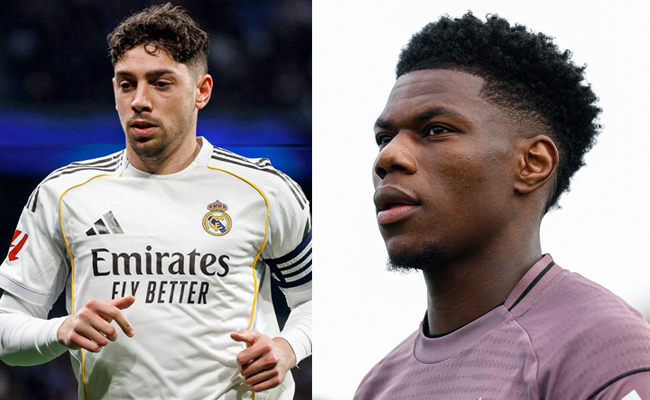
Barcelona (AP): Real Madrid slapped players Federico Valverde and Aurélien Tchouaméni with half-a-million-euro ($588,000) fines on Friday for their altercation during practice.
The massive fines came a day after the midfielders tussled when the team trained. Valverde said in a post on social media on Thursday that no punches were thrown. But Valverde knocked his head on a table and he suffered a small cut that required a brief hospital visit.
On social media, Valverde initially called it a “meaningless fight” with a teammate and said “everything has been blown out of proportion."
His employers, however, considered it a significant enough breach of team discipline to nail both Valverde and Tchouaméni with fines that bite even the bank account of a top soccer player. The half-a-million euro penalties reflect the reputational damage the club was enduring in a chaotic end to a disappointing season.
In a statement, the 15-time European champion said its disciplinary action was concluded after both players expressed to the club “their complete remorse for what happened and apologized to one another.”
Madrid added they also apologized to their teammates, the coaching staff and club supporters, as well as showing their willingness to accept whatever disciplinary action the club deemed “opportune.”
Tchouaméni was back training with Madrid on Friday, two days before they play at Barcelona in a clasico. Madrid has to win otherwise Barcelona will be crowned La Liga champion.
After being notified of the fine, he posted a public apology to the club and its fans on social media.
“What happened this week in training is unacceptable,” Tchouaméni wrote. "I say this while thinking about the example we are expected to set for young people, whether in football or at school.
“Above all, I am sorry for the image we projected of the club.”
Valverde was not at practice due to the head knock.
Both players are set to play in the World Cup next month, with Tchouaméni playing for France and Valverde for Uruguay.
Chaotic end to a poor season
===================
The run-in between the players, who for seasons have played side by side in Madrid's midfield, came after they argued this week in previous training sessions. But tempers boiled over on Thursday. Spanish media was rife with reports that the players previously disagreed over the club's decision to let coach Xabi Alonso go after just months on the job.
It was not the only altercation involving Madrid players during training this week. Álvaro Carreras confirmed he was in a “minor” incident with a teammate. Spanish media said he and fellow defender Antonio Rüdiger got into a scuffle.
Álvaro Arbeloa, the coach who was promoted from Madrid's reserve team when Alonso was fired in January, will face tough questions on what went wrong inside the changing room when he gives a press conference on Saturday ahead of the clasico at Camp Nou.
Madrid is facing a second consecutive campaign without a major trophy amid rumors in the Spanish media that club president Florentino Pérez is considering bringing back Jose Mourinho to straighten out his underperforming team.