India managed COVID second wave 'very well'; need to prepare for third wave: Niti member Saraswat
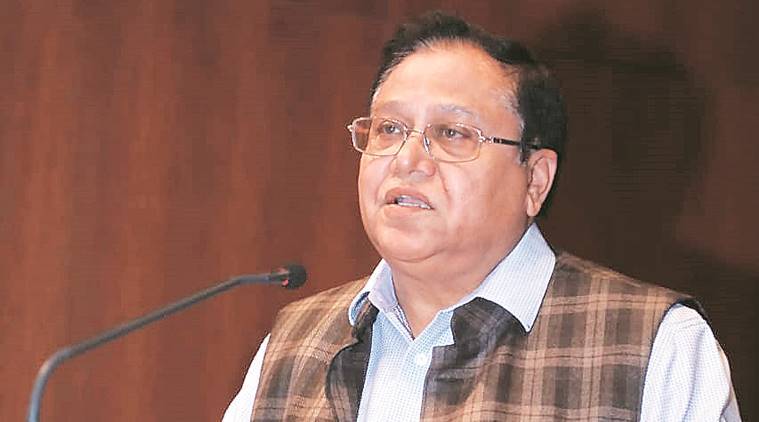
New Delhi, Jun 4: India has managed the second COVID wave very well as the number of fresh cases have come down significantly, Niti Aayog Member V K Saraswat has said even as he emphasised that preparations need to be in place to deal with the third wave that might impact the younger population more.
Saraswat further said that India's epidemiologists have made very clear indications that the third wave of COVID-19 is inevitable and is likely to start from September-October, so the country should vaccinate as many people as possible.
"I think we have done reasonably well. We have managed the second wave of COVID-19 pandemic very well, as a result COVID-19 numbers have come down significantly.
"... we have been able to manage (the second wave COVID-19 ) with the help of our science and technology activities, creating oxygen banks, making large number of industries to support oxygen supply. Using railways, using airports, using the military for transporting liquid oxygen," he told PTI.
From a daily case count of over 4 lakh, the number of new COVID-19 cases has been hovering around 1.3 lakh in the last few days.
Saraswat said India's management of the first wave of COVID-19 pandemic was good and the kind of discipline which had been introduced at that time, gave the country a lot of confidence to control the second wave of the pandemic.
"We did a fantastic job (of managing the second wave of COVID-19 pandemic), what we call emergency management," he asserted.
The Niti Aayog member pointed out that all indications were there that there might be a second wave of COVID-19, but epidemiologists' studies did not show it was going to be such a strong wave.
"... activities like marriages, religious functions that took place during this time resulted in a certain amount of accelerated spread of COVID-19," he noted.
Saraswat noted that in the first wave of COVID-19, intensity was not vigorous, which indicated that the country will be able to manage the second wave with the kind of infrastructure created last year in terms of ventilators, hospital beds and ICU beds.
"But in the second wave, the virus had a different characteristic which resulted in an indirect attack on lungs in a big way, which resulted in a large number of people demanding oxygen at a very early stage of infection. "So, this mutant caught us unaware. As a result, we found that we are not in a position to meet the increased demand of oxygen and some of the medicines which were needed at that particular stage," he argued.
The B.1.617.1 and B.1.617.2 variants of COVID-19, first identified in India, are highly infectious. The UN health agency named the B.1.617.1 variant of the COVID-19 as 'Kappa' while the B.1.617.2 variant was dubbed 'Delta.
Asked how prepared India is to deal with the third wave of COVID-19, Saraswat said India's epidemiologists have made very clear indications that the third wave is inevitable and might impact the younger population more.
"We expect by July-August, we have to take all preparations because the third wave is likely to start from September-October onward," he said, adding that lockdowns should be opened in a gradual manner.
According to Saraswat, despite the fact that India is going to have certain relaxations on the lockdowns, severe implementation of the pandemic norms of usage of masks and maintaining the social distances should be enforced by the states in a big way.
"We have to also see the infrastructure which we have also created, continues to remain in position and should be augmented further. So that we don't run into the crisis which we ran into during the second wave as far as the oxygen availability in the country is concerned," he said.
India reported 1,32,364 new coronavirus infections taking the country's total tally of COVID-19 cases to 2,85,74,350, while the recovery rate crossed 93 per cent, according to the Union Health Ministry data updated on Friday.
Let the Truth be known. If you read VB and like VB, please be a VB Supporter and Help us deliver the Truth to one and all.
Sujit Nair raises concerns over speculation of DMK-AIADMK understanding to block TVK
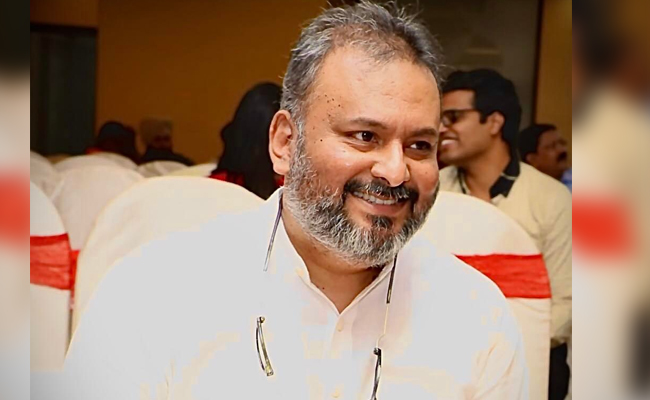
Chennai: Journalist and political commentator Sujit Nair has expressed concern over speculation that the Dravida Munnetra Kazhagam and the All India Anna Dravida Munnetra Kazhagam could explore a post-poll understanding to prevent Vijay-led Tamilaga Vettri Kazhagam from forming the government in Tamil Nadu.
In a social media post, Sujit Nair said the election verdict in Tamil Nadu reflected a clear public demand for political change and argued that the mandate should be respected irrespective of political preferences.
Referring to reports and political discussions surrounding a possible understanding between the DMK and AIADMK, he said he hoped such developments remained only speculative conversations and did not turn into reality.
Nair stated that if such an alliance were to take shape, it would raise serious questions about ideological politics in the country. He said TVK had emerged through a democratic electoral process and that the legitimacy to govern in a parliamentary democracy comes from the people’s verdict.
According to him, attempts to prevent an electoral winner from forming the government through unexpected political arrangements may be constitutionally valid, but many people could view them as politically opportunistic.
He further said that such a move could particularly affect the political image of the DMK, which has historically projected itself around ideology, social justice and opposition politics. Nair said that in ideological terms, the DMK appeared closer to TVK than to the AIADMK, and joining hands with its long-time political rival only to remain in power could weaken its broader political narrative.
He added that the same questions would apply to the AIADMK as well, as the party had spent decades positioning itself against the DMK and such an arrangement could create discomfort among its cadre and supporters.
Drawing a comparison with Maharashtra politics in 2019, Nair said he had expressed similar views when the Shiv Sena formed an alliance with the Indian National Congress and the Nationalist Congress Party after the Assembly elections.
He said post-poll alliances between long-standing political rivals often create a public perception that ideology and electoral mandates become secondary when political power equations come into play.
Nair also said such developments increase public cynicism towards politics and reinforce the belief among voters that ideology is often sidelined after elections.
He maintained that the Tamil Nadu verdict was emphatic and said respecting both the spirit and substance of the mandate was important for the credibility of democratic politics.