India most likely undercounting heat-related deaths: Former WHO chief scientist Soumya Swaminathan

New Delhi: India is "most likely" undercounting heat-related deaths due to a lack of robust data, but the government is now improving surveillance to minimise the impact of extreme conditions on health, former WHO chief scientist and health ministry advisor Soumya Swaminathan has said.
In an interview with PTI on the sidelines of TERI's World Sustainable Development Summit, she also stressed the urgent need for better tracking, preparedness and policy interventions as the country braces for another extreme summer.
Asked if India was undercounting heat-related deaths, the former director general of the Indian Council of Medical Research (ICMR) said, "Most likely. We do not really have a good record of every death in the country and so we have to make some estimations. We have to do some sort of calculations or modelling based on what is happening."
But recently, there have been several scientific papers that have actually tracked what are called excess deaths, Swaminathan said.
"When you look throughout the year, deaths every month will be the same in number in general. But then if you suddenly see a spike, like during COVID we saw a spike.
"So you are going along with your death rate every month fairly stable and then suddenly, in May-June, you see a spike. You can then attribute that the excess deaths are possibly due to heat," she explained.
India experienced brutal heat in last year's summer, recording 536 heatwave days, the highest in 14 years, according to the India Meteorological Department.
Official data showed that India recorded 41,789 suspected heat stroke cases and 143 heat-related deaths during one of its hottest and longest heat waves. Public health experts say the official number of heat deaths is an undercount as 20 to 30 per cent of heat stroke cases usually result in fatalities.
The IMD has forecast above-normal maximum and minimum temperatures over most parts of the country this summer season too.
While the health ministry has introduced surveillance for heat-related deaths, Swaminathan cautioned that fatalities represent only "the very tip of the iceberg".
"For every one death, there are probably 20 people who are suffering the impact of heat by high blood pressure or exacerbation of their cardiac disease or heat exhaustion and not being able to go to work," she added.
"There is a lot of productivity loss and economic loss which is happening, which may not be a death, but it is definitely having a big impact on families. That is where we need to really focus our attention because we need to make sure that people remain comfortable and productive," Swaminathan told PTI.
She added, "And of course we have to minimize deaths. We do not want anyone to die of heat stroke, but we also want them to be in thermal comfort."
She also warned of mental health consequences.
"If you do not get any relief from heat for a prolonged period, then we know, for example, suicides go up, psychiatric illnesses get worse, and domestic violence increases," Swaminathan added.
Let the Truth be known. If you read VB and like VB, please be a VB Supporter and Help us deliver the Truth to one and all.
Sujit Nair raises concerns over speculation of DMK-AIADMK understanding to block TVK
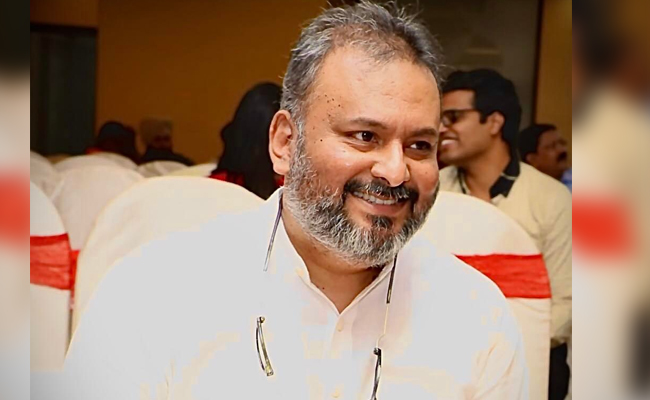
Chennai: Journalist and political commentator Sujit Nair has expressed concern over speculation that the Dravida Munnetra Kazhagam and the All India Anna Dravida Munnetra Kazhagam could explore a post-poll understanding to prevent Vijay-led Tamilaga Vettri Kazhagam from forming the government in Tamil Nadu.
In a social media post, Sujit Nair said the election verdict in Tamil Nadu reflected a clear public demand for political change and argued that the mandate should be respected irrespective of political preferences.
Referring to reports and political discussions surrounding a possible understanding between the DMK and AIADMK, he said he hoped such developments remained only speculative conversations and did not turn into reality.
Nair stated that if such an alliance were to take shape, it would raise serious questions about ideological politics in the country. He said TVK had emerged through a democratic electoral process and that the legitimacy to govern in a parliamentary democracy comes from the people’s verdict.
According to him, attempts to prevent an electoral winner from forming the government through unexpected political arrangements may be constitutionally valid, but many people could view them as politically opportunistic.
He further said that such a move could particularly affect the political image of the DMK, which has historically projected itself around ideology, social justice and opposition politics. Nair said that in ideological terms, the DMK appeared closer to TVK than to the AIADMK, and joining hands with its long-time political rival only to remain in power could weaken its broader political narrative.
He added that the same questions would apply to the AIADMK as well, as the party had spent decades positioning itself against the DMK and such an arrangement could create discomfort among its cadre and supporters.
Drawing a comparison with Maharashtra politics in 2019, Nair said he had expressed similar views when the Shiv Sena formed an alliance with the Indian National Congress and the Nationalist Congress Party after the Assembly elections.
He said post-poll alliances between long-standing political rivals often create a public perception that ideology and electoral mandates become secondary when political power equations come into play.
Nair also said such developments increase public cynicism towards politics and reinforce the belief among voters that ideology is often sidelined after elections.
He maintained that the Tamil Nadu verdict was emphatic and said respecting both the spirit and substance of the mandate was important for the credibility of democratic politics.