India-Myanmar ties: PM Modi urges ‘fair and inclusive’ elections in meeting with Junta Chief
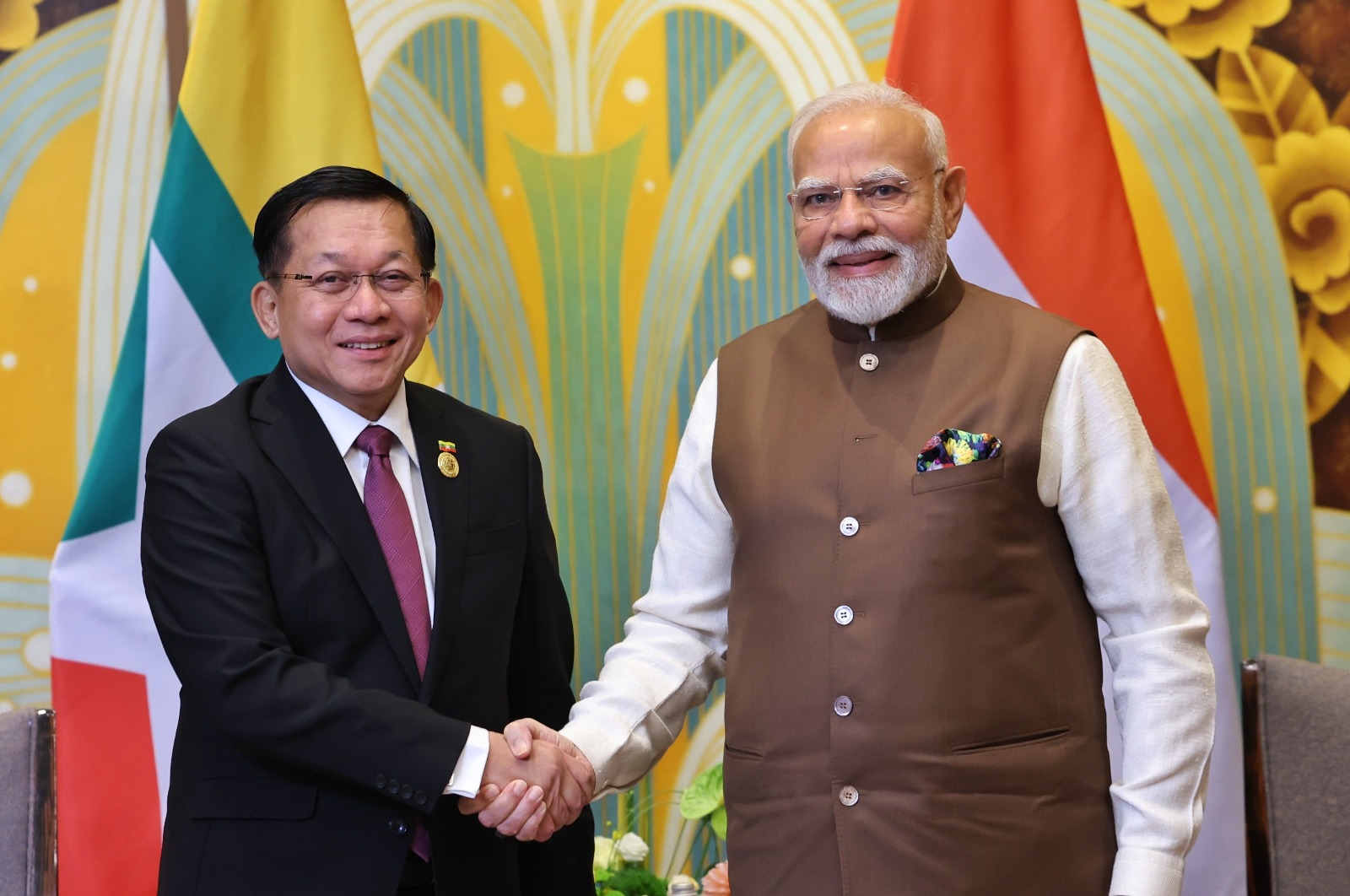
New Delhi: Prime Minister Narendra Modi met Myanmar’s military ruler Senior General Min Aung Hlaing on August 31, on the sidelines of the Shanghai Cooperation Organisation (SCO) Summit in Tianjin, China. During the meeting, Modi expressed hope that the upcoming elections in Myanmar would be conducted in a “fair and inclusive” manner involving all stakeholders.
According to the Ministry of External Affairs (MEA), Modi reiterated India’s support for a “Myanmar-led and Myanmar-owned peace process,” emphasising that dialogue and consultation are the only viable path toward stability. The two leaders also reviewed bilateral ties and discussed cooperation in areas such as development partnership, defence and security, border management, and connectivity projects under India’s Act East policy.
Foreign secretary Vikram Misri told reporters that Modi welcomed Myanmar’s election announcement and underlined that dialogue was key to fostering peace. However, Myanmar’s state-run media claimed India had agreed to send election observers and support Myanmar’s SCO membership bid, claims not reflected in the MEA’s statement.
Rights groups condemned Modi’s outreach, saying it risked legitimising the junta, which seized power in 2021 by toppling Aung San Suu Kyi’s elected government. Justice For Myanmar spokesperson Yadanar Maung accused India of “propping up a criminal junta” and warned that sending observers could grant credibility to what it described as a “sham electoral process.”
The planned elections, scheduled to begin in phases from December 28, have drawn criticism for excluding Suu Kyi’s National League for Democracy (NLD). Hlaing has threatened punitive action against critics of the polls, further deepening doubts about their legitimacy.
Modi’s meeting with the Myanmar military chief follows his talks with Chinese President Xi Jinping in Tianjin, his first visit to China in seven years, as India navigates regional diplomacy aimed at balancing China’s influence in Southeast Asia.
Senior General Min Aung Hlaing and I held talks in Tianjin. Myanmar is a vital pillar of India’s Act East and Neighbourhood First Policies. We both agreed that there is immense scope to boost ties in areas like trade, connectivity, energy, rare earth mining and security. pic.twitter.com/Sxs32TsiTK
— Narendra Modi (@narendramodi) August 31, 2025
Let the Truth be known. If you read VB and like VB, please be a VB Supporter and Help us deliver the Truth to one and all.
Allen, Raghuvanshi, Green power KKR to 29-run win over GT
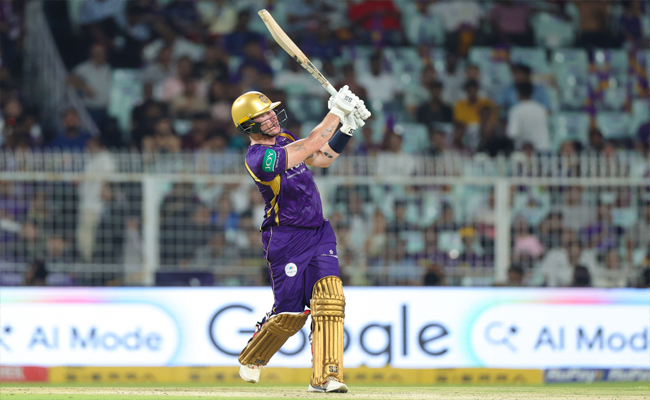
Kolkata (PTI): Finn Allen blasted a 35-ball 93, while Angkrish Raghuvanshi hit an unbeaten 44-ball 82 as Kolkata Knight Riders kept their playoff hopes alive with a 29-run win over Gujarat Titans in the IPL match here on Saturday.
Sent in to bat, Allen went on a six-hitting spree, smashing 10 maximums and four boundaries to add 95 off 41 balls with Raghuvanshi (82).
Raghuvanshi then shared another 108 off 53 balls with Cameron Green (52 not out) to power KKR to a challenging 247 for 2.
In reply, GT could manage 218-4, riding on skipper Shubman Gill's 49-ball 85 and a 35-ball 57 from Jos Buttler. Opener Sai Sudarsan was retired hurt but returned to make a 28-ball 53 not out.
Sunil Narine (2/29) claimed two wickets and Saurabh Dubey snapped one for KKR.
For GT, Mohammed Siraj (1/50), Sai Kishore (1/38) were the wicket-takers.
Brief Score:
KKR: 247 for 2 in 20 overs (Finn Allen 93, Angkrish Raghuvanshi 82 not out, Camero Green 52 not out; Mohammed Siraj 1/50).
GT: 218 for 4 in 20 overs (Shubman Gill 85, Sunil Narine 2/29).