India on track to lead world in rail technology systems: Vaishnaw
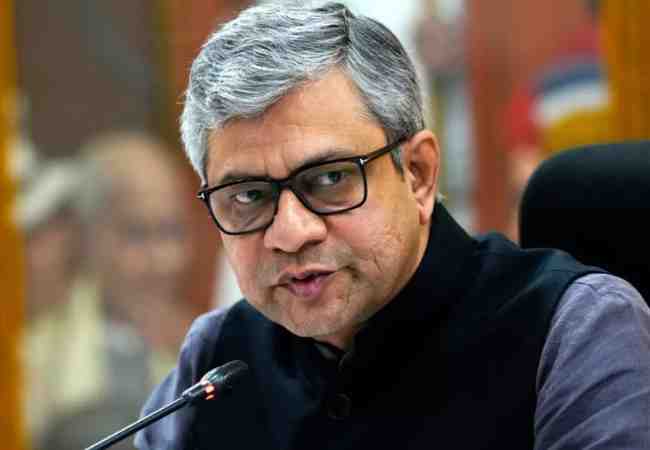
New Delhi (PTI): India is on track to lead the world in rail technology systems and is at the forefront of engineering innovation, Railway Minister Ashwini Vaishnaw said on Wednesday.
The minister inaugurated the 16th edition of the International Railway Equipment Exhibition (IREE) at the Bharat Mandapam here. Jointly organised by the Railway Ministry and the Confederation of Indian Industry (CII), the IREE-2025 features participation from over 450 companies representing more than 15 countries, including Austria, France, Germany, Japan, Korea, Switzerland, the UK, and the US.
Recognised as Asia’s largest and the world’s second-largest rail technology showcase, the IREE serves as a global platform for collaboration, innovation, and investment in rail infrastructure and mobility, according to an official statement.
“India is on track to lead the world in rail technology systems and is at the forefront of engineering innovation. It is a vital exercise to bring Indian and global equipment manufacturers and the entire railway ecosystem together on one platform,” Vaishnaw said.
He added, “With record production in 2024–25 of 7,000 coaches, 42,000 wagons, and 1,681 locomotives, Indian Railways is powering India’s journey towards a developed nation.”
Vaishnaw announced plans to develop dedicated passenger corridors, engineered for maximum speeds of up to 350 kmph with an operating speed of 320 kmph. He said many such corridors will be constructed across the country, forming part of the 'Viksit Bharat' vision, which targets the development of around 7,000 km of dedicated routes by 2047.
"These corridors will be equipped with indigenously developed signalling systems and modern Operations Control Centres (OCCs)," Vaishnaw stated.
Calling Vande Bharat trains a "huge success", he said on technical parameters, the train matches the best in the world.
"India is working on the next generation of high-speed trains, with a strong focus on the export market," the minister said.
He said India is currently operating Vande Bharat 3.0, which represents a significant improvement over its earlier versions.
The Minister highlighted that Vande Bharat 3.0 already meets international benchmarks, capable of accelerating from 0 to 100 kmph in just 52 seconds -- faster than many trains in Japan and Europe -- while maintaining lower noise and vibration levels.
He asserted that Vande Bharat 4.0 is expected to be launched within the next 18 months, aiming to set global benchmarks in every aspect of performance and passenger experience.
According to Vaishnaw, the Indian Railways indigenously designed a 2400 kW hydrogen train -- choosing not to import the technology -- marking a major milestone in India’s journey toward self-reliance and global leadership in sustainable rail.
Railway Board Chairman and CEO, Satish Kumar, said the Indian Railways today stands "at the threshold of a historic transformation."
“From being the backbone of India’s infrastructure, it is now a symbol of technological self-reliance and global excellence,” Kumar added.
The official said that under the leadership of Vaishnaw, the Indian Railways is driving the vision of ‘Make in Bharat, Made for the World’, from design to development, manufacturing to operations.
A statement released by the CII said IREE is recognised as Asia's largest and the world’s second-largest rail technology showcase and serves as a global platform for collaboration, innovation, and investment in rail infrastructure and mobility.
"The inaugural day witnessed the signing of 40 Memorandums of Understanding (MoUs) between Indian Railways and its PSUs, and leading industry partners from across the world, focused on advanced joint initiatives in rolling stock, signalling, sustainability tech, passenger safety and digital integration.
A key highlight was the MoU between CII and Gati Shakti Vishwavidyalaya, focusing on capacity-building, skill development, and research collaboration to strengthen India’s future-ready railway talent ecosystem.
Chandrajit Banerjee, Director General, Confederation of Indian Industry (CII), while addressing the gathering, appreciated various recent initiatives taken by the Indian Railways under the leadership of Vaishnaw.
“Indian Railways today stands as a modern engine of Viksit Bharat, combining past achievements with future ambition. It carries over 2 crore passengers daily and is the world’s second-largest cargo carrier, transporting 1.6 billion tonnes of freight, surpassing even the United States," Banerjee said.
The day also saw the launch of several new railway products and technologies, covering AI-driven maintenance, freight optimisation, eco-friendly materials, and energy-efficient propulsion systems, the CII press note said.
Let the Truth be known. If you read VB and like VB, please be a VB Supporter and Help us deliver the Truth to one and all.
Siddaramaiah, I will abide by Cong high command decision on leadership issue, says Shivakumar
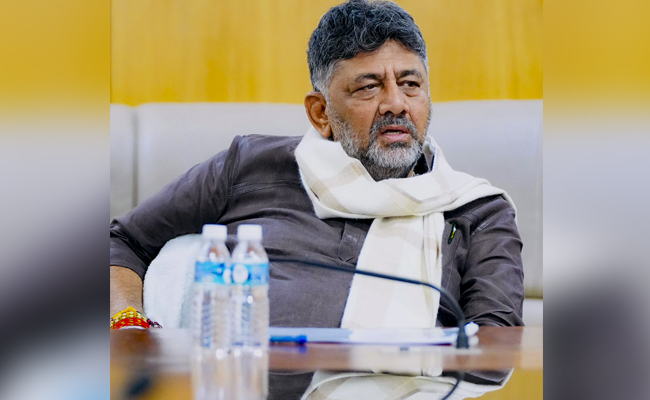
Bengaluru (PTI): Karnataka Deputy Chief Minister D K Shivakumar on Sunday said both he and Chief Minister Siddaramaiah will abide by any decision takeb by the Congress high command on the leadership issue in the state.
Speaking to reporters after returning from Delhi, the Congress state president said, he has full faith in the party leadership and that it would take an approapriate decision at the appropriate time.
The remarks comes amid speculations within the party and political circles about a possible leadership change and cabinet reshuffle after May 4, when the results for assembly elections in four states and one union territory, along with bypolls to two assembly segments in the Karnataka are announced.
"I will not speak about political issues before the media. I have already said that when the time comes you will get to know. So I will not tell you," Shivakumar said in response to a question on discussions with the Congress high command during his Delhi visit over the last couple of days.
He asserted that there are no issues within the party, and whatever has been already decided will take place accordingly.
Responding to a question on senior Minister Satish Jarkiholi's reported statement about internal differences, the Deputy CM said, "nothing like that, they (high command) will do what they have to do at the appropriate time."
"There are no issues, we have faith in our party, they will do what they have to," he added.
Asked about the issue of leadership change as the government is about to complete three years in office, Shivakumar said, "... I have never discussed this issue. The CM and I have both said that we will accept whatever and whenever the high command decides, and we will abide by it."
He declined to comment when asked whether any "good news" can be expected by his birthday on May 15.
The leadership tussle within the ruling party has intensified amid speculation about a possible change of chief minister after the Congress government completed the halfway mark of its five-year term on November 20, 2025. The speculation has been fuelled by the reported "power-sharing" arrangement between Siddaramaiah and Shivakumar at the time of government formation in 2023.
Responding to a question on the BJP's criticism against the Congress government over its decision on internal reservation for Scheduled Castes, alleging injustice to several communities and questioning its intent behind the revised quota formula, Shivakumar said the BJP could not do anything on internal reservation while in power, but the Congress has kept its promise.
"We have found a solution and tried to do justice to all sections among SCs. We have fulfilled the promise made and every one should go together," he said.
Shivakumar warned his party workers against erecting flex banners for his birthday on May 15.
"For May 15, I want to tell everyone that no one should put up flex banners or advertisements for my birthday. If flex are installed I will ensure that cases are registered by authorities against those responsible, whether they are party workers or followers....no one should put such things on roads, this is my personal request," he said, adding that he has asked commissioners of the city corporations to register cases and impose heavy fines.