India ranks 129th on Global Gender Gap index, Iceland on top: WEF
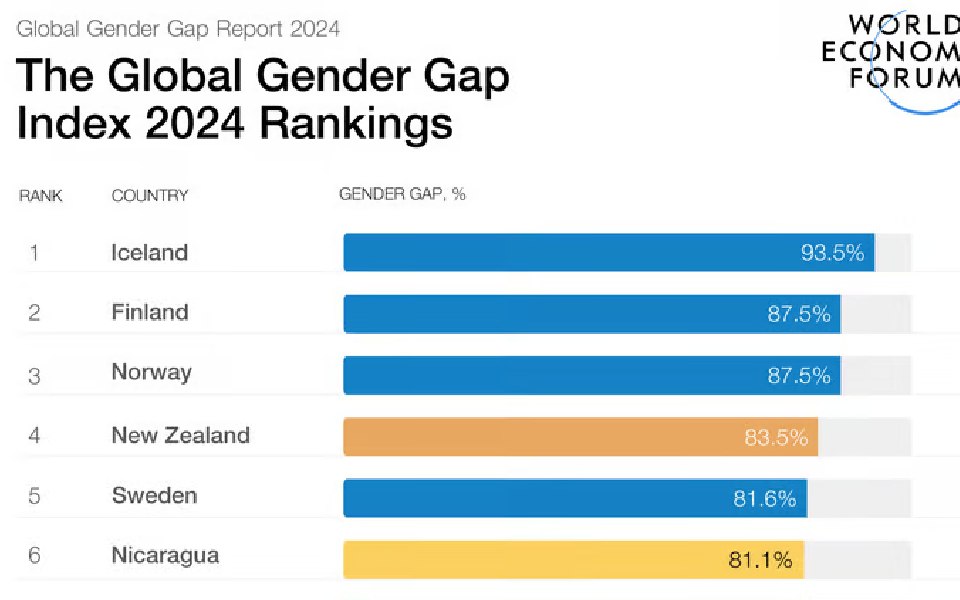
New Delhi, Jun 12: India has slipped two places on the World Economic Forum's Global Gender Gap index to 129th place, while Iceland retained its top position in the rankings published on Wednesday.
Within South Asia, India was ranked fifth after Bangladesh, Nepal, Sri Lanka and Bhutan, while Pakistan was ranked last.
Globally, Sudan was ranked last on the index of 146 countries, while Pakistan slipped three places to 145th.
India figured among the economies with the lowest levels of economic parity, alongside Bangladesh, Sudan, Iran, Pakistan, and Morocco. All of them registered less than 30 per cent gender parity in estimated earned income.
However, India showed the best gender parity in terms of enrolment in secondary education, while it scored well on political empowerment of women at 65th rank globally.
With regard to parity in the number of years with female/male heads of state for the last 50 years, India was ranked 10th.
With a population of over 140 crore, India has closed 64.1 per cent of its gender gap in 2024 and the decline of two places from 127th last year, mainly happened due to small declines in 'Educational Attainment' and 'Political Empowerment,' parameters, while 'Economic Participation' and 'Opportunity' scores slightly improved.
The WEF said India's economic parity score has trended upwards for the past four years.
In the Political Empowerment subindex, India scored within the top-10 on the head-of-state indicator, but its scores for women's representation at the federal level, in ministerial positions (6.9 per cent) and in Parliament (17.2 per cent), remain relatively low, it added.
The WEF said the world has closed 68.5 per cent of the gender gap, but at the current pace it will take another 134 years -- equivalent to five generations -- to achieve full gender parity.
Since last year, the gender gap has closed by 0.1 percentage points.
"Despite some bright spots, the slow and incremental gains highlighted in this year's Global Gender Gap Report underscore the urgent need for a renewed global commitment to achieving gender parity, particularly in economic and political spheres," WEF Managing Director Saadia Zahidi said.
"We cannot wait until 2158 for parity. The time for decisive action is now," she added.
Iceland was followed by Finland, Norway, New Zealand and Sweden in the top five.
The UK was ranked 14th, while the USA was at 43rd place.
The @wef's Global #GenderGap24 report is now live. It shows only a slight improvement in the global gap, with parity still five generations away at current rates of progress.
— World Economic Forum (@wef) June 11, 2024
However, in a historical election year, improving the #political participation of #women could have a… pic.twitter.com/HPLRKNVFg1
Let the Truth be known. If you read VB and like VB, please be a VB Supporter and Help us deliver the Truth to one and all.
Women journalists face doubling of online abuse since 2020, AI intensifies harassment: report
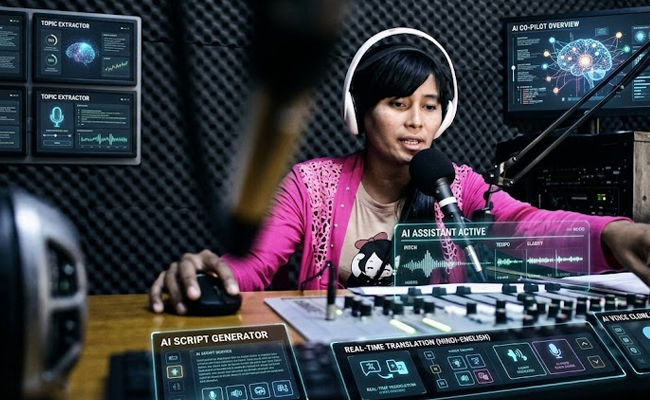
New Delhi: Incidents of online violence against women journalists have doubled since 2020, with growing use of artificial intelligence intensifying the scale and impact of abuse, according to a new report released ahead of World Press Freedom Day.
The study is titled “Tipping point: Online violence impacts, manifestations and redress in the AI age.” It is published by UN Women and its partners and highlights how digital harassment has become more invasive and technologically sophisticated.
The study is based on a 2025 global survey covering 641 respondents across 119 countries. The report found that women journalists and media workers are increasingly resorting to self-censorship due to online abuse. Around 45 per cent said they avoid expressing themselves on social media, which is a sharp rise from 2020. Nearly 22 per cent reported limiting their professional work for similar reasons.
The findings also indicate that 12 per cent of respondents have experienced non-consensual sharing of personal images, including intimate content, and six per cent reported being targeted by AI-generated “deepfakes.” One in three said they had received unsolicited sexual advances online.
The report highlights the psychological toll of such harassment, noting that nearly a quarter of women journalists surveyed had been diagnosed with anxiety or depression, while about 13 per cent reported post-traumatic stress disorder.
An environmental journalist from India, quoted in the report, described how coordinated online attacks and misinformation campaigns had led to fear and withdrawal from investigative reporting, and the repercussions extending to family members.
However, as the abuse has increased, so too has the number of women journalists reporting such incidents. The percentage of women journalists approaching law enforcement agencies has doubled from 11 per cent to 22 per cent in 2025 compared with 2020. The report also shows an increase in legal action against perpetrators, technology platforms, and employers.
However, the report points to significant gaps in legal protection. It presents data that fewer than 40 per cent of countries have laws addressing cyber harassment or stalking. Kalliopi Mingerou, who leads efforts to end violence against women at UN Women, said emerging technologies are amplifying existing threats. “AI is making abuse easier and more damaging,” she said, warning that the trend risks undermining democratic participation and hard-won rights.
The report can be accessed at https://www.unwomen.org/en/digital-library/publications/2026/04/tipping-point-online-violence-impacts-manifestations-and-redress-in-the-ai-age