India rarely saw accountability of state in targeted violence: Teesta Setalvad
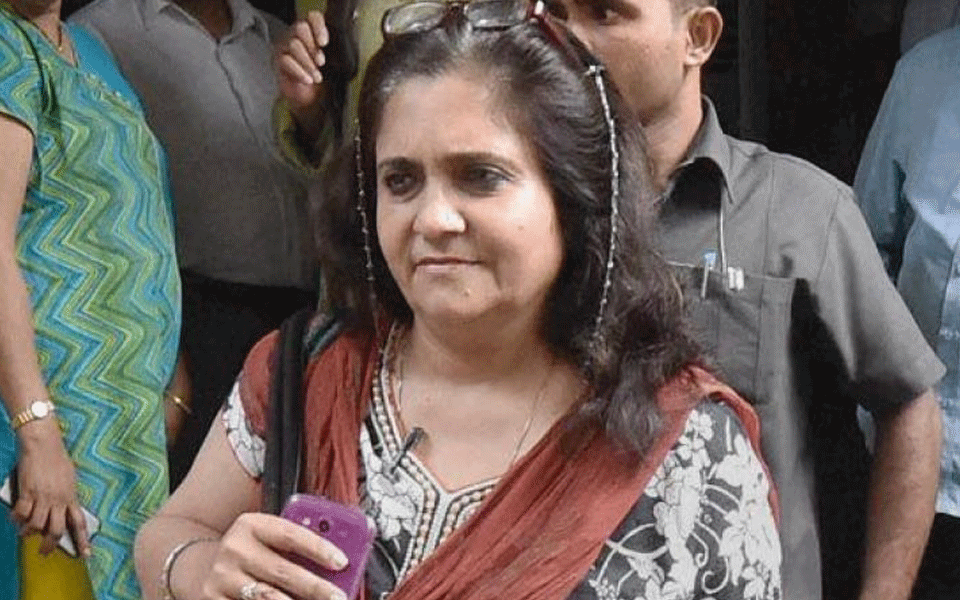
Ahmedabad (PTI): Social activist Teesta Setalvad has said the country had rarely seen accountability of the state as far as targeted violence is concerned, and added that survivors and citizens supporting them are among the "fallout" of such violence.
Delivering the Girish Patel Smarnanjali Lecture here on Sunday, Setalvad said the story of targeted violence begins with the build-up that is created with hate speeches and hate writings.
The survivors of such violence have to face difficulties in ensuring punishment for the perpetrators, she added.
"What is fallout? State accountability happens rarely in our country. How many people have been punished in (the riots of) 1984, 1992 and 2002? These are the questions before us. And the difficulties that survivors have to face to ensure punishment and citizens for supporting them are the issues that come up," she said.
Setalvad was recently arrested by Gujarat police in a case of the alleged fabrication of evidence to frame innocent people in the 2002 Gujarat riots cases in which a large number of people, especially those from the minority community, were killed. She was recently granted interim bail by the Supreme Court.
Setalvad said working on a deeply polarising issue among the public is not an easy one and added that the impact of social media on polarization is also overwhelming.
"The people in power who are controlling social media are the same that have spent 70-80 years in the society, on the roads, among doctors, lawyers, and cultural organisations to capture them. Power is degenerative, but they have worked hard," she said.
The process being witnessed in the country is that of people perpetrating the violence and the party in power lending its support, and this has an old history, she said.
What happened after the demolition of Babri Masjid on December 6, 1992, appears to repeat itself, she claimed.
"We saw a harking back to an earlier period. We need to understand the phenomenon as to what was happening in the country between 1986 and 1992, and what are we looking at now and what happened in between. Today, one also has to grapple with the media, which are carrying out a set agenda of "targeting individuals and movements who have in any way threatened it," the rights activist said.
She said the buffer against polarisation and hate politics will build on its own if one is successful in holding on to social, political, constitutional and human rights engagements.
"The stamina we require for sustained, rigorous action sometimes fails us because everything is overwhelming...Somehow we need to get back to this language where we actually talk about how we can build this buffer zone to make sure the Constitution stays alive among our people," said the former journalist.
She said people know of the promises made to them in the Indian Constitution, but are getting overwhelmed by the divisive propaganda coming from different directions.
The big challenge in this situation is to get back to an agenda of constitutionalism and make sure the battle for the Constitution is fought in a real sense, Setalvad said and called for the need for collective risk-taking rather than individual risk-taking.
"Collective is more difficult to become a target. Can we collectively articulate certain issues? Silence is not an option," she said.
She also talked about the issue of "citizenship" (regarding the National Register of Citizens, Citizenship Amendment Act) and said the people trapped in its net are nearly one-third of the population of Assam.
"To take up their case, from tribunal to the Supreme Court, is an impossible job. So there has to be a political solution, there has to be a solution which decides on what basis notices are being issued to common people. They are malafide and wrong and need to be questioned and stopped," Setalvad said.
She added there is a need to look at prison reforms and prison monitoring, and bail courts.
Talking about Mahatma Gandhi, she said the first attempt to rewrite history after Independence was regarding his assassination.
She claimed Gandhi's speech asking the Sanatan Hindu religion to repent for Dalit and Harijan atrocities and calling for India to be a secular country were the reasons for his assassination.
Let the Truth be known. If you read VB and like VB, please be a VB Supporter and Help us deliver the Truth to one and all.
Sujit Nair raises concerns over speculation of DMK-AIADMK understanding to block TVK
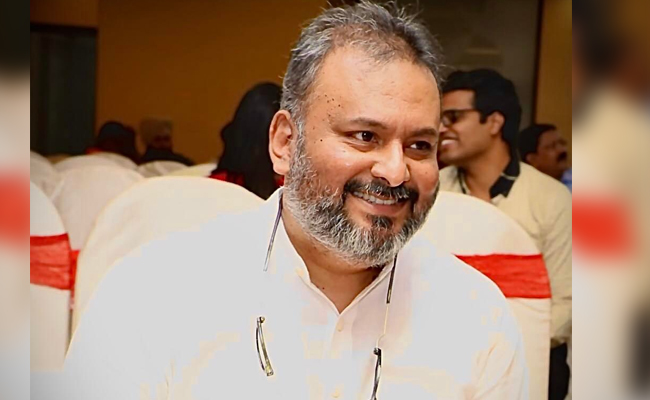
Chennai: Journalist and political commentator Sujit Nair has expressed concern over speculation that the Dravida Munnetra Kazhagam and the All India Anna Dravida Munnetra Kazhagam could explore a post-poll understanding to prevent Vijay-led Tamilaga Vettri Kazhagam from forming the government in Tamil Nadu.
In a social media post, Sujit Nair said the election verdict in Tamil Nadu reflected a clear public demand for political change and argued that the mandate should be respected irrespective of political preferences.
Referring to reports and political discussions surrounding a possible understanding between the DMK and AIADMK, he said he hoped such developments remained only speculative conversations and did not turn into reality.
Nair stated that if such an alliance were to take shape, it would raise serious questions about ideological politics in the country. He said TVK had emerged through a democratic electoral process and that the legitimacy to govern in a parliamentary democracy comes from the people’s verdict.
According to him, attempts to prevent an electoral winner from forming the government through unexpected political arrangements may be constitutionally valid, but many people could view them as politically opportunistic.
He further said that such a move could particularly affect the political image of the DMK, which has historically projected itself around ideology, social justice and opposition politics. Nair said that in ideological terms, the DMK appeared closer to TVK than to the AIADMK, and joining hands with its long-time political rival only to remain in power could weaken its broader political narrative.
He added that the same questions would apply to the AIADMK as well, as the party had spent decades positioning itself against the DMK and such an arrangement could create discomfort among its cadre and supporters.
Drawing a comparison with Maharashtra politics in 2019, Nair said he had expressed similar views when the Shiv Sena formed an alliance with the Indian National Congress and the Nationalist Congress Party after the Assembly elections.
He said post-poll alliances between long-standing political rivals often create a public perception that ideology and electoral mandates become secondary when political power equations come into play.
Nair also said such developments increase public cynicism towards politics and reinforce the belief among voters that ideology is often sidelined after elections.
He maintained that the Tamil Nadu verdict was emphatic and said respecting both the spirit and substance of the mandate was important for the credibility of democratic politics.