India remains engaged with the US: MEA on Chabahar port project
New Delhi (PTI): India is mulling various options on its engagement in the development of the strategically-located Chabahar port in Iran against the backdrop of the Trump administration threatening a 25 per cent additional tariff on countries doing business with Tehran.
India is a major partner in development of the Chabahar port, located in the Sistan-Balochistan province Iran's southern coast.
In September last year, the US imposed crippling economic sanctions on Iran but had granted India a six-month exemption from the punitive measures on the Chabahar port project. The waiver will come to an end on April 26.
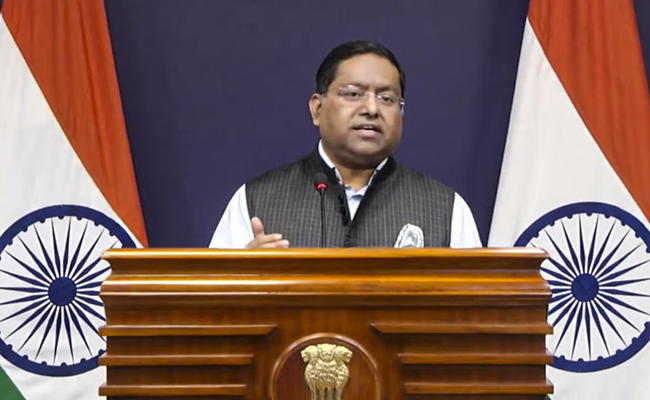
External Affairs Ministry spokesperson Randhir Jaiswal on Friday said New India is engaged with the US on the issue.
His remarks in answering a question came amid reports that New Delhi is looking at withdrawing from it in view of fresh American tariffs on nations having trade relations with Iran.
"As you are aware, on October 28, the US Department of Treasury had issued a letter outlining the guidance on the conditional sanctions waiver valid till April 26, 2026. We remain engaged with the US side in working out this arrangement," Jaiswal said.
Jaiswal also mentioned India's long-standing relations with Iran and said New Delhi is closely following the evolving situation in the country. Iran has been witnessing massive anti-government protests in which over 2,500 people were killed.
It is learnt that India is in the process of transferring approximately USD 120 million -- the amount it committed for the project -- as part of a move to end its direct exposure to the Chabahar port project, people familiar with the matter said.
A possibility to create a new entity to carry forward the development of the Chabahar port is also being considered, they said.
This option will end the Indian government's exposure to the project, but in a way it will ensure continuation of New Delhi's support, the people explained.
In September last year, the Trump administration announced its decision to revoke the 2018 sanctions waiver with regard to the Chabahar port in Iran.
Weeks after announcing the revocation of the sanctions, Washington said it is extending six months' waiver from the punitive measures to India.
As tensions between Washington and Tehran escalated again, President Donald Trump announced a fresh 25 per cent tariff on countries doing business with Iran.
The new tariff is likely to have a "minimal impact" on India, government sources said on Tuesday.
Jaiswal said the volume of two-way trade between India and Iran was USD 1.6 billion last year. Out of the total, India's exports was to the tune of USD 1.2 billion and import was of USD 0.4 billion.
The Chabahar port is being developed by India and Iran to boost connectivity and trade ties. Both the countries are also strongly pitching for making Chabahar port an integral part of the International North-South Transport Corridor (INSTC).
The INSTC is a 7,200-km-long multi-mode transport project for moving freight among India, Iran, Afghanistan, Armenia, Azerbaijan, Russia, Central Asia and Europe.
Jaiswal also said that the Indian embassy in Tehran is in touch with the Indians in Iran.
"We are keeping a close watch on the situation there, and as far as our citizens are concerned, we are committed to doing whatever is necessary for their well-being," he said.
"Approximately 9,000 of our citizens are currently residing in Iran. The majority of them are students," he said.
India has already issued a number of advisories to the Indian nationals in view of the current situation in that country.
"In these advisories, we have advised our citizens in India not to travel to Iran at this time, and we have advised Indian citizens residing in Iran to leave the country by whatever means are available," he said.
India on Wednesday asked all its nationals currently residing in Iran to leave by available means after the security situation deteriorated further.
New Delhi also strongly advised its nationals to avoid travelling to Iran.
There has been rising tensions in Iran and the region after US President Donald Trump indicated military action if Tehran continues its crackdown on the protesters.
"If they hang them, you're going to see some things...We will take very strong action if they do such a thing," the US president told CBS News.
In a message to the protesters, Trump said on Tuesday that "help is on the way".
The protests began late last month in Tehran after the Iranian currency rial plunged to record lows. The protests have since spread to all 31 provinces, evolving from an agitation against economic woes to a demand for political change.
Let the Truth be known. If you read VB and like VB, please be a VB Supporter and Help us deliver the Truth to one and all.
Bengal: Hundreds stage protest over 'threats' by TMC workers
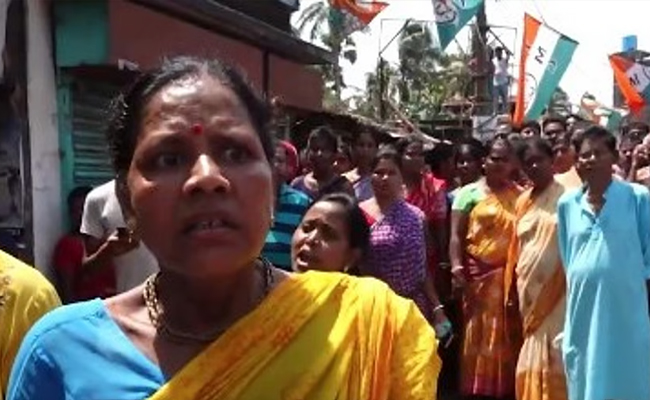
Kolkata (PTI): Demanding safety after counting of votes, hundreds of villagers staged a protest in Falta in West Bengal's South 24 Parganas district on Saturday, alleging they were receiving life threats from TMC workers in the area.
The protesters, many of them women and holding BJP flags, blocked the road in Hasimnagar village, alleging that local panchayat pradhan Israfil, a close associate of TMC candidate Jehangir Khan, issued them threats of attacks after poll results are announced.
The CRPF deputy commandant visited the area with a large force and assured the demonstrators of ensuring their safety.
Khan dismissed the allegations and said the women were "deployed" by the BJP to stage the demonstration and engineer the arrest of TMC functionaries in the area before the counting to "harm the morale of the TMC supporters".
"If the charges are proved, I am ready to face the law," he said.
Fatima Bibi, one of the protesters belonging to the BJP's Mahila Morcha, claimed Israfil and his men "have been visiting the area since April 30 and threatening us that there would be bloodshed from May 5. We demand CRPF remain in the area".
The CRPF official said, "We are here to instill confidence among the people with support of the local police, We have assured them of full security."
An Election Commission official said a report has been sought about the protests from the district administration.