India saw extreme weather events almost every day in first 9 months this year: Report
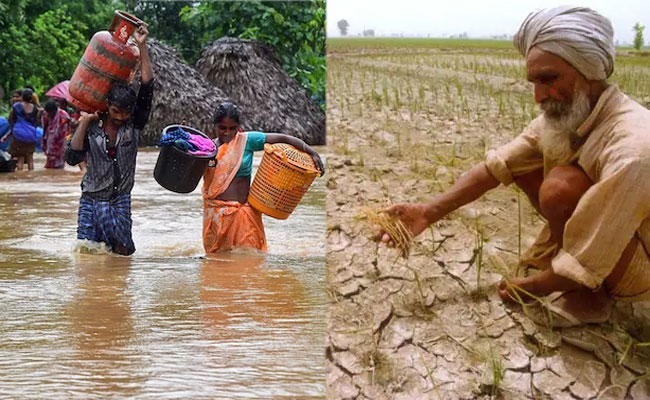
New Delhi (PTI): India experienced extreme weather events almost every day in the first nine months of this year which led to nearly 3,000 deaths, according to a report released on Wednesday.
Published by the independent think tank Centre for Science and Environment (CSE), the report said the climate-vulnerable country had extreme weather on 86 per cent of days from January to September 2023.
The CSE said 2,923 people died, almost two million hectares of crops were ruined, 80,000 homes were destroyed and more than 92,000 animals were killed. But these numbers might be even higher because not all the data is collected, it said.
"'India 2023: An assessment of extreme weather events' attempts to build an evidence base on the frequency and expanding geography of extreme weather events in the country. As this assessment clearly shows, what the country has witnessed so far in 2023 is the new 'abnormal' in a warming world," said the CSE director general Sunita Narain.
Madhya Pradesh reported the highest number of extreme weather events at 138. However, the largest number of deaths occurred in Bihar (642), followed by Himachal Pradesh (365) and Uttar Pradesh (341).
Punjab recorded the highest number of animal deaths while Himachal Pradesh reported the most damaged houses due to extreme weather events.
In the southern region, Kerala saw the highest count of extreme weather days (67) and deaths (60). Telangana suffered maximum effect on crop area (over 62,000 hectares). The state also witnessed high animal casualties (645). Karnataka faced severe destruction, with over 11,000 houses demolished.
In northwest India, Uttar Pradesh had the most extreme weather days at 113. Himachal Pradesh, Punjab, Haryana, Uttarakhand, and Rajasthan were also significantly affected.
In the eastern and northeastern regions, Assam registered maximum extreme weather events (102), with the state losing 159 livestock and over 48,000 hectares of crops devastated. Nagaland saw over 1,900 houses destroyed.
The CSE said January was slightly warmer than average, while February broke records, becoming the warmest in 122 years. India had its sixth driest February and the driest August in 122 years.
It said lightning and storms were the most common disasters, occurring on 176 out of 273 days and claiming 711 lives. Most of these deaths occurred in Bihar. However, the most significant devastation came from heavy rains, floods, and landslides, causing over 1,900 casualties.
According to research conducted by a different think tank, more than 80 per cent of Indians live in districts vulnerable to climate risks.
Let the Truth be known. If you read VB and like VB, please be a VB Supporter and Help us deliver the Truth to one and all.
Karnataka School Edu Dept prohibits children from being made to dance to obscene songs
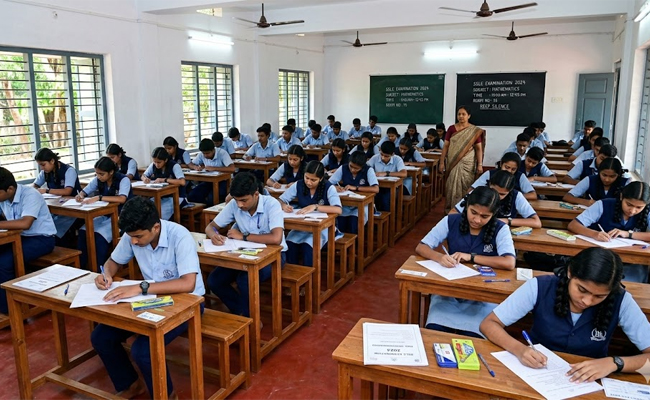
Bengaluru (PTI): The Karnataka School Education Department has issued a circular strictly prohibiting children from being made to dance to obscene songs in educational and cultural programmes.
It stated that such dances would negatively impact students' mental health and moral values. It will create indiscipline and harm the sanctity of education.
"All the Deputy Directors (Administration) of the state's School Education Department have been asked to take strict measures to prevent children or students from dancing to obscene songs in all government, aided and unaided schools in the state," the office of the commissioner of the School Education Department said in a recent circular.
"If it is found that children are being made to dance to obscene songs, appropriate action will be taken against the headmaster or management of such school," it added.
The department also listed certain measures in this regard, which include: strictly prohibiting children from being made to dance to obscene songs during educational and cultural programmes; selecting songs that are inspiring, positive, instilling national pride in children and reflecting the greatness, dignity, values, culture, and morality of the state.
Stating that the school headmaster and management are responsible for selecting songs and dances for cultural programmes, it said, they should also ensure that students wear decent clothes in dance or cultural programmes.