India sees single-day rise of 38,628 COVID-19 cases, 617 deaths
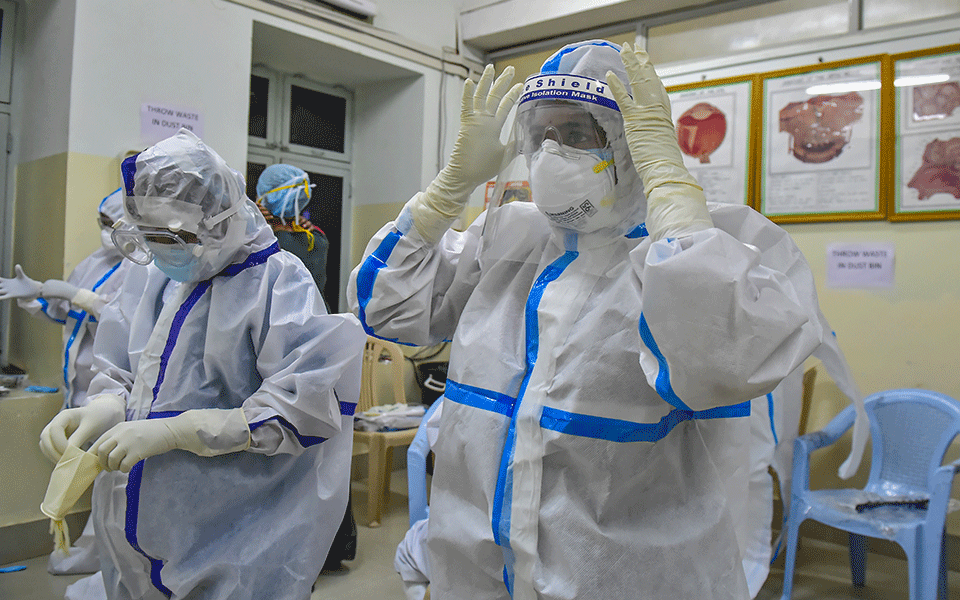
New Delhi, Aug 7 (PTI): India recorded a single-day rise of 38,628 new coronavirus cases, taking the infection tally to 3,18,95,385, while the death toll climbed to 4,27,371 with 617 fresh fatalities, the Union health ministry said on Saturday.
The active cases in the country have declined to 4,12,153 and comprises 1.29 per cent of the total infections, while the national COVID-19 recovery rate was recorded at 97.37 per cent, the ministry data updated at 8 am showed.
A decrease of 2,006 cases has been recorded in the active COVID-19 caseload in a span of 24 hours, it said.
The ministry also said that 17,50,081 tests were conducted on Friday, taking the total cumulative tests conducted so far for detection of COVID-19 to 47,83,16,964.
The daily positivity rate was recorded at 2.21 per cent. It has been less than 3 per cent for the last 12 days.
Weekly positivity rate was recorded at 2.39 per cent, according to the health ministry.
Meanwhile, the number of people who have recuperated from the disease surged to 3,10,55,861, while the case fatality rate stands at 1.34 per cent, the data stated.
Cumulative vaccine doses administered so far has reached 50.10 crore under the nationwide vaccination drive.
India's COVID-19 tally had crossed the 20 lakh-mark on August 7 last, 30 lakh on August 23, 40 lakh on September 5 and 50 lakh on September 16.
It went past 60 lakh on September 28, 70 lakh on October 11, 80 lakh on October 29, 90 lakh on November 20 and surpassed the one crore-mark on December 19.
India crossed the grim milestone of 2 crore on May 4 and 3 crore on June 23 this year.
According to the ministry data, the 617 latest fatalities include 187 each from Maharashtra and Kerala.
A total of 4,27,371 deaths have been reported so far in the country, including 1,33,717 from Maharashtra, 36,741 from Karnataka, 34,260 from Tamil Nadu, 25,065 from Delhi, 22,771 from Uttar Pradesh, 18,202 from West Bengal and 17,515 from Kerala.
The health ministry stressed that more than 70 per cent of the deaths occurred due to comorbidities.
"Our figures are being reconciled with the Indian Council of Medical Research," the ministry said on its website, adding that state-wise distribution of figures is subject to further verification and reconciliation.
Let the Truth be known. If you read VB and like VB, please be a VB Supporter and Help us deliver the Truth to one and all.
Trump says EU has until July 4 to approve last year's trade deal or it will face higher tariffs
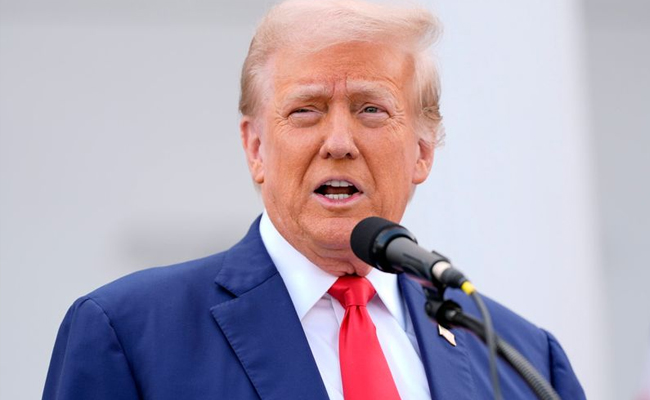
Washington (AP): President Donald Trump has said in a social media post that goods from the European Union would face higher tariff rates if the 27-member bloc fails to approve last year's trade framework by July 4.
The announcement on Thursday appeared to be a deadline extension after the president said last Friday that EU autos would face a higher 25 per cent tariff starting this week. Trump made the updated announcement after what he described as a "great call" with European Commission President Ursula von der Leyen.
Still, the US president was displeased that the European Parliament had yet to finalize the trade arrangement reached last year, which was further complicated in February by the US Supreme Court ruling that Trump lacked the legal authority to declare an economic emergency to impose the initial tariffs used to pressure the EU into talks.
"A promise was made that the EU would deliver their side of the Deal and, as per Agreement, cut their Tariffs to ZERO!" Trump posted. "I agreed to give her until our Country's 250th Birthday or, unfortunately, their Tariffs would immediately jump to much higher levels."
It was unclear from the post whether Trump was implying that the tariff rates would jump on all EU goods or the increase would only apply to autos.
His latest statement indicates he might be backing away from his earlier threat on EU autos by giving the European Parliament several more weeks to approve the agreement.
Under the original terms of the framework, the US would charge a 15 per cent tax on most goods imported from the EU.
But since the Supreme Court ruling, the administration has levied a 10 per cent tariff while investigating trade imbalances and national security issues, aiming to put in new tariffs to make up for lost revenues.