India should impose tax on ultra-wealthy to tackle wealth inequality, says study
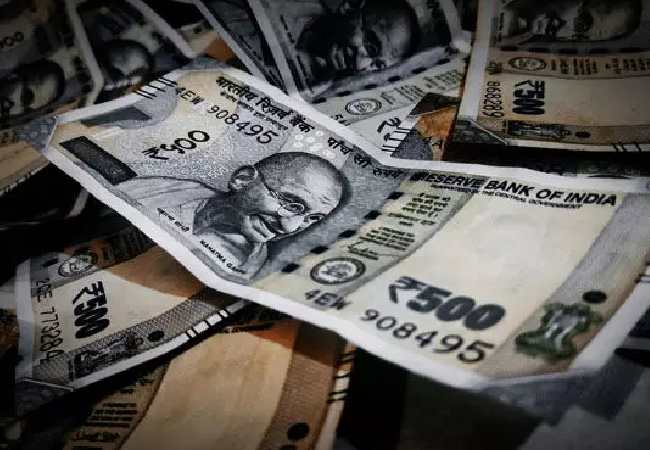
New Delhi (PTI): India needs to impose a 2 per cent tax on net wealth exceeding Rs 10 crore and a 33 per cent inheritance tax to deal with the problem of rising inequality in the country, and create fiscal space for investments in the social sector, a new research paper co-authored by economist Thomas Piketty has suggested.
The paper titled 'Proposals For a Wealth Tax Package to Tackle Extreme Inequalities in India' propose a comprehensive tax package on the ultra-wealthy to tackle the massive concentration at the very top of the wealth distribution and create valuable fiscal space for crucial social sector investments.
"Raise phenomenally large tax revenues while leaving 99.96 per cent of the adults unaffected by the tax."
"In a baseline scenario, a 2 per cent annual tax on net wealth exceeding Rs 10 crore and a 33 per cent inheritance tax on estates exceeding Rs 10 crore in valuation would generate a massive 2.73 per cent of Gross Domestic Product (GDP) in revenues," the paper suggested.
The paper said that the taxation proposal needs to be accompanied by explicit redistributive policies to support the poor, lower castes, and middle classes.
"For example, the baseline scenario would allow nearly doubling the current public spending on education, which has stagnated at 2.9 per cent of GDP over the past 15 years, well below -- less than half -- the 6 per cent target set by the government's own National Education Policy 2020 (NEP 2020)," it said.
The paper noted that the taxation proposal needs to be extensively debated, with a consensus on specific details of the design emerging from a broader democratic debate on tax justice and wealth redistribution in India.
The paper has been authored by Thomas Piketty (Paris School of Economics and World Inequality Lab), Lucas Chancel (Harvard Kennedy School and World Inequality Lab), Anmol Somanchi, (Paris School of Economics and World Inequality Lab) and Nitin Kumar Bharti (New York University and World Inequality Lab)
According to the paper, debates on income and wealth inequality in India have gained significant momentum in recent weeks, partly following the release of our study 'Income and Wealth Inequality in India, 1922-2023: The Rise of the Billionaire Raj', which revealed that economic disparities in India have reached historical highs.
These extreme inequalities and their close link with social injustice can no longer be ignored, it said.
Co-author Anmol Somanchi highlighted that Indian billionaires are largely an upper caste club.
"A progressive wealth tax package of the kind we propose is most likely to benefit lower castes and the middle classes at the detriment of only a tiny number of ultra-wealthy upper caste families.
"In that respect, besides addressing extreme wealth inequality, such taxes could also play a small role in weakening the rigid link between social and economic inequalities in India," Somanchi said.
According to him, the 2024 Lok Sabha election marks a critical juncture with heightened political and public focus on economic justice. Despite sustained attempts from certain sections at derailing this much-needed conversation, a vibrant public debate has emerged.
Somanchi said it would, however, be a shame if after coming this far, this momentum is not translated into policy.
"Progressive wealth taxation, effective redistribution, and broad-based social sector investments are urgently needed to build an equitable and prosperous India," he noted.
The authors in their working paper released on March 20 had said inequality in India has skyrocketed since the early 2000s, with the income and wealth share of the top 1 per cent population rising to 22.6 per cent and 40.1 per cent, respectively, in 2022-23.
"Between 2014-15 and 2022-23, the rise of top-end inequality has been particularly pronounced in terms of wealth concentration.
"By 2022-23, top 1 per cent income and wealth shares (22.6 per cent and 40.1 per cent) are at their highest historical levels and India's top 1 per cent income share is among the very highest in the world, higher than even South Africa, Brazil, and the US," the paper said.
Let the Truth be known. If you read VB and like VB, please be a VB Supporter and Help us deliver the Truth to one and all.
Rupee falls 32 paise to all-time low of 95.20 against US dollar
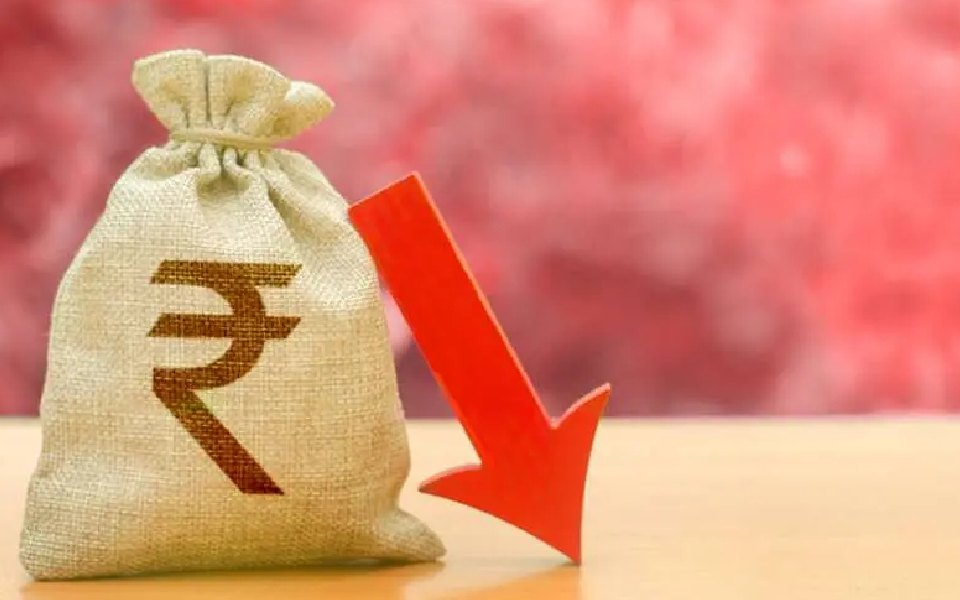
Mumbai, Apr 30 (PTI): The rupee depreciated 32 paise to an all-time low of 95.20 against the US dollar in early trade on Thursday, weighed down by elevated Brent crude oil prices, hovering around USD 122 per barrel, and strong American currency.
Forex traders said the USD/INR pair may see further downside, as rising crude oil prices are likely to sharply impact India's import costs, while concerns over potential wider conflict in West Asia are fuelling investor anxiety.
Meanwhile, the US dollar added to gains after the US FED Reserve kept rates unchanged. Safe-haven demand was also boosted by another diplomatic setback between Washington and Tehran.
At the interbank foreign exchange market, the rupee opened at 95.01 against the US dollar, then lost some ground and touched an all-time low of 95.20 against the US dollar in initial trade, registering a fall of 32 paise over its previous close.
On Wednesday, the rupee depreciated 20 paise to close at an all-time low of 94.88 against the US dollar.
ALSO READ: Meghalaya: Interstate ATM theft racket busted, 6 arrested
"The main effect on the rupee has been from the rising oil prices, which touched USD 120 per barrel and looked headed for further upside as the US continues with its blockade of Iranian ports, while Iran does not allow any ship/tanker to pass through the Strait of Hormuz," said Anil Kumar Bhansali, Head of Treasury and Executive Director Finrex Treasury Advisors LLP.
Meanwhile, the dollar index, which gauges the greenback's strength against a basket of six currencies, was trading 0.01 per cent higher at 98.96.
Brent crude, the global oil benchmark, was trading higher by 3.16 per cent at USD 121.76 per barrel in futures trade.
On the domestic equity market front, Sensex tumbled 821.79 points to 76,674.57 in early trade, while the Nifty dived 287.3 points to 23,890.35.
Foreign Institutional Investors offloaded equities worth Rs 2,468.42 crore on Wednesday, according to exchange data.
"FPIs continue with their sale of Indian Equities and debt (the yield touched 7 per cent on Wednesday) and are also dollar buyers consistently," Bhansali added.