India slams Pakistan for raking up Kashmir issue in UN
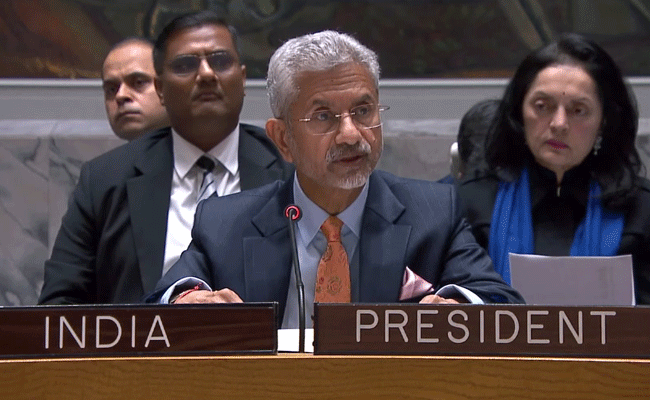
United Nations (PTI): India strongly hit back at Pakistan on Wednesday after it raised the Kashmir issue in the UN Security Council, asserting that a country that hosted slain al-Qaeda leader Osama bin Laden and attacked a neighbouring Parliament does not have the credentials to "sermonize" in the power UN organ.
External Affairs Minister S Jaishankar said the credibility of the UN depends on its effective response to the key challenges of our times, be it pandemics, climate change, conflicts or terrorism.
"We are obviously focused today on the urgency of reforming multilateralism. We will naturally have our particular views, but there is a growing convergence at least that this cannot be delayed any further," said Jaishankar, who is chairing India's signature event on reformed multilateralism.
"While we search for the best solutions, what our discourse must never accept is the normalisation of such threats. The question of justifying what the world regards as unacceptable should not even arise. That certainly applies to state sponsorship of cross-border terrorism. Nor can hosting Osama bin Laden and attacking a neighbouring Parliament serve as credentials to sermonize before this Council," he said.
Eighteen years ago on December 13, terrorists of the Pakistsan-based Lashkar-e-Taiba (LeT) and the Jaish-e-Mohammed (JeM) attacked the Indian Parliament complex in New Delhi and opened fire, killing nine people.
Jaishankar's strong remarks came after Pakistan Foreign Minister Bilawal Bhutto raised the Kashmir issue while speaking in the Council debate on reformed multilateralism.
Jaishankar arrived here Tuesday to preside over two signature events on counter-terrorism and reformed multilateralism being held under India's current Presidency of the UN Security Council, before the curtains come down this month on the country's two-year tenure as an elected member of the powerful 15-nation.
India's Permanent Representative to the UN Ambassador Ruchira Kamboj was chairing the debate when Bhutto spoke in the Council.
Tensions between India and Pakistan have spiked since New Delhi abrogated Article 370 of the Constitution to revoke the special status of Jammu and Kashmir on August 5, 2019. India's decision evoked strong reactions from Pakistan, which downgraded diplomatic ties and expelled the Indian envoy.
India has categorically told the international community that the scrapping of Article 370 was its internal matter. It also advised Pakistan to accept the reality and stop all anti-India propaganda.
India has told Pakistan that it desires normal neighbourly relations with Islamabad in an environment free of terror, hostility and violence.
Let the Truth be known. If you read VB and like VB, please be a VB Supporter and Help us deliver the Truth to one and all.
Congress using hijab issue to pacify minority anger, alleges Karnataka LoP R Ashoka
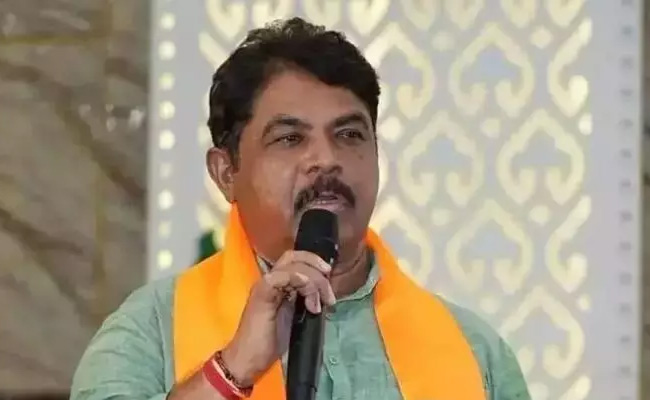
Bengaluru: Leader of Opposition in the Assembly R. Ashoka has accused the Congress government of using the hijab issue to placate what he described as discontent among minority voters after the Davanagere by-election.
In a post on X on Wednesday, Ashoka alleged that the state government, instead of addressing issues such as price rise, corruption, farmers’ distress and law and order, was attempting to retain its minority vote base by reviving the hijab issue.
Referring to the 2022 dress code introduced by the BJP government, which prohibited hijab in schools and colleges, Ashoka said the Karnataka High Court had upheld the policy and emphasised the importance of discipline in educational institutions.
He questioned the Congress government’s move to revisit the issue and asked whether setting aside the court-backed policy to benefit one community could be described as secularism.
Ashoka further alleged that while the government was willing to permit hijab, it continued to prohibit saffron shawls.
He accused the government of dividing students on religious lines rather than treating schools and colleges as spaces of equality.
Drawing a comparison with Mamata Banerjee’s government in West Bengal, Ashoka claimed that excessive appeasement politics had harmed the state and warned that the Congress in Karnataka could face a similar political response.
He said voters in Karnataka would teach the Congress a lesson for what he termed “vote-bank politics” and for compromising constitutional and judicial principles.