India suspends tourist visas issued to Chinese nationals: IATA
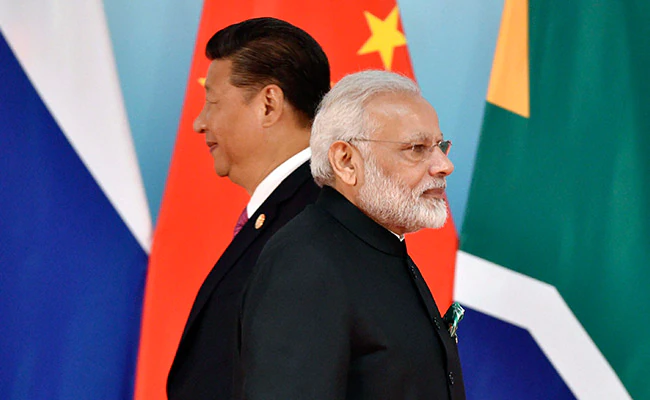
New Delhi, Apr 24: India has suspended tourist visas issued to Chinese nationals, global airlines body IATA told its member carriers on April 20.
India has been raising with China the plight of approximately 22,000 Indian students enrolled in Chinese universities who are unable to go back for physical classes. However, the neighbouring country has till date refused to let them enter.
These students had to leave their studies in China and come to India when the COVID-19 pandemic began in the beginning of 2020.
In a circular issued on April 20 regarding India, the International Air Transport Association (IATA) said, "Tourist visas issued to nationals of China (People's Republic) are no longer valid."
It said the following passengers are allowed to enter India: nationals of Bhutan, India, Maldives and Nepal; passengers with a residence permit issued by India; passengers with visa or an e-visa issued by India; passengers with an overseas citizen of India (OCI) card or booklet; passengers with a persons of Indian origin (PIO) card; and passengers with a diplomatic passport.
The IATA also said that tourist visas with a validity of 10 years are no longer valid.
The IATA is a global airlines body with around 290 members that comprise more than 80 per cent of global air traffic.
India has urged Beijing to adopt a "congenial stance" in the matter as the continuation of the strict restrictions is putting the academic careers of thousands of Indian students in jeopardy, MEA spokesperson Arindam Bagchi had said on March 17.
Bagchi said a Chinese foreign ministry spokesperson had stated on February 8 that China was looking into the matter in a coordinated manner and that arrangements for allowing foreign students to return to China were being examined.
"But let me clarify that till date, the Chinese side has not given any categorical response about the return of Indian students. We will continue to urge the Chinese side to adopt a congenial stance in the interest of our students and that they facilitate an early return to China so that our students can pursue their studies," Bagchi said.
He said the issue was also taken up with Chinese foreign minister Wang Yi by External Affairs Minister S Jaishankar during a meeting in Dushanbe in September last year. The two foreign ministers had held talks in the Tajik capital city on the sidelines of a conclave of the Shanghai Cooperation Organisation (SCO).
Let the Truth be known. If you read VB and like VB, please be a VB Supporter and Help us deliver the Truth to one and all.
Congress using hijab issue to pacify minority anger, alleges Karnataka LoP R Ashoka
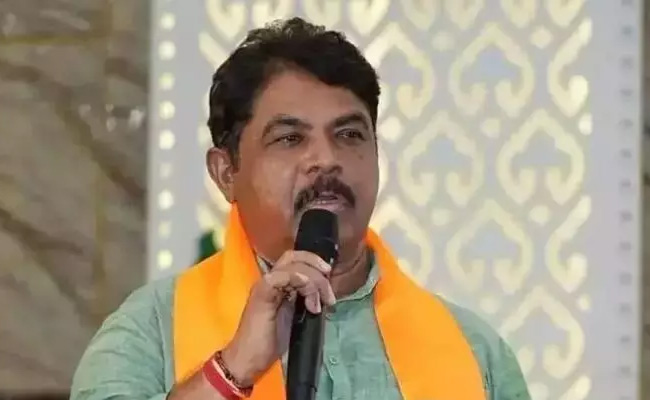
Bengaluru: Leader of Opposition in the Assembly R. Ashoka has accused the Congress government of using the hijab issue to placate what he described as discontent among minority voters after the Davanagere by-election.
In a post on X on Wednesday, Ashoka alleged that the state government, instead of addressing issues such as price rise, corruption, farmers’ distress and law and order, was attempting to retain its minority vote base by reviving the hijab issue.
Referring to the 2022 dress code introduced by the BJP government, which prohibited hijab in schools and colleges, Ashoka said the Karnataka High Court had upheld the policy and emphasised the importance of discipline in educational institutions.
He questioned the Congress government’s move to revisit the issue and asked whether setting aside the court-backed policy to benefit one community could be described as secularism.
Ashoka further alleged that while the government was willing to permit hijab, it continued to prohibit saffron shawls.
He accused the government of dividing students on religious lines rather than treating schools and colleges as spaces of equality.
Drawing a comparison with Mamata Banerjee’s government in West Bengal, Ashoka claimed that excessive appeasement politics had harmed the state and warned that the Congress in Karnataka could face a similar political response.
He said voters in Karnataka would teach the Congress a lesson for what he termed “vote-bank politics” and for compromising constitutional and judicial principles.