India taking steps to reduce crude oil, gas imports; focus on exploration, green energy: PM
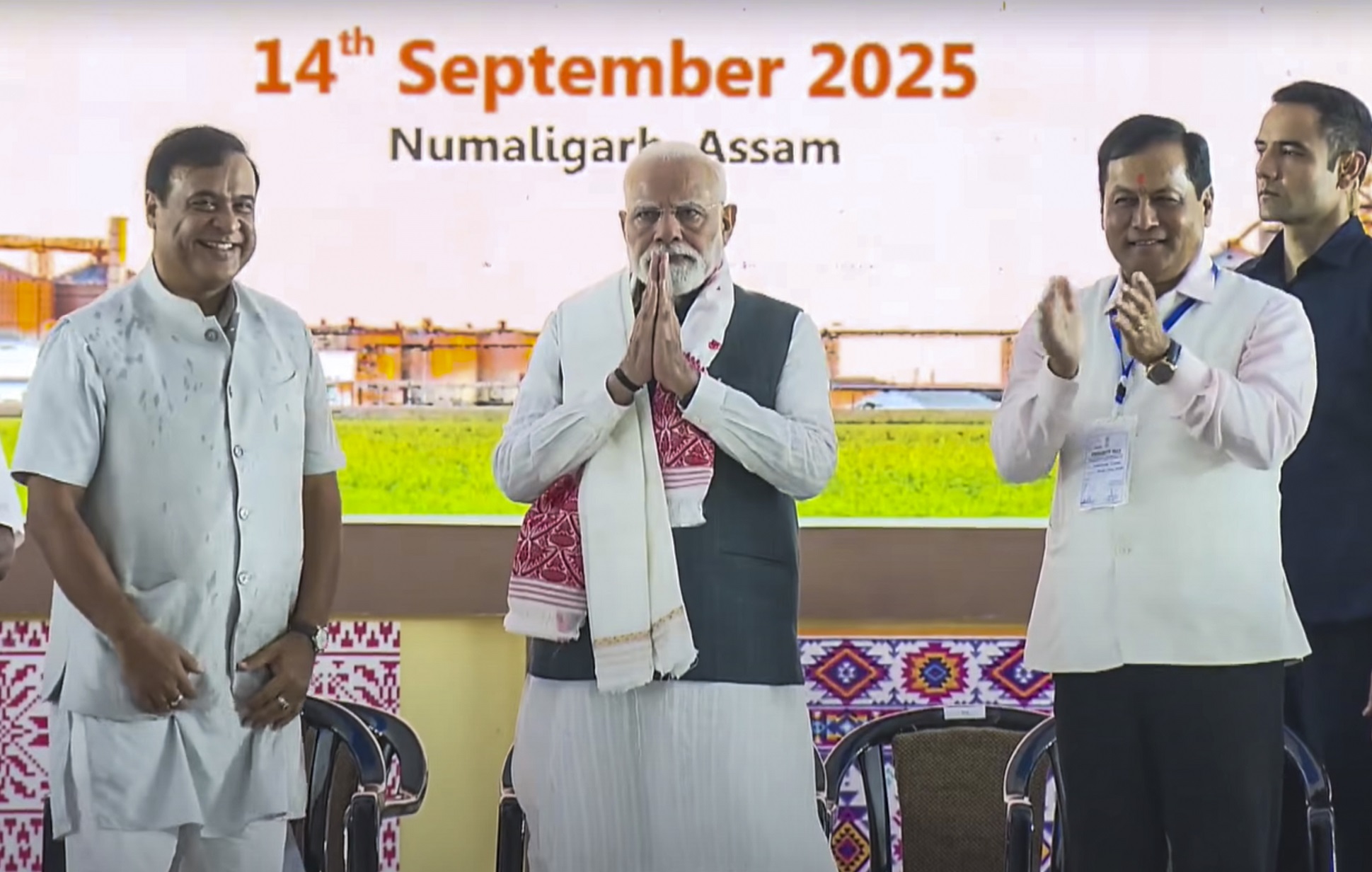
Numaligarh (Assam), Sep 14 (PTI): Prime Minister Narendra Modi on Sunday said the BJP-led central government is taking steps to reduce imports of crude oil and gas, focusing more on exploration of fossil fuels and green energy.
Addressing a rally in Assam’s Numaligarh after inaugurating and laying foundation stones for projects worth over Rs 12,000 crore, Modi said that with India emerging as one of the fastest-growing economies in the world, the country is dependent on foreign nations for crude oil and gas.
“To change this, the focus has to be on meeting our energy requirements. The government is working on oil exploration and green energy generation,” the PM said.
Ethanol is a major alternative source of energy, and the newly inaugurated bioethanol refinery at Numaligarh will significantly benefit farmers and tribals, he said.
ALSO READ: PM lays foundation stones for health, infra projects worth Rs 6,300 cr in Assam's Darrang
The polypropylene plant, the foundation for which was also laid by Modi, will greatly benefit the local economy, he said.
Modi said energy and semiconductors were the two key drivers for ‘Atmanirbhar Bharat’, underscoring that Assam has an important role to play in these sectors.
Taking a dig at the Congress, the prime minister alleged that it was responsible for insurgency and unrest in Assam.
“The Congress also ignored the heritage and icons of Assam. But, the BJP brought development and gave recognition to the state’s heritage,” he asserted.
Modi claimed that Assam was facing a demographic challenge due to Congress' backing of infiltrators for votes.
“The Assam government is evicting encroachers, and providing deprived people land rights,” he said.
“We are taking steps for the welfare of tribals, who were neglected during the Congress rule,” the PM said.
The BJP government’s commitment is to make Assam a hub of trade and tourism, he added.
Let the Truth be known. If you read VB and like VB, please be a VB Supporter and Help us deliver the Truth to one and all.
Delhi court sentences CBI joint director to 3 months' imprisonment in IRS officer assault case

New Delhi (PTI): A Delhi court has sentenced two CBI officers to three months' imprisonment for assaulting and trespassing into the residence of an Indian Revenue Service (IRS) officer during a raid over two decades ago.
Judicial Magistrate Shashank Nandan Bhatt was hearing the arguments on the sentence against the convicted retired police officer V K Pandey and Ramneesh, who was serving as a superintendent of police when the raid was conducted in 2000.
Ramneesh is at present a joint director at the Central Bureau of Investigation (CBI).
The court also fined Rs 50,000 each to both the accused.
Both were accused under IPC sections 323 (voluntarily causing hurt), 427 (mischief) and 448 (criminal trespass) in a complaint filed by IRS officer Ashok Kumar Aggarwal.
The case pertained to an incident on October 19, 2000, when a CBI team carried out a search and arrest operation at Aggarwal's residence in Paschim Vihar.
Aggarwal alleged that the officials forcibly entered his house in the early hours, assaulted him and violated legal procedures during the arrest.
#WATCH | Delhi | Former IRS officer assault case. | Tis Hazari Court sentenced CBI joint director Ramneesh and Retired ACP Vivek Pandey to 3 months sentence in an assault case filed by former IRS officer Ashok Agarwal. The court has granted them bail to challenge the judgment.… https://t.co/RwAxjMrWDK pic.twitter.com/2FlkG4rDs0
— ANI (@ANI) April 28, 2026