India to experience above-normal rainfall this monsoon: IMD
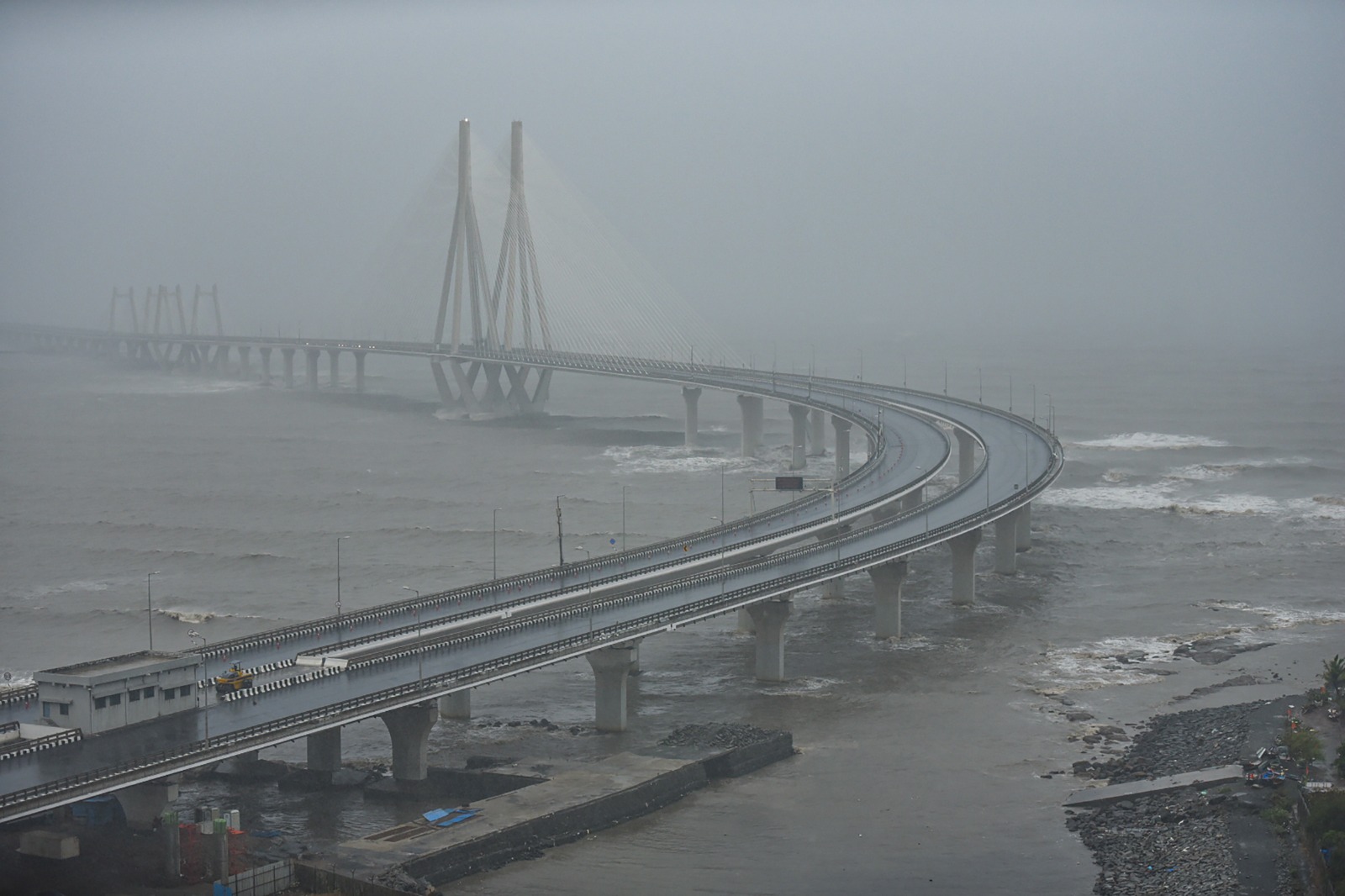
New Delhi (PTI): India will experience above-normal monsoon rains this season on the back of favourable La Nina conditions, the IMD said on Monday, bringing cheer to farmers and policy-planners.
M Ravichandran, the secretary in the Ministry of Earth Sciences, told a press conference that the seasonal rainfall will be on the higher side of 'above-normal', and pegged it at 106 percent of the long-period average (87 cm).
Parts of the country are already battling extreme heat and a significantly high number of heat wave days are expected in the April to June period. This could strain power grids, and result in water shortages in several areas.
The monsoon is critical for India's agricultural landscape, with 52 percent of the net cultivated area relying on it. It is also crucial for the replenishing reservoirs critical for drinking water apart from power generation across the country.
A prediction of above-normal rainfall during the monsoon season, therefore, comes as a huge relief to the fast-developing South Asian nation.
However, normal cumulative rainfall does not guarantee uniform temporal and spatial distribution of rain across the country, with climate change further increasing the variability of the rain-bearing system.
Parts of northwest, east and northeast India are expected to receive below-normal rainfall during the season, Mrutyunjay Mohapatra, the director general of the IMD, said during the presser.
However, models have not given any "clear signal" about monsoon rainfall for several parts of Madhya Pradesh, Rajasthan, Maharashtra, Odisha, Chhattisgarh, Madhya Pradesh, Uttar Pradesh and West Bengal, which form the core monsoon zone (agriculture primarily rain-fed) of the country.
The IMD chief said there is a 29 percent chance of normal rainfall, 31 percent chance of above-normal rainfall and 30 percent chance of excess precipitation during the monsoon season.
According to the IMD, rainfall between 96 per cent and 104 percent of a 50-year average of 87 cm is considered 'normal'.
Rainfall less than 90 percent of the long-period average is considered 'deficient', between 90 percent and 95 percent is 'below normal', between 105 percent and 110 percent is 'above normal' and more than 100 percent is 'excess' precipitation.
Data from the 1951-2023 period shows India experienced above-normal rainfall in the monsoon season on all the nine occasions when La Nina followed an El Nino event, Mohapatra said.
The country gauged above-normal or normal monsoon in 20 out of the 22 La Nina years.
El Nino conditions are prevailing at present. ENSO neutral conditions are expected in the first half of the monsoon season. Thereafter, models suggest, La Lina conditions may set in by August-September, Mohapatra said.
Positive Indian Ocean Dipole conditions, favorable for the Indian monsoon, are predicted during the season. Also, the snow cover in the Northern Hemisphere and Eurasia is low. Therefore, all the conditions are conducive, he said.
El Nino conditions -- periodic warming of surface waters in the central Pacific Ocean -- are associated with weaker monsoon winds and drier conditions in India.
La Nina conditions - the antithesis of El Nino -- are the dominant factor in the likelihood of "above-normal" rainfall during the monsoon season, D S Pai, a senior scientist at the IMD, told PTI.
The IMD will provide an update on the onset of the monsoon over the Indian landmass and the rainfall distribution during June, July, August and September in mid-May, Mohapatra said.
Three large-scale climatic phenomena are considered for forecasting monsoon season rainfall.
The first is El Nino, the second is the Indian Ocean Dipole (IOD), which occurs due to differential warming of the western and eastern sides of the equatorial Indian Ocean, and the third is the snow cover over the northern Himalayas and the Eurasian landmass, which also has an impact on the Indian monsoon through the differential heating of the landmass.
Let the Truth be known. If you read VB and like VB, please be a VB Supporter and Help us deliver the Truth to one and all.
Karnataka issues order on internal quota within SC reservation; 56,432 recruitments to proceed
Bengaluru: The Karnataka government on Tuesday issued an order implementing internal reservation within the 15 per cent quota earmarked for Scheduled Castes in appointments and admissions.
As per the order, 5.25 per cent reservation has been allocated to Left-hand communities under Category-A, 5.25 per cent to Right-hand communities under Category-B, and 4.50 per cent to other touchable Scheduled Caste communities under Category-C.
The government said the decision follows the recent Cabinet meeting held in view of the interim order of the High Court. It was decided to temporarily adopt the 50 per cent overall reservation ceiling and continue recruitments subject to the final verdict of the court.
Accordingly, the 15 per cent SC reservation in recruitment and admissions will now be distributed among the three categories in the prescribed ratio.
The order further stated that 20 per cent of posts or seats available under Category-C must be reserved for 59 most backward castes within the Scheduled Castes. If eligible candidates from these 59 castes are not available, the vacancies or seats should be filled by candidates from other communities within Category-C.
For implementing the revised quota in recruitment, authorities have been directed to follow a 400-point roster system. Where fewer than three Scheduled Caste roster points are available in any cadre, the reserved posts should be treated as general SC category posts for appointment purposes.
The government has also directed departments to revise ongoing recruitment processes by incorporating internal reservation. Notifications already issued without such quota distribution are to be withdrawn and fresh revised notifications issued immediately.
The order added that if the court upholds the enhanced 24 per cent reservation for Scheduled Castes and Scheduled Tribes, the additional 6 per cent posts should be treated as backlog vacancies and filled accordingly.
The government has instructed all recruiting authorities to take urgent steps to fill 56,432 posts already cleared by the Finance Department through direct recruitment.