India tops global list in snakebite deaths with 58,000 fatalities annually: Report

New Delhi: India records the highest number of snakebite deaths in the world, with an estimated 58,000 fatalities each year, according to a new global report. The staggering toll is attributed to a combination of high snake population density, vast rural populations, and widespread dependence on traditional healers.
The report, titled “Time to Bite Back: Catalyzing a Global Response to Snakebite Envenoming”, was released at the 78th World Health Assembly in Geneva by the Global Snakebite Taskforce. The study, as cited by The New Indian Express on Thursday, paints a grim picture of the situation in India, where snakebites disproportionately affect poor and indigenous communities with limited access to timely and quality healthcare.
The report calls attention to the “devastating and preventable human toll of snakebite envenoming” and highlights key systemic issues: delays in seeking medical care due to reliance on traditional medicine, lack of quality control among some domestic antivenom producers, and high out-of-pocket costs in informal healthcare settings.
Although India has implemented a National Action Plan for Prevention and Control of Snakebite Envenoming, significant gaps remain, the report stated.
It urges stronger efforts toward meeting the World Health Organisation’s target of halving global deaths and disabilities from snakebite envenoming by 2030.
Dr Yogesh Jain, a public health physician and one of the authors of the report, emphasised the inadequacies of the Indian healthcare system in managing snakebite emergencies. “The healthcare system is simply not equipped to respond. Doctors often lack the training, tools, and confidence to treat cases effectively. Poverty compounds the problem. When care isn’t free or accessible, people turn to faith healers or other ineffective options,” TNIE quoted him as saying.
Dr Jain, who heads the community health initiative Jan Swasthya Sahyog in Chhattisgarh, also raised concerns about the limited efficacy of available treatments. He noted that even when patients do reach a clinic, the polyvalent antivenom available only covers a handful of the 35 venomous species and is effective in about 80 percent of cases.
In a move to improve surveillance and intervention, India last year classified snakebite as a notifiable disease. The country, which accounts for nearly half of the world’s snakebite deaths, has long been regarded as the global epicenter of the crisis.
Let the Truth be known. If you read VB and like VB, please be a VB Supporter and Help us deliver the Truth to one and all.
SC to hear on May 4 PIL seeking stringent guidelines for issuing Aadhaar to adolescents, adults
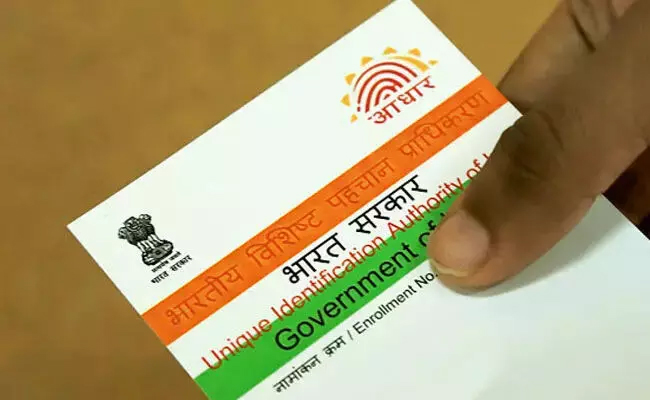
New Delhi (PTI): The Supreme Court is scheduled to hear on Monday a plea seeking a direction to the Unique Identification Authority of India to issue new Aadhaar cards only to citizens up to the age of six years, and frame stringent guidelines for its issuance to adolescents and adults to stop infiltrators from masquerading as Indian citizens.
As per the apex court's causelist of May 4, the plea would come up for hearing before a bench of Chief Justice Surya Kant and Justice Joymalya Bagchi.
The Public Interest Litigation (PIL) filed by lawyer Ashwini Upadhyay has also sought a direction to the authorities to install display boards at common service centres stating that the 12-digit unique identification number is only a "proof of identity" and not a proof of citizenship, address or date of birth.
Besides all the states and Union Territories, the plea has made the UIDAI -- which is the authority that issues Aadhaar -- and the Union ministries of home, law and justice, and electronics and information technology as parties.
The plea, filed through advocate Ashwani Dubey, said Aadhaar, originally intended as a proof of identity, has increasingly become a "foundational document" enabling individuals to obtain other identification documents, such as ration cards, domicile certificates and voter identity cards.
"The UIDAI has issued 144 crore Aadhaar and 99 percent Indians have been enrolled. Therefore, the petitioner is filing this writ petition as a PIL under Article 32, seeking a direction to UIDAI to issue new Aadhaar to children only and frame new stringent guidelines for adolescents and adults, so as to stop infiltrators from getting it and masquerading as Indian citizens," the plea said.
It said the need to file the plea arose when the petitioner came to know the manner in which infiltrators are able to procure Aadhaar through a verification process that is weak and can be easily manipulated.
"Foreigners apply for Aadhaar under the 'foreign' category. But infiltrators apply for Aadhaar under the 'Indian citizen' category and get it easily made. Thereafter, they obtain a ration card, birth and domicile certificate, driving licence, et cetera, essentially becoming indistinguishable from Indian citizens…," it said.
Besides seeking other directions, the plea has raised legal questions, including whether the Aadhaar Act 2016 has become "temporally unreasonable" for failing to keep up with the legislative intent of distinguishing foreigners from Indian citizens.
It said the alleged misuse of Aadhaar undermines targeted welfare delivery and leads to diversion of public resources.