India-US interim trade pact likely to be operationalised in April: Goyal
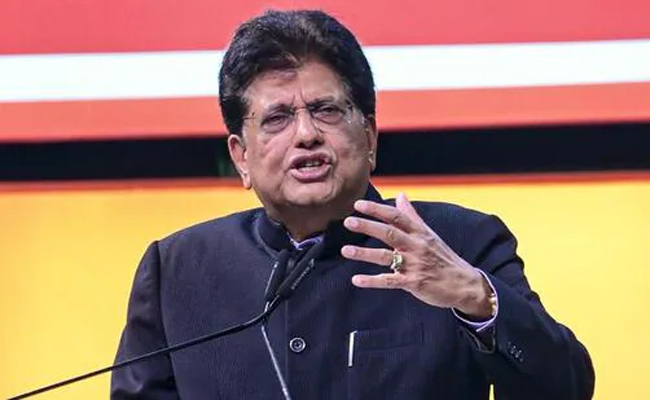
New Delhi (PTI): An interim trade agreement between India and the US is likely to be signed in March and operationalised in April, Commerce and Industry Minister Piyush Goyal said on Friday.
Earlier this month, India and the US released a joint statement announcing a framework for an interim trade agreement.
To finalise the text of the first phase of the bilateral trade agreement, the chief negotiators of the two countries will meet in Washington next week.
The three-day meeting between the two teams will begin on February 23.
Goyal told reporters here that the pact is expected to be signed next month and may be implemented in April.
US Trade Representative (USTR) Jamieson Greer is likely to visit India in March to sign the agreement.
In an event at the AI Impact Summit here, US Ambassador Sergio Gor said that the India-US trade deal is set to be inked soon.
India on Friday joined the US-led strategic alliance Pax Silica aimed at building a resilient supply chain for critical minerals.
"From the trade deal to Pax Silica to defence cooperation, the potential for our two nations to work together is truly limitless," Gor said in his remarks.
The joint statement, released separately by the two nations earlier this month, lays down the contours of the deal. These now need to be translated into a legal agreement, for which the two sides will meet next week.
The Indian team will be headed by chief negotiator Darpan Jain, who is a joint secretary in the Commerce Ministry.
Under the pact, both sides would extend duty concessions to each other on a number of goods traded between them.
The US has announced that it will reduce the reciprocal tariffs on Indian goods from 25 per cent to 18 per cent. It has already eliminated the 25 per cent punitive tariffs on India for buying Russian crude oil. The move is a big relief to the domestic industry as they were facing steep 50 per cent tariffs by the US.
Goyal expressed hope that an executive order to cut the tariffs to 18 per cent would be issued by the Trump administration this month.
While speaking at the launch of seven components of the Rs 25,060-crore export promotion mission (EPM), Goyal said the India-US trade agreement has opened huge business opportunities for Indian exporters.
He said that India has protected all the sensitive sectors, including agriculture.
"Now once that rate (50 per cent tariff) comes out to lower than any of our competitors, we are lower than anybody else who is an emerging market or a developing economy, and plus having safeguarded all the sensitive sectors, it's a great win-win solution for both countries," he said.
The minister said that labour-intensive sectors like apparel, leather and marine were suffering from high tariffs.
He also criticised Congress leader Rahul Gandhi for raising concerns about the deal.
Stepping up his attack on the government over the interim US trade deal, Gandhi on Friday said the answer to why Prime Minister Narendra Modi agreed to a deal, where India gives so much and appears to get so little, and makes an "abject surrender" lies in the "grips" and "chokes" placed on him.
Gandhi questioned that why the government has agreed to increase US imports by USD 100 billion a year without a reciprocal promise.
"I think he (Gandhi) lives in a world very detached from reality. All of you here are exporters. Were you happy with the 50 per cent tariff? Was your business prospering? Were your jobs safe? Was Tirupur able to export apparel? What was happening to your leather industry where lakhs of workers are working? What had happened to our marine seafood exports? All labour-intensive sectors were suffering," he said.
He added that businesses will prosper at the 18 per cent rate that India negotiated under the trade pact with the US.
It will help boost exports of gems and jewellery, and spices also, he said. On imports from the US, Goyal said India needs high-tech devices like GPUs (Graphics Processing Units), coking coal and aircrafts.
"We need airplanes in India. As our steel production doubles and is slated to double from 140 million to 300 million tonnes in the next 5-6 years, huge investments, almost Rs 10 lakh crores investments are in the pipeline in the steel industry. That steel will need coking coal.
"You are all businessmen in this room. Is it better to have two sources of a product or six sources of a product?," he asked.
India needs these products from trusted partners for its economic growth, the minister said, adding that exports will play an important role in the effort to push the country's growth.
"...very clearly, India is on the right track. We make sure that our sensitive defensive interests remain protected. All our agricultural produce in India remains protected from the markets where there is any competition. We ensure that we open our market for consumer benefit," he said.
Through this deal, he said, India has ensured to purchase high-quality pharma products, "super expensive and complicated" medical devices will come to India at lower or zero import duty.
"We are serving 1.4 billion consumers who are also a stakeholder in the development," he added.
According to the joint statement, India has expressed its intention to purchase USD 500 billion of US energy products, aircraft and aircraft parts, precious metals, technology products and coking coal over the next five years.
The reciprocal tariffs on India are now among the lowest compared to its competitor nations.
These countries include China (35 per cent), Thailand (19 per cent), Myanmar (40 per cent), Cambodia (19 per cent), Indonesia (19 per cent), Brazil (50 per cent), and Vietnam (20 per cent).
During the April-January period of this fiscal year, the country's exports to the US increased 5.85 per cent to USD 72.46 billion, while imports rose 13.87 per cent to USD 43.92 billion.
Let the Truth be known. If you read VB and like VB, please be a VB Supporter and Help us deliver the Truth to one and all.
4 held for sexually assaulting woman, girl on moving bus after social media alert in UP's Agra

Agra (UP) (PTI): Four people were arrested, after a prompt response by police following a social media alert, for allegedly sexually assaulting a woman and a girl inside a moving bus here, officials said on Tuesday.
According to an official police statement, at 12:27 am on April 27, information was received on the social media platform X about an incident of sexual assault on a bus travelling from Kanpur to Ahmedabad, which was approaching Namner crossing in Agra.
Acting under the direction of Police Commissioner Deepak Kumar, the Agra Police social media team immediately alerted the Rakabganj police station within minutes and coordinated with the victims to confirm the incident and obtain the exact location, it stated.
Police teams launched intensive checking at Namner crossing and intercepted the bus as it reached the spot. The four accused involved in the incident were apprehended on the spot, and legal action was initiated against them, the statement said.
The police said the swift response and coordination between the social media team and field units ensured timely action, bringing relief to the victims and other passengers, who expressed gratitude towards the police, it added.