Indian ambassador met 8 former Navy men on death row in Qatar, 2 hearings on appeal held: MEA
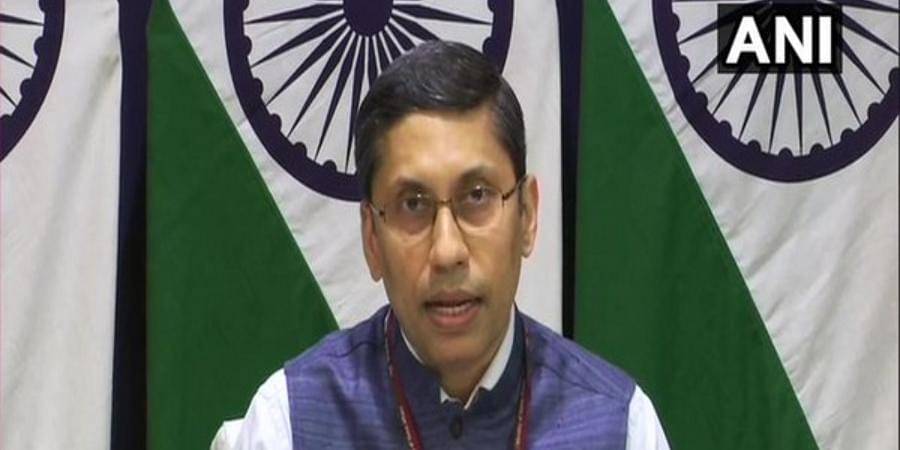
New Delhi, Dec 7: The Indian ambassador to Qatar met eight former Indian Navy personnel on death row four days back and two hearings took place on an appeal filed against the capital punishment handed down to them by a Qatari court.
Spokesperson in the Ministry of External Affairs (MEA) Arindam Bagchi said this at a media briefing on Thursday.
The Navy veterans were on October 26 given death sentence by Qatar's Court of First Instance. India described the ruling as "deeply" shocking and vowed to explore all legal options in the case.
An appeal was filed against the death sentence by the family members of the Indians.
"As you know, we filed an appeal that is from the families and the detainees. Two hearings have since been held. One, I think on November 30 and the other on November 23," Bagchi said when asked about the case.
"I think the next hearing is coming up soon. We are closely following the matter and extending all legal and consular assistance. Meanwhile, our ambassador got consular access to meet all eight of the men in prison on December 3. We will continue to follow (the matter)," he added.
Asked whether Prime Minister Narendra Modi took up the matter with Qatar's Amir Sheikh Tamim bin Hamad Al-Thani when they met on the sidelines of the COP28 summit in Dubai last week, Bagchi did not give a direct reply and referred to Modi's post on 'X'.
"We had a good conversation on the potential of bilateral partnership and the well-being of the Indian community in Qatar," the prime minister had said.
The Indian envoy was given consular access earlier as well.
The Indian nationals, who worked with private company Al Dahra, were arrested in August last year reportedly in an alleged case of espionage.
Neither the Qatari authorities nor New Delhi made the charges against the Indian nationals public.
In its reaction to the ruling by the Qatari court, the MEA last month said that it is attaching "high importance" to this case and is exploring all legal options.
The charges were filed against the eight Indian Navy veterans on March 25 and they were tried under Qatari law.
All of the former Navy officers had "unblemished stints" of up to 20 years in the Indian Navy and had held important positions including that of instructors in the force, former military officials had said.
In May, Al Dahra Global closed its operations in Doha and all those working there (primarily Indians) have since returned home.
On December 1, Navy Chief Admiral R Hari Kumar said the government is putting all-out efforts to bring back the former naval personnel from Qatar.
"There is total support and effort being put in by the government," he said.
In the past, the Navy had taken up the case of the former naval personnel with top brass of the government for securing their release.
Let the Truth be known. If you read VB and like VB, please be a VB Supporter and Help us deliver the Truth to one and all.
TMC will be voted back to power in Bengal: Tejashwi Yadav
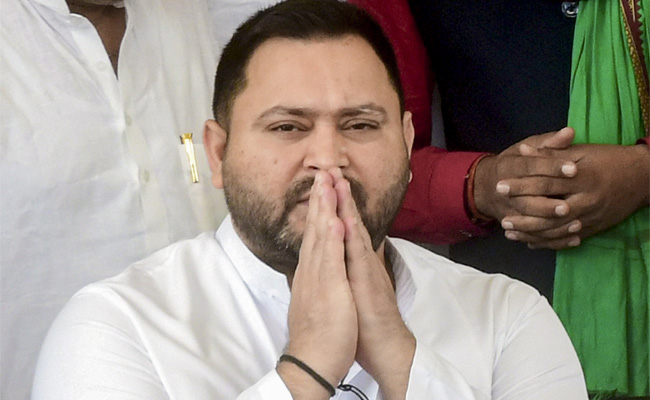
Patna (PTI): Leader of Opposition in Bihar assembly, Tejashwi Yadav, on Tuesday exuded confidence that the Mamata Banerjee-led TMC will again be voted to power in West Bengal.
Yadav returned to Patna after a four-day poll campaign in West Bengal.
“The atmosphere there is euphoric and people want to bring Didi (Mamata Banerjee) back to power. I am fully confident that the TMC will win the election,” he told reporters here.
He said that a large number of people from Bihar living in West Bengal share a lot of love and respect for Mamata Banerjee.
Responding to BJP’s allegations that the TMC had “ruined” West Bengal during its tenure, the RJD leader said the “entire country has been ruined under the Narendra Modi-led government”.
“I want to ask one question to Modi ji – you have been prime minister for more than 11 years, tell me one thing you have done for Bengal,” Yadav said.
The first phase of elections to the 294-member West Bengal assembly was held on April 23, while the second phase will take place on April 29. Votes will be counted on May 4.