Indian boxing's first Dronacharya awardee coach O P Bhardwaj dies
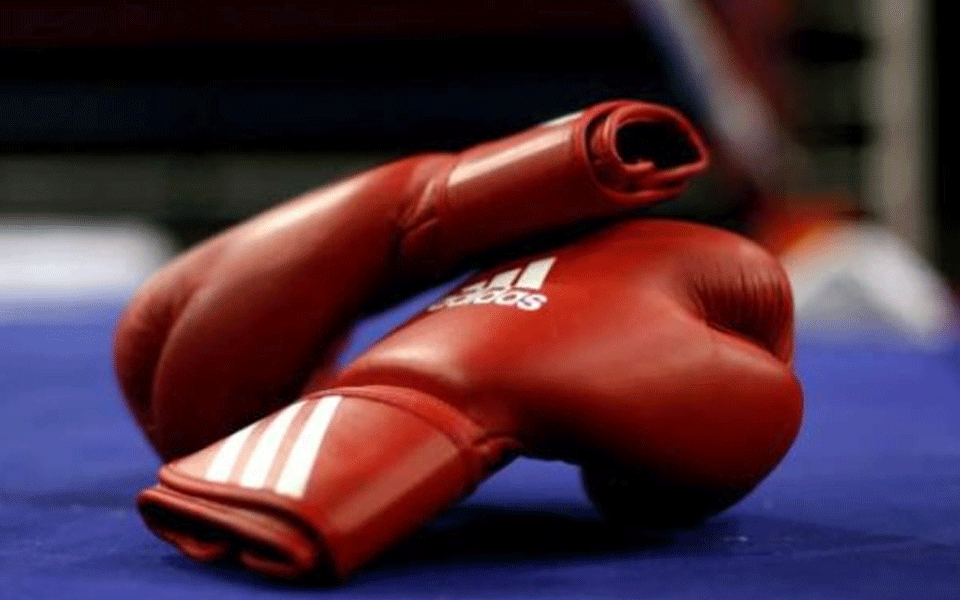
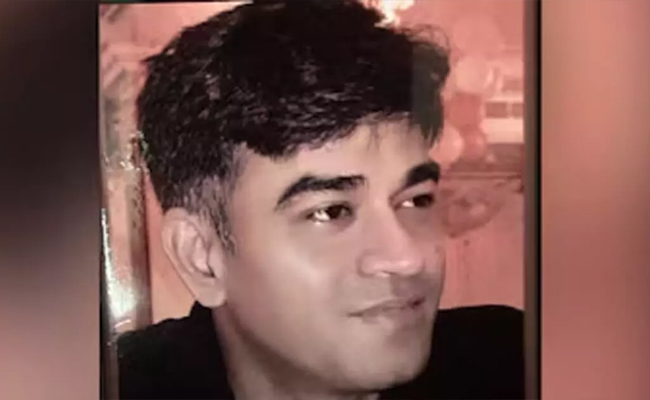
New Delhi: India's first Dronacharya awardee coach in boxing, O P Bhardwaj, died on Friday after battling prolonged illness and age-related issues here.
He was 82 and had tragically lost his wife Santosh to ill-health about 10 days ago.
Bhardwaj was bestowed the highest national honour in coaching jointly with Bhalchandra Bhaskar Bhagwat (wrestling) and O M Nambiar (athletics), when it was introduced in 1985.
"He had been unwell for many days with a lot of health issues and was hospitalised. Age was a factor and there was also the shock of losing his wife about 10 days back," T L Gupta, a close family friend and a former boxing coach, told PTI.
Bhardwaj was India's national boxing coach from 1968 to 1989 and also served as a national selector. Under his tutelage, Indian pugilists won medals at the Asian Games, the Commonwealth Games and the South Asian Games.
Boxing Federation of India President Ajay Singh condoled his demise.
"O P Bharadwaj ji has been a flag-bearer for the sport of boxing. As a Coach, he inspired a generation of boxers, and coaches while as a selector, his work has been visionary and unparalleled," Singh said.
"I join my colleagues in the Boxing Federation of India to mourn this irreplaceable loss and pray for his eternal peace."
A pioneer in Indian boxing, Bhardwaj was the first chief instructor for the sport at the National Institute of Sports in Patiala.
"He started his career in the Army School of Physical Training in Pune and became an accomplished coach for Services. In 1975, when NIS came up with the proposal for coaching diplomas, in boxing, Mr Bhardwaj was picked to start the course," Gupta said.
"I am proud to say I was among his first students. He was an inspiration," he added.
In 2008, Bhardwaj had even taught some boxing techniques to Congress MP Rahul Gandhi for a couple of months.
Former national coach Gurbax Singh Sandhu, who was among his first set of students at NIS, said the man from Chennai was a hands-on instructor.
"I shared a magnificent friendship with Bhardwaj ji. I was his student as well as co-worker after being inducted in the NIS. I saw him lay the foundation for Indian boxing to flourish," Sandhu, under whose guidance India won its maiden Olympic medal in boxing, said.
"He was always, always there with the boys. He would never stand and instruct. He would run with the boys during training, even long distance runs. It is something I learnt from him, to be completely involved. A vary sad day," he added.
Gulati said Bhardwaj was driven by a desire to make things better for the sport.
"He was a dynamic man. I remember, in those days, when there were no computers and hardly anyone knew how to type, he bought a typewriter from a trip to Russia," Gupta said.
"He would write letter after letter to authorities demanding better amenities for boxers at NIS using that typewriter. He typed with just one finger because he had no formal training in typing," remembered Gupta, who retired as chief instructor from the NIS a few years ago.
Former national federation secretary general Brigadier (Retd) PKM Raja, during whose tenure he was a national selector, said Bhardwaj was highly respected for his contribution to the sport.
"He was a Services Sports Control Board legend. A truly remarkable coach and also a very impressive personality. It is unfortunate that in the last couple of years his multiple health issues restricted him greatly," he said.
Gupta said that Bhardwaj had a fierce personality which often came to fore at any perceived ill-treatment of boxers.
"I remember, after the 1980 Asian boxing championship in the then Bombay, the team was coming back with two gold, five silver, and three bronze medals. Their accommodation on return to Patiala was not up to it," he said.
"Mr Bhardwaj took it upon himself to fight for it with the authorities and ensured that boxers got better accommodation. He gave direction to the sport at that time," he added.
Let the Truth be known. If you read VB and like VB, please be a VB Supporter and Help us deliver the Truth to one and all.
Sujit Nair raises concerns over speculation of DMK-AIADMK understanding to block TVK
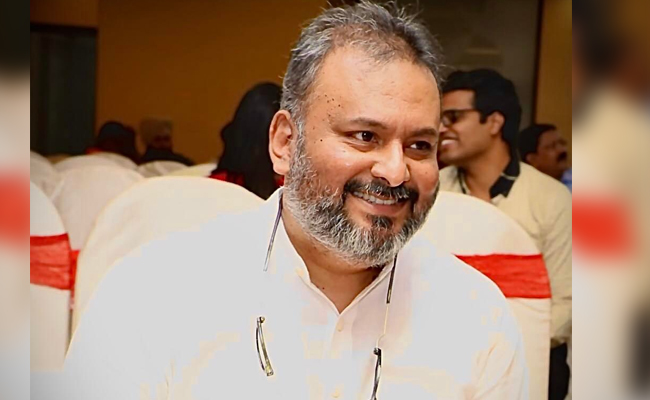
Chennai: Journalist and political commentator Sujit Nair has expressed concern over speculation that the Dravida Munnetra Kazhagam and the All India Anna Dravida Munnetra Kazhagam could explore a post-poll understanding to prevent Vijay-led Tamilaga Vettri Kazhagam from forming the government in Tamil Nadu.
In a social media post, Sujit Nair said the election verdict in Tamil Nadu reflected a clear public demand for political change and argued that the mandate should be respected irrespective of political preferences.
Referring to reports and political discussions surrounding a possible understanding between the DMK and AIADMK, he said he hoped such developments remained only speculative conversations and did not turn into reality.
Nair stated that if such an alliance were to take shape, it would raise serious questions about ideological politics in the country. He said TVK had emerged through a democratic electoral process and that the legitimacy to govern in a parliamentary democracy comes from the people’s verdict.
According to him, attempts to prevent an electoral winner from forming the government through unexpected political arrangements may be constitutionally valid, but many people could view them as politically opportunistic.
He further said that such a move could particularly affect the political image of the DMK, which has historically projected itself around ideology, social justice and opposition politics. Nair said that in ideological terms, the DMK appeared closer to TVK than to the AIADMK, and joining hands with its long-time political rival only to remain in power could weaken its broader political narrative.
He added that the same questions would apply to the AIADMK as well, as the party had spent decades positioning itself against the DMK and such an arrangement could create discomfort among its cadre and supporters.
Drawing a comparison with Maharashtra politics in 2019, Nair said he had expressed similar views when the Shiv Sena formed an alliance with the Indian National Congress and the Nationalist Congress Party after the Assembly elections.
He said post-poll alliances between long-standing political rivals often create a public perception that ideology and electoral mandates become secondary when political power equations come into play.
Nair also said such developments increase public cynicism towards politics and reinforce the belief among voters that ideology is often sidelined after elections.
He maintained that the Tamil Nadu verdict was emphatic and said respecting both the spirit and substance of the mandate was important for the credibility of democratic politics.