Indian cities most vulnerable to heat waves focus on short-term fixes: Report

New Delhi (PTI): Some of India's cities most vulnerable to future heat waves focus mainly on immediate responses while long-term measures remain rare, according to a study published on Wednesday.
The analysis by the Sustainable Futures Collaborative, a New Delhi-based research organisation, examines how nine major Indian cities -- Bengaluru, Delhi, Faridabad, Gwalior, Kota, Ludhiana, Meerut, Mumbai and Surat -- are preparing for the increasing threat of extreme heat.
These cities together account for over 11 per cent of India's urban population.
The report said that while all nine cities focus on short-term responses to heat waves, "long-term actions remain rare and where they do exist, they are poorly targeted".
Without effective long-term strategies, India is likely to witness more heat-related deaths due to more frequent, intense and prolonged heat waves in the coming years, the authors said.
"Many of the long-term risk reduction measures we focus on will take several years to mature. They must be implemented now, with urgency, to have a chance of preventing significant increases in mortality and economic damage in the coming decades," said Aditya Valiathan Pillai, Visiting Fellow at Sustainable Futures Collaborative and Doctoral Researcher at King's College London.
Most cities studied have adopted short-term measures such as ensuring drinking water access, adjusting work schedules and increasing hospital capacity before or during heat waves, according to the report which is based on interviews with city, district and state government officials responsible for implementing heat-related actions.
Key emergency responses are mainly driven by national and state disaster management and health authorities rather than heat action plans (HAPs). Since HAPs focus largely on long-term strategies, their weak implementation limits their effectiveness, the report said.
The authors said that these cities lack measures such as occupational cooling for workers exposed to extreme heat, insurance for lost wages, better fire management and power grid upgrades. Some initiatives, like tree planting and rooftop solar, do not target the people who need them the most.
While the health sector has taken steps such as training healthcare workers and monitoring heat-related deaths, other critical sectors, including urban planning, have not integrated heat concerns into their policies. The focus remains on treating heat impacts rather than preventing them, the report said.
It pointed out that cities manage short-term measures using existing budgets, but structural changes, such as urban cooling and infrastructure upgrades, require dedicated financial support.
The authors identified poor coordination among government departments, staff shortages, technical gaps and a lack of urgency about heat risks as major obstacles to sustained heat adaptation efforts.
They recommended that local governments use heat action plans to focus on long-term solutions, track their success and ensure they protect the most vulnerable areas.
States can use national and state disaster funds to reduce heat risks and invest in long-term solutions, they said.
The authors also suggested that if cities appoint Chief Heat Officers (CHOs), they must have enough authority and resources to address heat-related challenges. Otherwise, they will struggle like current heat officers.
They also recommended that India's 10 most heat-affected cities train officials responsible for implementing heat-related policies.
Every district facing serious climate risks should have permanent, well-trained disaster management staff to prepare for future heat waves, they added.
Let the Truth be known. If you read VB and like VB, please be a VB Supporter and Help us deliver the Truth to one and all.
IPL final shifted for bigger stadium, not ticket issue: Shivakumar
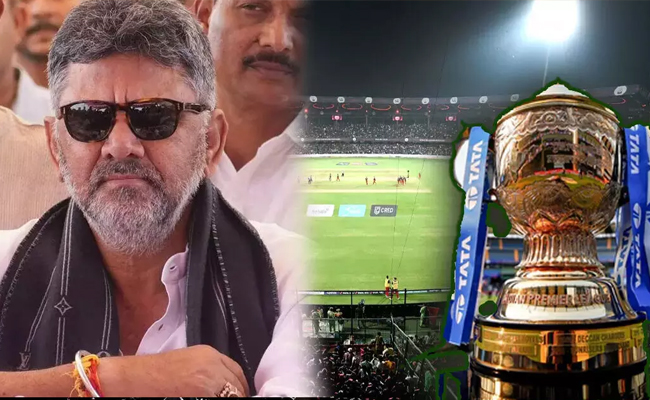
Bengaluru (PTI): Karnataka Deputy Chief Minister D K Shivakumar on Wednesday rubbished allegations that the IPL final venue was shifted from Bengaluru to Ahmedabad due to the distribution of tickets to MLAs.
Speaking to reporters, Shivakumar said the reason for the shift could be the availability of a larger stadium in Ahmedabad.
“Ahmedabad has a large stadium and can accommodate more spectators. That must be the reason the IPL final was shifted there. There is no connection between ticket distribution to MLAs and the venue change,” he said.
When asked about reports linking the venue shift to MLAs demanding tickets, he quipped, “In some places, 50 per cent of tickets are reserved.”
When reporters said the BCCI had indicated that the decision was linked to ticket issues, he responded, “Let them make such statements. I will respond appropriately.”
Bengaluru was originally expected to host the final as the Royal Challengers Bengaluru were the defending champions.
Ahmedabad will host the IPL final for a second successive season on May 31, the BCCI announced earlier in the day, while allotting Qualifier 1 to Dharamsala and two other playoff games to New Chandigarh.
The board, however, said the final venue was shifted “owing to certain requirements from the local association and authorities that were beyond the scope of BCCI’s established guidelines and protocols.”
Shivakumar declined to comment on the revocation of the suspension of Muslim leaders in Davanagere, saying it was a party decision.
Regarding the removal of MLC Naseer Ahmed as CM Siddaramaiah’s political secretary, he said the chief minister had already spoken on the matter.
“The CM has his own information. Party office-bearers have provided guidance. He was given certain responsibilities, which he did not handle properly, which is why he was removed,” Shivakumar said.
On MLC Abdul Jabbar, who resigned as the state Congress minority cell chief and was later expelled from the party, he said Jabbar had submitted his resignation, which the party accepted.
The Congress in Karnataka faced internal dissent in April when several Muslim leaders objected to the party fielding Samarth Shamanur as its candidate for the recently held Davanagere South Assembly bypoll.
They demanded that a Muslim candidate be fielded, citing the constituency’s substantial Muslim population. The party subsequently took disciplinary action against three leaders, including Jabbar and MLC Ahmed.
When asked about his and the CM’s visit to Delhi, he said, “We will go when the high command calls us. It is not appropriate to go without being called.”
On Congress supporting TVK in Tamil Nadu, Shivakumar said the decision was taken to keep the "BJP out of power and strengthen secular forces." Elections to the 234 Assembly constituencies were held on April 23, and the results were announced on May 4.
The Congress party, a long-time ally of the DMK, announced its support for TVK to form a government in Tamil Nadu and severed ties with the Dravidian major.
The incumbent DMK was trounced by the fledgling Tamilaga Vettri Kazhagam, led by Vijay, who secured 108 seats. “Despite pressure from the AIADMK and BJP, TVK did not align with them. Our party has taken this decision in the interest of secular forces and the welfare of Tamil Nadu,” Shivakumar said.