Indian doctors face challenges in diagnosing long covid
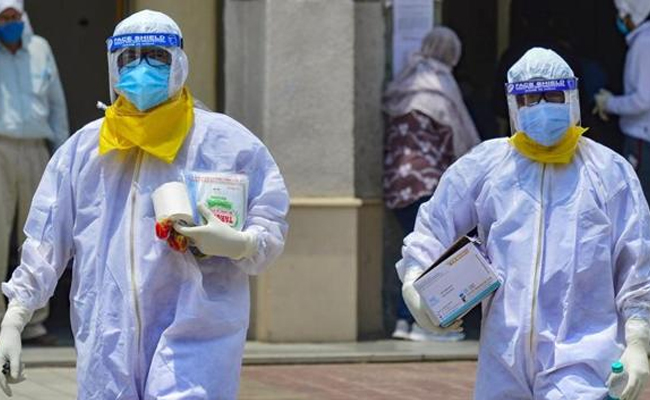
New Delhi: Doctors in India are grappling with the complexities of diagnosing and treating long Covid due to a lack of comprehensive guidelines and limited research on the condition. Although the World Health Organization has declared the end of Covid-19 as a global health emergency, there remains a crucial need to assess the long-term impact of the virus.
Long Covid encompasses a range of persistent symptoms that can affect various parts of the body, lingering well beyond the initial infection. Common manifestations include cough, muscle and joint pain, fatigue, brain fog, and difficulties in concentration.
Recent studies shed light on the prevalence of long Covid globally. A Harvard Medical School study published in the International Journal of Infectious Diseases found that:
- 31% of moderately to severely infected individuals in North America
- 44% in Europe
- 51% in Asia
experience long Covid. In India, a study from Maulana Azad Medical College revealed that 45% of recovered Covid patients reported ongoing symptoms, with persistent fatigue and dry cough being the most frequently noted issues.
Doctors are increasingly seeing patients presenting symptoms that were absent before their Covid infections, such as asthma-like conditions and neurological complications. However, there is currently no specific test or standardised guidelines for diagnosing long Covid. Dr. Neetu Jain, a senior consultant at Pushpawati Singhania Hospital, stated, "We really do not have any test to diagnose long Covid... We diagnose based on clinical symptoms and quality of life."
In response to the urgent need for better understanding and management of long Covid, a research team from Shiv Nadar University has developed a fluorescent probe designed to detect inflammation in brain cells related to Covid infection. This innovative tool measures nitric oxide levels in microglia cells.
Experts call for increased research efforts focused on sleep disorders, the biological mechanisms behind long Covid, and the development of targeted interventions. Dr. Rajesh Sagar, a Professor of Psychiatry at AIIMS, noted, "Looking at the current state of long Covid studies in India, it is too premature to say that we understand the condition well enough." The Indian medical community is eager for more dedicated research to tackle the growing awareness of neurological complications associated with long Covid.
Let the Truth be known. If you read VB and like VB, please be a VB Supporter and Help us deliver the Truth to one and all.
Sujit Nair raises concerns over speculation of DMK-AIADMK understanding to block TVK
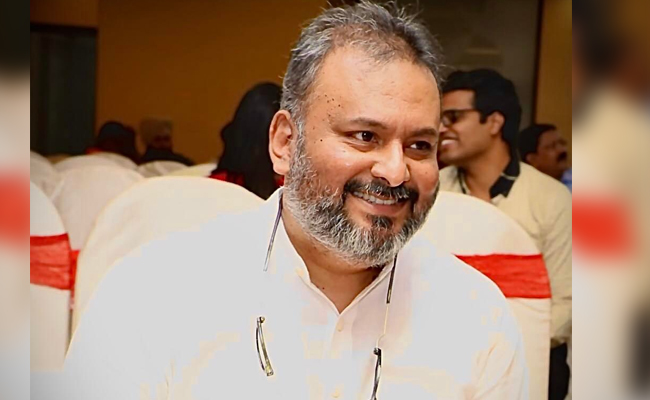
Chennai: Journalist and political commentator Sujit Nair has expressed concern over speculation that the Dravida Munnetra Kazhagam and the All India Anna Dravida Munnetra Kazhagam could explore a post-poll understanding to prevent Vijay-led Tamilaga Vettri Kazhagam from forming the government in Tamil Nadu.
In a social media post, Sujit Nair said the election verdict in Tamil Nadu reflected a clear public demand for political change and argued that the mandate should be respected irrespective of political preferences.
Referring to reports and political discussions surrounding a possible understanding between the DMK and AIADMK, he said he hoped such developments remained only speculative conversations and did not turn into reality.
Nair stated that if such an alliance were to take shape, it would raise serious questions about ideological politics in the country. He said TVK had emerged through a democratic electoral process and that the legitimacy to govern in a parliamentary democracy comes from the people’s verdict.
According to him, attempts to prevent an electoral winner from forming the government through unexpected political arrangements may be constitutionally valid, but many people could view them as politically opportunistic.
He further said that such a move could particularly affect the political image of the DMK, which has historically projected itself around ideology, social justice and opposition politics. Nair said that in ideological terms, the DMK appeared closer to TVK than to the AIADMK, and joining hands with its long-time political rival only to remain in power could weaken its broader political narrative.
He added that the same questions would apply to the AIADMK as well, as the party had spent decades positioning itself against the DMK and such an arrangement could create discomfort among its cadre and supporters.
Drawing a comparison with Maharashtra politics in 2019, Nair said he had expressed similar views when the Shiv Sena formed an alliance with the Indian National Congress and the Nationalist Congress Party after the Assembly elections.
He said post-poll alliances between long-standing political rivals often create a public perception that ideology and electoral mandates become secondary when political power equations come into play.
Nair also said such developments increase public cynicism towards politics and reinforce the belief among voters that ideology is often sidelined after elections.
He maintained that the Tamil Nadu verdict was emphatic and said respecting both the spirit and substance of the mandate was important for the credibility of democratic politics.