Indian government had no say in choice of private partner in Rafale deal: Defence Ministry
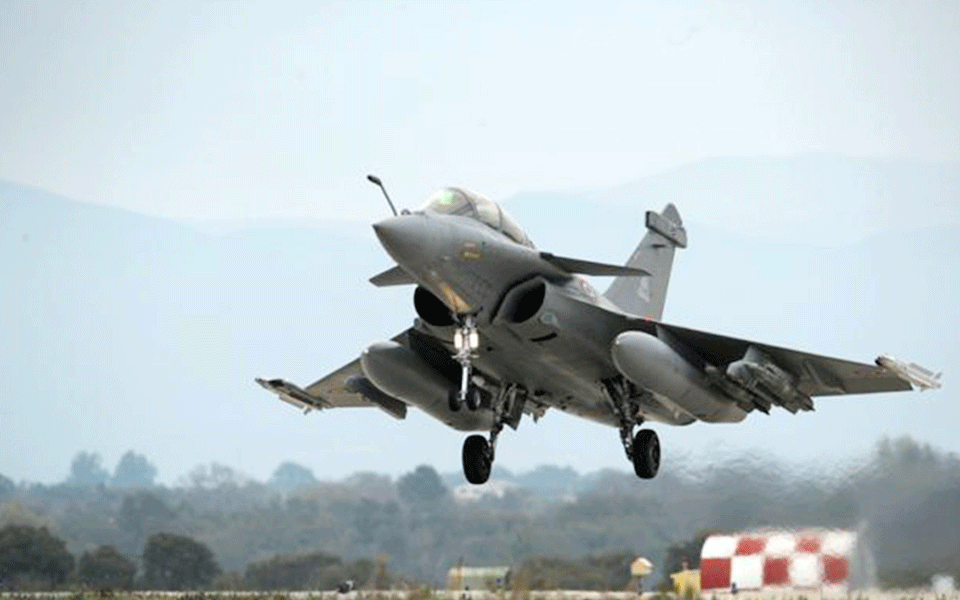
New Delhi, Sep 22: The Defence Ministry on Saturday said the Indian government had no role in the selection of an Indian private firm as the offset partner of the French firm Dassault Aviation as it was a commercial decision of the Original Equipment Manufacturer (OEM) which was taken as early as 2012 when the UPA was in power.
Reacting to the raging controversy over the deal, a Defence Ministry spokesperson said that unnecessary controversies were being sought to be created following media reports on a statement purportedly made by the former French President Francois Hollande, concerning the selection of Reliance Defence as the offset partner by Dassault.
The statement by the Ministry of Defence comes amid media reports of the former French President claiming that the Indian government suggested the private firm for the Rafale offset contract.
Hollande was quoted in an article by a French website as claiming that the Indian government had asked the French government to nominate Reliance Defence as its India partner in the deal. "We did not have a say in this. The Indian government proposed this service group and Dassault negotiated with Ambani."
The Defence Ministry said that the reported statement by the former President perhaps needs to be seen in its "full context" - where the French media has raised "issues of conflict of interest involving persons close to the former President". "His subsequent statements are also relevant in this regard," it said.
The defence ministry statement said "The government has stated earlier and again reiterates that it had no role in the selection of Reliance Defence as the Offset partner."
It also said that it has been reported that a joint venture between Reliance Defence and Dassault Aviation came into being in February, 2017.
"This is a purely commercial arrangement between two private companies. Incidentally, media reports of February, 2012 suggest that Dassault Aviation, within two weeks of being declared the lowest bidder for procurement of 126 aircraft by the previous government, had entered into a pact for partnership with Reliance Industries in Defence sector," it said.
The ministry said that Dassault Aviation has also issued a release stating that it has signed partnership agreements with several companies and is negotiating with a hundred odd other companies.
"As per the guidelines, the vendor is to provide the details of the offset partners either at the time of seeking offset credit or one year prior to discharge of offset obligation, which in this case will be due from 2020," the ministry said.
The deal to purchase 36 Rafale fighter jets from France was announced by Prime Minister Narendra Modi in 2015 and signed in 2016.
The UPA government was earlier negotiating a deal to procure 126 Rafale jets, with 18 to come in flyaway condition and 108 to be manufactured by HAL under licence.
The Modi government has repeatedly said it was Dassault that chose its India partner for offsets and that the government had no say in the deal.
Explaining how the Offset Policy came into play, the ministry said "The Offset Policy was formally announced for the first time in 2005 and has been revised several times. To leverage its huge arm-imports in order to develop a strong indigenous industry, a flow-back arrangement is made in the defence contracts, which is widely known as offsets, and constitutes a certain percentage of the contract value.
"The key objectives of the Defence Offset Policy is to leverage the capital acquisitions to develop Indian defence industry by fostering development of internationally competitive enterprises; augmenting capacity for research and development in defence sector and to encourage development of synergistic sector like civil aerospace and internal security."
The offset can be discharged by many means such as direct purchase of eligible products/services, FDI in joint ventures and investment towards equipment and transfer of technology.
As per Defence Offset Guidelines, the foreign OEM is free to select any Indian company as its offset partner.
Let the Truth be known. If you read VB and like VB, please be a VB Supporter and Help us deliver the Truth to one and all.
CEC orders immediate arrest of those involved in post-poll violence in Bengal: Official
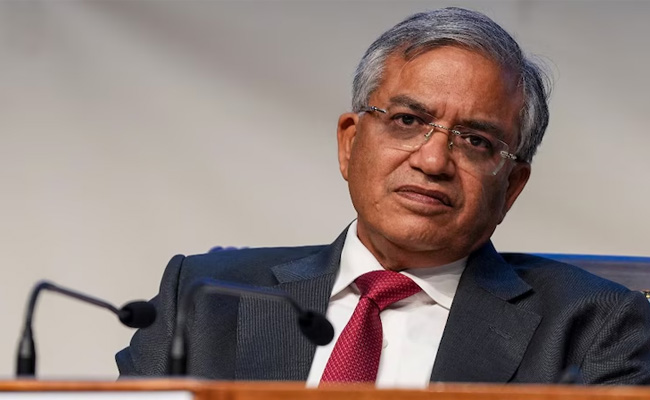
Kolkata (PTI): Chief Election Commissioner Gyanesh Kumar directed the authorities concerned to immediately arrest those involved in post-poll violence and vandalism in West Bengal, an official said on Wednesday.
The Election Commission's directive came after two persons were killed in alleged incidents of post-poll violence in the state on Tuesday, besides scores of party offices being ransacked.
The CEC issued instructions to the West Bengal chief secretary, director general of police, Kolkata police commissioner and directors general of central armed police forces, along with all district magistrates, superintendents of police and other officials, to maintain continuous patrolling in sensitive areas, he said.
"Those responsible for inciting violence and carrying out acts of vandalism must be arrested immediately," the official said, quoting the CEC's instruction.
The chief election commissioner also stressed the need for swift and firm enforcement of the law, he added.
This directive came amid concerns over law and order in parts of the state, with the Election Commission closely monitoring the situation, he added.
"We have been asked to remain on high alert and ensure that any attempt to disturb peace is dealt with firmly," a senior police officer said.
The state authorities have intensified vigil across districts, with coordinated efforts between the police and central forces to prevent any untoward incident, he added.
The assembly elections were held in West Bengal in two phases - April 23 and 29. The counting of votes took place on May 4.
The BJP sealed a landslide victory with 207 seats in the 294-member assembly, ending the TMC's uninterrupted 15-year rule in the state.