Indian human space mission to create 15,000 jobs: ISRO chief
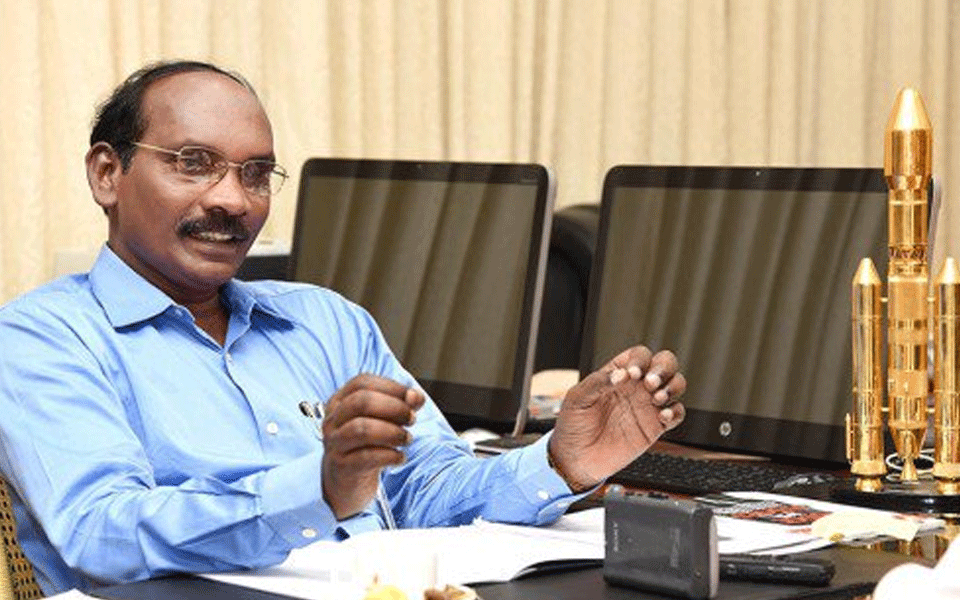
Bengaluru, Aug 15 : The plan to put an Indian into space, on its own, for the first time by 2022 will create as many as 15,000 jobs, Indian Space Research Organisation (ISRO) Chairman K. Sivan said on Wednesday.
"We estimate that the human space mission will generate about 15,000 jobs over the next few years," Sivan told IANS here.
The ISRO wants to take up the manned spaceflight in collaboration with multiple state-run scientific institutions, academia, industry and start-ups.
The space agency aims to take Indian astronauts into space to a height of 350-400 km above the earth and orbit around the planet for at least a week by 2022. The astronauts will also be conducting experiments in space, details of which are yet to be decided by ISRO.
"The human spaceflight will be a national project and not just ISRO's, as we will be collaborating with several institutions, academia and the industry," Sivan told reporters here.
Rakesh Sharma, a former Indian Air Force pilot, is the only Indian citizen to travel into space so far. He was part of the crew on Soyuz T-11 launched on April 2, 1984 from the Baikonur Cosmodrome in Kazakh Soviet Socialist Republic, a part of the then Soviet Union.
The ISRO will be working with the Institute of Aerospace Medicine in Bengaluru for training the crew and the Indian Air Force, which will select the crew, as well as with the private sector, which will be involved in research and development, Sivan said.
The ISRO Chairman addressed the press conference in this tech hub hours after Prime Minister Narendra Modi announced in his Independence Day address in New Delhi the country's plan to put an Indian into space by 2022 on its own.
Admitting that the space agency was "surprised" by the Prime Minister's human space mission announcement, Sivan said the technological preparations for the project were on track since 2004.
"The announcement came to us as a surprise. We were not expecting it," Sivan said, adding that ISRO, however, has been developing several critical technologies required for the mission like the crew module and the crew escape system.
"It is not an unrealistic schedule. We are confident of achieving it even before 2022," Sivan said.
The opportunity of exploring space will enhance the country's science and technological capabilities, while inspiring the youth, he added.
India's attempt to reach space by 2022 is about six decades after a Russian cosmonaut Yuri Gagarin became the first human to journey into outer space and orbit the earth in 1961.
The US, Russia and China are the only three nations to have launched manned space flights.
The ISRO is yet to finalise the exact timeline of tests before a manned mission can take off, as it plans to have two unmanned test flights onboard a Geosynchronous Satellite Launch Vehicle (GSLV) Mk 3.
In the run-up to the first manned mission, said to be the largest project undertaken by the Indian space agency, the ISRO will conduct the next unmanned test flight by 2020.
"There will be two unmanned flights before the manned mission, for which the astronaut suit is also being developed," said Sivan.
The ambitious human space mission is expected to cost about Rs 10,000 crore, in addition to the already spent Rs 300-crore in developing the technologies for the mission, like the crew module.
Let the Truth be known. If you read VB and like VB, please be a VB Supporter and Help us deliver the Truth to one and all.
TN polls: TVK pushes DMK behind with leads in 83 seats, AIADMK ahead in 54
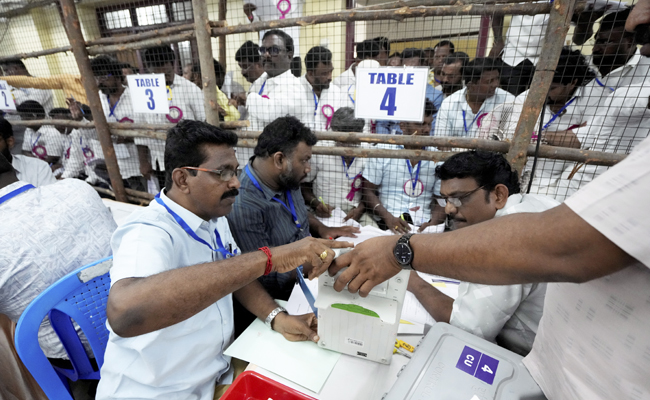
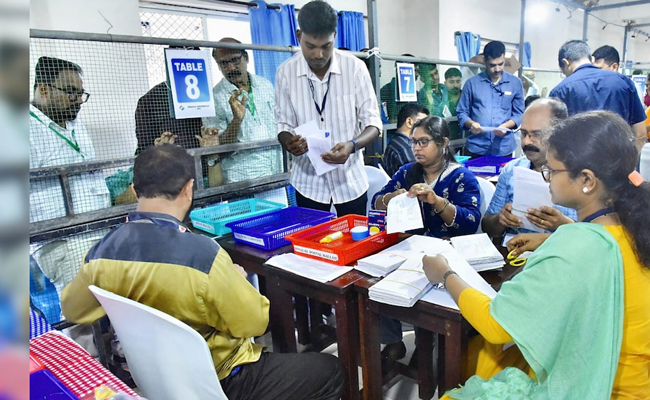
Chennai (PTI): New entrant TVK, led by actor-politician Vijay, was leading in as many as 83 constituencies on Monday when counting of votes polled in the April 23 Assembly polls was on across Tamil Nadu. The AIADMK was leading in 58 seats while the ruling DMK was ahead in 34, EC data showed.
About two hours after the postal ballots were counted and EVMs opened for multi-round counting, Vijay's Tamilaga Vettri Kazhagam surged ahead of its Dravidian rivals-- the DMK and the AIADMK, with the ruling party struggling to catch up.
If the trends maintain, Vijay could as well ensure the biggest electoral upset, something in lines with the "1967,1977" wins he had referred to in his campaign speeches.
While the Dravidian stalwart CN Annadurai brought the first non-Congress government in Tamil Nadu post-independence in 1967, the charismatic MG Ramachandran (MGR) installed the maiden AIADMK government 10 years later, unseating then DMK government under M Karunanidhi. TVK was leading in most Chennai segments, all considered DMK strongholds and currently represented by the party in the 234-member House.
A poor show by DMK could belie most exit polls giving an edge to it, riding on the number of populist measures Chief Minister M K Stalin had implemented in his five year "Dravidian model," inclusive governance.
According to EC and TV reports, 15 cabinet ministers, including Stalin were trailing. His son and deputy CM Udhayanidhi was also behind in his incumbent Chepauk-Tirvuvallikeni seat, according to a number of reports.
Stalin was trailing behind TVK's VS Babu by 1234 votes in Kolathur segment. Vijay was ahead in Tiruchirappalli East by over 3,000 votes at the end of two rounds of counting, according to EC data.
BJP is trailing in 26 constituencies and it is ahead in Thali segment alone. TVK is ahead in constituencies including Ponneri, Tiruvallur, Poonamalle, and Avadi.
AIADMK is leading in segments including Katpadi, and Guidyattam and party chief Edappadi K Palaniswami is ahead in Edappadi segment by 7003 votes.
DMK was leading in segments including Vellore, Anaikattu and Rishivandiyam.