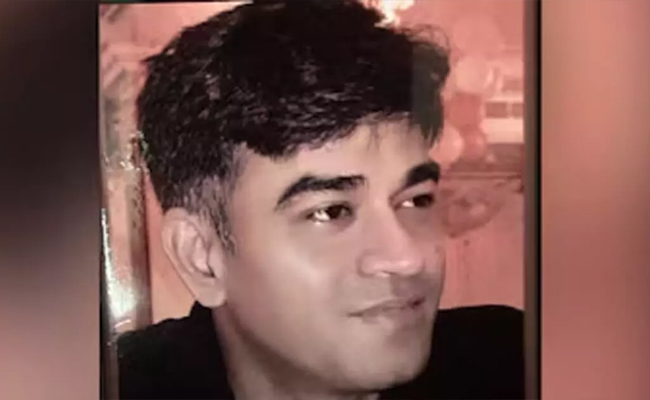
Indian-origin student goes missing during vacation in Dominican Republic

New York (PTI): A 20-year old Indian student has gone missing while on vacation in the Dominican Republic and US federal law enforcement agencies are working with authorities in the Caribbean country on the investigation in her disappearance.
Sudiksha Konanki is a citizen of India and a permanent resident of the United States. A student at the University of Pittsburgh, Konanki, was reported to be vacationing with five female college friends at a resort in Punta Cana, Dominican Republic, the Loudoun County Sheriff's Office said in a statement Monday.
Konanki was reported missing on March 6. The Loudoun County Sheriff's Office (LCSO) said it continues to assist and support the US federal law enforcement agencies working with the Dominican National Police and others to determine Konanki's whereabouts and what may have happened to her.
Konanki, a resident of Loudoun County, Virginia, was reported missing while vacationing on a spring break trip in Punta Cana and was last seen in the early morning of March 6. The ongoing investigation includes wide-ranging search efforts, along with a review of surveillance video and telephone records.
Interviews are also continuing with anyone who may have seen or been with Konanki before she went missing, the LCSO statement said. It added that the LCSO has filed for a Yellow Notice (worldwide police alert for a missing person) to be issued by INTERPOL.
A report in ABC News said three Dominican officials involved in the investigation told the outlet over the weekend that Konanki is believed to have drowned in the ocean.
The LCSO cautioned against drawing any unsubstantiated conclusions, saying there has been considerable public speculation about what may have happened to Konanki and who may be involved.
We caution anyone from drawing any unsubstantiated conclusions and are committed to ensuring that a thorough investigation is conducted before any conclusions are reached, it said.
The LCSO said it is hopeful for Konanki's safe return and we are committed to supporting this investigation and her family in every way possible.
The LCSO is working closely with federal partners at the US Department of State, FBI, DEA and Homeland Security Investigations (HSI) as well as the University of Pittsburgh Police in support of the ongoing investigation by the Dominican National Police.
The report in ABC News quoted two police sources with knowledge of the investigation as saying that Konanki's clothes were discovered on a portable beach bed close to the beach where she went missing.
The police have found no evidence of violence, according to sources. The ABC News report said that after going to a nightclub on the night of March 5, Konanki and a group of people went to the beach at about 4 am local time on Thursday, March 6.
The report quotes sources as saying that the other women travelling with Konanki went back to their hotel at about 5:55 am, with security cameras capturing their return to their rooms.
A man stayed behind with Konanki on the beach, according to a Dominican Republic investigative police report. The man, whose name was not released, told police that he and Konanki went for a swim and got caught by a big wave, the police report said, according to the ABC News report.
The man is understood to have told the police that when he got back to the beach, he threw up and went to sleep on a beach bed. When he woke up, Konanki was nowhere to be seen, the report said.
Sources have said that the man, who was seen in security video coming back to his hotel room at 9:55 am, is not considered a suspect in Konanki's death.
Officials said Konanki's friends, who were with her around the time of her disappearance, were also questioned by the police and have not been charged with crimes, the ABC News report said.
Let the Truth be known. If you read VB and like VB, please be a VB Supporter and Help us deliver the Truth to one and all.
Sujit Nair raises concerns over speculation of DMK-AIADMK understanding to block TVK
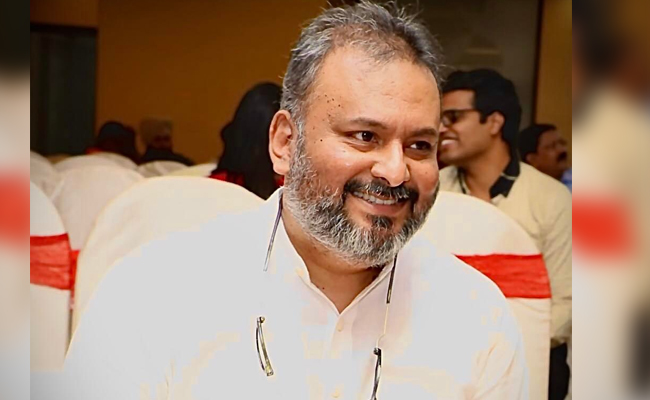
Chennai: Journalist and political commentator Sujit Nair has expressed concern over speculation that the Dravida Munnetra Kazhagam and the All India Anna Dravida Munnetra Kazhagam could explore a post-poll understanding to prevent Vijay-led Tamilaga Vettri Kazhagam from forming the government in Tamil Nadu.
In a social media post, Sujit Nair said the election verdict in Tamil Nadu reflected a clear public demand for political change and argued that the mandate should be respected irrespective of political preferences.
Referring to reports and political discussions surrounding a possible understanding between the DMK and AIADMK, he said he hoped such developments remained only speculative conversations and did not turn into reality.
Nair stated that if such an alliance were to take shape, it would raise serious questions about ideological politics in the country. He said TVK had emerged through a democratic electoral process and that the legitimacy to govern in a parliamentary democracy comes from the people’s verdict.
According to him, attempts to prevent an electoral winner from forming the government through unexpected political arrangements may be constitutionally valid, but many people could view them as politically opportunistic.
He further said that such a move could particularly affect the political image of the DMK, which has historically projected itself around ideology, social justice and opposition politics. Nair said that in ideological terms, the DMK appeared closer to TVK than to the AIADMK, and joining hands with its long-time political rival only to remain in power could weaken its broader political narrative.
He added that the same questions would apply to the AIADMK as well, as the party had spent decades positioning itself against the DMK and such an arrangement could create discomfort among its cadre and supporters.
Drawing a comparison with Maharashtra politics in 2019, Nair said he had expressed similar views when the Shiv Sena formed an alliance with the Indian National Congress and the Nationalist Congress Party after the Assembly elections.
He said post-poll alliances between long-standing political rivals often create a public perception that ideology and electoral mandates become secondary when political power equations come into play.
Nair also said such developments increase public cynicism towards politics and reinforce the belief among voters that ideology is often sidelined after elections.
He maintained that the Tamil Nadu verdict was emphatic and said respecting both the spirit and substance of the mandate was important for the credibility of democratic politics.