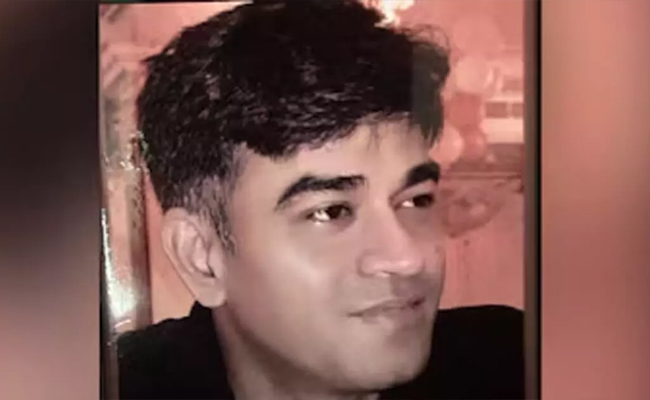
Indian woman on death row executed in Abu Dhabi last month; MEA informs Delhi High Court

New Delhi/Abu Dhabi: Shahzadi Khan, an Indian caregiver who had been sentenced to death in the United Arab Emirates (UAE) for charges related to the death of a four-month-old child, was executed in Abu Dhabi on February 15. The Ministry of External Affairs (MEA) informed the Delhi High Court of her execution on Monday, bringing an end to a prolonged legal battle and appeals for clemency.
The information was conveyed to a bench led by Justice Sachin Datta by Additional Solicitor General (ASG) Chetan Sharma, representing the MEA. The ministry further assured the court that Shahzadi’s last rites would take place on March 5 in Abu Dhabi and that it would extend all necessary assistance to her family to facilitate the process.
The court, while acknowledging the submission, termed the situation "unfortunate" and disposed of the plea filed by Shahzadi’s father, Shabbir Khan. He had approached the Delhi High Court seeking directions for the central government to confirm the legal status of his daughter, fearing the worst after her appeals had been exhausted.
Shahzadi Khan, a 33-year-old caregiver from Banda district in Uttar Pradesh, had been convicted by an Abu Dhabi court in connection with the death of a child under her care. According to court records, she was taken into custody by Abu Dhabi police on February 10, 2023, and was later sentenced to death on July 31, 2023. Her conviction was upheld despite multiple appeals, and her death sentence was reaffirmed by UAE authorities on February 28, 2024.
According to her father's petition before the Delhi High Court, Shahzadi had legally travelled to Abu Dhabi in December 2021 on a work visa. In August 2022, she secured employment as a caregiver for a newborn child in an Emirati household.
However, tragedy struck on December 7, 2022, when the infant received routine vaccinations in the morning but passed away later that evening. While the child’s parents initially refused a postmortem and signed an agreement waiving further investigation, Shahzadi was later accused of wrongdoing and subjected to legal proceedings that resulted in a death sentence.
Shabbir Khan, in his petition, alleged that his daughter was coerced into confessing to a crime she did not commit. He claimed that a video of her purported confession, recorded in February 2023, was obtained through torture by her employer and their family. He further accused the Indian Embassy’s legal counsel of failing to provide adequate legal representation and pressuring Shahzadi into making a confession.
Despite efforts to appeal her conviction, her case was repeatedly rejected by UAE courts. Her final appeal was dismissed in September 2023, and the death sentence was reaffirmed in February 2024.
As a last resort, Shabbir Khan had submitted a mercy petition to the Indian Embassy in Abu Dhabi on July 11, 2024, pleading for diplomatic intervention. However, he never received a response.
On February 14, 2025, just a day before her execution, Shahzadi reportedly made a distressing phone call to her father from prison, informing him that her execution was imminent.
With her last rites scheduled for March 5 in Abu Dhabi, the MEA has assured the family of its full cooperation in facilitating the process.
Let the Truth be known. If you read VB and like VB, please be a VB Supporter and Help us deliver the Truth to one and all.
Sujit Nair raises concerns over speculation of DMK-AIADMK understanding to block TVK
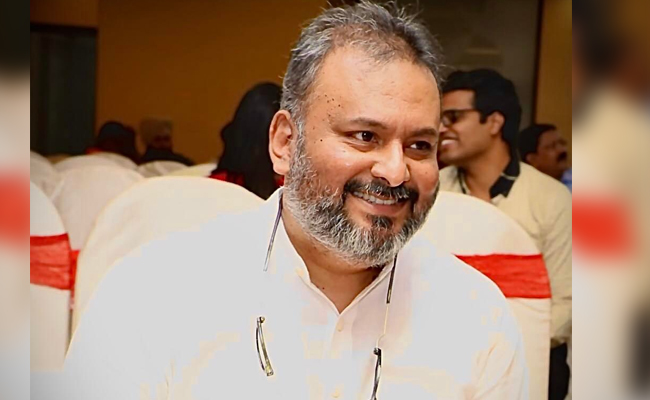
Chennai: Journalist and political commentator Sujit Nair has expressed concern over speculation that the Dravida Munnetra Kazhagam and the All India Anna Dravida Munnetra Kazhagam could explore a post-poll understanding to prevent Vijay-led Tamilaga Vettri Kazhagam from forming the government in Tamil Nadu.
In a social media post, Sujit Nair said the election verdict in Tamil Nadu reflected a clear public demand for political change and argued that the mandate should be respected irrespective of political preferences.
Referring to reports and political discussions surrounding a possible understanding between the DMK and AIADMK, he said he hoped such developments remained only speculative conversations and did not turn into reality.
Nair stated that if such an alliance were to take shape, it would raise serious questions about ideological politics in the country. He said TVK had emerged through a democratic electoral process and that the legitimacy to govern in a parliamentary democracy comes from the people’s verdict.
According to him, attempts to prevent an electoral winner from forming the government through unexpected political arrangements may be constitutionally valid, but many people could view them as politically opportunistic.
He further said that such a move could particularly affect the political image of the DMK, which has historically projected itself around ideology, social justice and opposition politics. Nair said that in ideological terms, the DMK appeared closer to TVK than to the AIADMK, and joining hands with its long-time political rival only to remain in power could weaken its broader political narrative.
He added that the same questions would apply to the AIADMK as well, as the party had spent decades positioning itself against the DMK and such an arrangement could create discomfort among its cadre and supporters.
Drawing a comparison with Maharashtra politics in 2019, Nair said he had expressed similar views when the Shiv Sena formed an alliance with the Indian National Congress and the Nationalist Congress Party after the Assembly elections.
He said post-poll alliances between long-standing political rivals often create a public perception that ideology and electoral mandates become secondary when political power equations come into play.
Nair also said such developments increase public cynicism towards politics and reinforce the belief among voters that ideology is often sidelined after elections.
He maintained that the Tamil Nadu verdict was emphatic and said respecting both the spirit and substance of the mandate was important for the credibility of democratic politics.