Indians can now get multiple entry Schengen visa with longer validity as EU eases norms
New Delhi (PTI): Frequent Indian travellers to Europe will now be able to apply for multiple entry Schengen visa of up to five years, with the European Commission effecting certain changes in existing rules.
European Union's ambassador to India Herve Delphin described the new visa regime as another step towards enhancing people-to-people contact between the two sides.
"On April 18, the European Commission adopted specific rules on the issuing of multiple entry visas to Indian nationals, which are more favourable than the standard rules of the visa code that applied to date," an EU readout said.
It said this new visa 'cascade' regime for Indian nationals residing in India who apply for Schengen (short-stay) visas in India will provide easier access to visas with multi-year validity for travellers with an established travel history.
"According to the newly adopted visa 'cascade' regime for India, Indian nationals can now be issued long-term, multi-entry Schengen visas valid for two years after having obtained and lawfully used two visas within the previous three years," the readout said.
"The two-year visa will normally be followed by a five-year visa, if the passport has sufficient validity remaining. During the validity period of these visas, holders enjoy travel rights equivalent to visa-free nationals," it said.
The changes in the visa norms came in the context of "strengthened" relations under the EU-India common agenda on migration and mobility, which seeks comprehensive cooperation on migration policy between the two sides, it added.
Schengen visas allow the holder to travel freely in the Schengen area for short stays of a maximum of 90 days in any 180-day period. The visas are not purpose-bound, but they do not grant the right to work.
The Schengen area consists of 29 European countries of which 25 are EU states.
The countries are Belgium, Bulgaria, Croatia, Czech Republic, Denmark, Germany, Estonia, Greece, Spain, France, Italy, Latvia, Lithuania, Luxembourg, Hungary, Malta, Netherlands, Austria, Poland, Portugal, Romania, Slovenia, Slovakia, Finland and Sweden, along with Iceland, Liechtenstein, Norway and Switzerland.
Let the Truth be known. If you read VB and like VB, please be a VB Supporter and Help us deliver the Truth to one and all.
Supreme Court declines fresh curbs on hate speech, says existing laws are enough
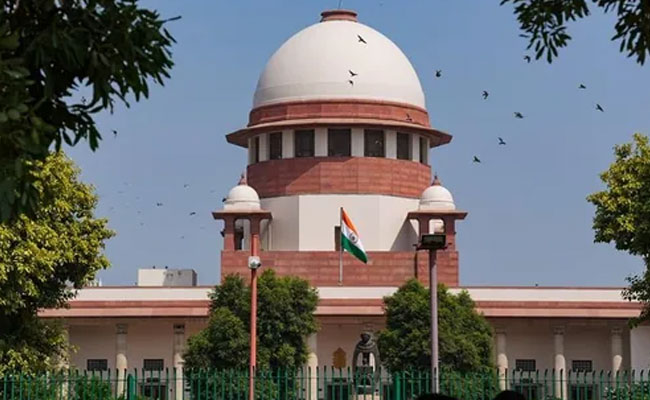
New Delhi: The Supreme Court of India on Wednesday refused to issue additional directions to curb hate speech across the country, holding that the existing legal framework is sufficient and that the real issue lies in implementation rather than absence of law.
A Bench comprising Justice Vikram Nath and Justice Sandeep Mehta said creation of criminal offences falls within the legislative domain and courts cannot legislate or compel Parliament and state legislatures to enact laws.
The Bench observed that constitutional courts can interpret the law and issue directions for enforcement of fundamental rights, but cannot step into the law-making role.
“At the highest, the court may draw attention to the need for reform. The decision whether and in what manner to legislate remains within the exclusive domain of Parliament and the state legislatures,” the court said.
The court held that the field of hate speech is not legally vacant and said concerns arise mainly from poor enforcement of existing provisions.
It also noted that the Bharatiya Nagarik Suraksha Sanhita (BNSS), 2023, provides a comprehensive mechanism to set criminal law in motion, meaning there is no legislative vacuum.
Referring to remedies already available under the earlier Code of Criminal Procedure (CrPC) and the BNSS, the court said police are duty-bound to register an FIR when a cognisable offence is disclosed, as laid down in the Lalita Kumari judgment.
It said if police fail to register an FIR, an aggrieved person can approach the Superintendent of Police under Section 154(3) of CrPC or Section 173(4) of BNSS, and thereafter move the magistrate under Section 156(3) CrPC or Section 175 BNSS, or file a private complaint under Section 200 CrPC or Section 223 BNSS.
The Bench further held that an order directing investigation under Section 156(3) CrPC does not amount to taking cognisance under Section 190 CrPC or the corresponding Section 210 of BNSS.
Even while declining fresh directions, the court acknowledged the seriousness of the issue.
It observed that hate speech and rumour-mongering directly affect fraternity, dignity and constitutional order.
The Bench urged legislative authorities to consider whether further policy or legal measures are needed in view of changing social challenges, including suggestions made in the 267th Report of the Law Commission in 2017.
The judgment came in a batch of petitions arising from events dating back to 2020, when multiple pleas were filed over alleged communal narratives spread through television channels and social media.
Among the earliest cases were challenges relating to content described as the “Corona Jihad” campaign and a programme aired by Sudarshan TV titled “UPSC Jihad”. During those proceedings, the court had restrained further telecast of the programme.
Later, more petitions were filed over speeches made at religious gatherings described as “Dharam Sansad” events.
These included pleas moved by journalist Qurban Ali and Major General S.G. Vombatkere seeking action against alleged hate speeches made at such forums.
During the pendency of the matter, the Supreme Court in 2023 had issued major directions asking all states and Union Territories to act proactively in cases involving communal hate speeches or remarks hurting religious sentiments.
It had directed police to register FIRs suo motu, without waiting for formal complaints.
Later, contempt petitions were also filed alleging poor implementation of those earlier directions.