India's 1st Iranian oil cargo since 2019 headed to Gujarat coast
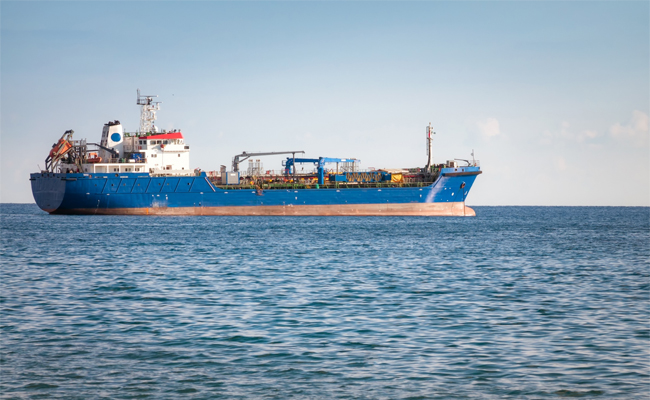
New Delhi (PTI): India's first Iranian crude oil cargo since 2019 may be headed towards a port in Gujarat, according to ship tracking data.
Indian refiners have been looking to purchase a few cargoes of Iranian oil on water following the recent sanctions waiver by Washington.
"The Indo-Iranian oil trade has flickered back to life. Following the US administration's decision to grant a 30-day window for Iranian oil "on the water" due to regional conflict, the vessel Ping Shun is now en route to Vadinar (in Gujarat) with 600,000 barrels of crude. This is the first such delivery since May 2019 and comes at a critical time for Indian refiners facing tightening inventories," said Sumit Ritolia, Lead Research Analyst, Refining and Modelling at commodity market analytic firm Kpler.
While the identity of the buyer is unknown, Vadinar is home for 20 million tonnes a year oil refinery of Russian oil giant Rosneft-backed Naraya Energy. It also is the landing point for crude oil that goes to hinterland refineries such as Bina refinery of Bharat Petroleum Corporation Ltd (BPCL).
India's oil ministry has so far maintained that techno-commercial feasibility will drive the decision on resuming buying Iranian crude.
Historically, India was a major buyer of Iranian crude, importing significant volumes of Iranian light and heavy grades due to strong refinery compatibility and favourable commercial terms.
Following sanctions tightening in 2018, imports ceased from May 2019, with volumes replaced by Middle Eastern, US and other grades. At peak, Iranian crude accounted for 11.5 per cent of India's total imports.
India used to buy 518,000 barrels per day of Iranian oil in 2018, which slowed to 268,000 bpd between January and May 2019 when the US granted waivers to a few buyers. There have been no imports since.
The key grades that Indian refiners used to purchase are Iran light and Iran heavy crudes.
"The Aframax Ping Shun (IMO 9231901) loaded with Iranian crude oil from Kharg Island in early March has emerged as the first vessel observed signalling a destination of Vadinar, India since May 2019, following sanction reimposition on Iranian oil by the first Trump administration," Ritolia said.
The US earlier this month waived sanctions on the purchase of Iranian oil at sea for 30 days in its latest attempt to ease oil prices that have been driven up by the US-Israeli war on Iran.
That window expires April 19. An estimated 95 million barrels of Iranian oil is on vessels on sea, of which around 51 million barrels could be sold to India while the remaining are better suited for buyers in China and Southeast Asia.
"The tanker is estimated to have loaded approximately 600 kb (600,000 barrels) from Kharg Island around 4 March, with a declared ETA to Vadinar on 4 April," he added.
While the US waiver allowed countries to purchase those barrels, it is unclear how payments will be made.
Iran remains cut off from SWIFT (Society for Worldwide Interbank Financial Telecommunication) -- a global messaging network used by banks and financial institutions to securely send and receive information about financial transactions.
Last purchases from Iran were done in Euro using a Turkish bank as a go-between but that option no longer exists.
Iran was cut off from the SWIFT system in March 2012 following European Union sanctions over its nuclear programme, with the move forcing the disconnection of multiple Iranian banks and severely restricting global financial transactions.
Further disruptions occurred in 2018 after the US reimposed sanctions, leading to renewed suspension of several Iranian banks from the network, which significantly constrained Tehran's ability to conduct international trade, receive oil payments and access foreign currency reserves.
Let the Truth be known. If you read VB and like VB, please be a VB Supporter and Help us deliver the Truth to one and all.
Andhra eyes top 5 global quantum hub status, CM Naidu announces action plan
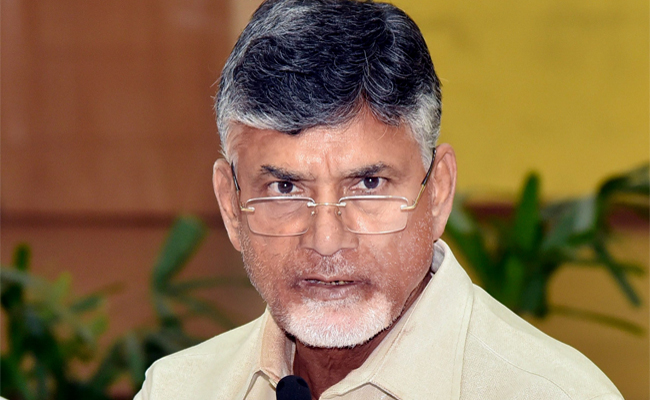
Amaravati (PTI): Andhra Pradesh Chief Minister N Chandrababu Naidu on Tuesday said the greenfield capital city of Amaravati is set to become India’s first quantum computing hub.
The country’s first Open Quantum Computer will be launched here on April 14.
Naidu said the quantum computer will be a valuable tool for students and researchers for testing purposes.
“Amaravati is going to emerge as India’s first quantum computing hub with the launch of the first Open Quantum Computer on April 14, which will be useful for students and researchers,” he said in a press release.
With this development, Naidu noted that Andhra Pradesh is positioning itself as a leader in next-generation technologies.
The Amaravati Quantum Computing Valley (AQV) is expected to provide a new direction to India’s technology ecosystem.
Addressing a roundtable conference on the quantum hardware manufacturing ecosystem at the state secretariat, Naidu emphasised the need to develop a domestic quantum hardware ecosystem within the next two years.
He reaffirmed that Andhra Pradesh is among the front-runners in implementing the National Quantum Mission, with Amaravati set to emerge as a world-class, future-ready innovation hub.
Naidu urged all stakeholders to collaborate in building a self-reliant quantum ecosystem, reducing dependence on imports, and positioning India as a global leader in quantum technology, said a press release.
Key participants included representatives from the National Quantum Mission, IBM, CDAC, CDOT, DRDO, Naval Science & Technological Laboratory, and BARC, along with academic experts from IIT Tirupati and IIT Madras.
Other attendees included National Quantum Mission director JBV Reddy, State Quantum Mission director CV Sridhar, IBM director Amit Sanghi, and senior officials.
Naidu outlined a comprehensive roadmap for developing quantum computing hardware, components, and algorithms within the state.
He underscored the importance of building a robust ecosystem covering cryogenics, photonics, and power electronics, and called for promoting startups, innovation, and research collaborations to develop 'Made in Amaravati' quantum products.
The roundtable resolved to transform Andhra Pradesh into one of the top five global quantum computing hubs by 2030, finalising an action plan featuring advanced infrastructure, including eight towers dedicated to quantum computing, research, innovation, and startups.
“The roundtable has decided to implement an action plan to turn Andhra Pradesh into one of the top five global quantum computing hubs by 2030,” the release said.
Naidu added that skill development programs are being launched to train youth in quantum technologies, with emerging services such as AI Doctor, AI Tutor, and AI Agronomist expected to benefit citizens.
The discussions focused on manufacturing quantum computing components in Amaravati Quantum Valley, along with hardware, algorithms, and related technologies. The roundtable also outlined plans to develop AQV’s infrastructure and establish a hardware ecosystem.
Under the ‘Made in Amaravati’ initiative, the participants emphasised intensive efforts to manufacture quantum computing components locally, promote research and innovation through startups, and develop a bio-foundry.
The release noted that Andhra Pradesh has already begun its quantum technology journey, pioneering a state-specific quantum computing policy.
The government has signed agreements with 15 companies, and seven have already commenced operations in Vijayawada.
These companies have expressed readiness to contribute technologies, including quantum simulators, biosensors, mineral sensors, and laser-based applications, it added.