India's air pollution crisis now full-blown assault on brains, bodies: Congress
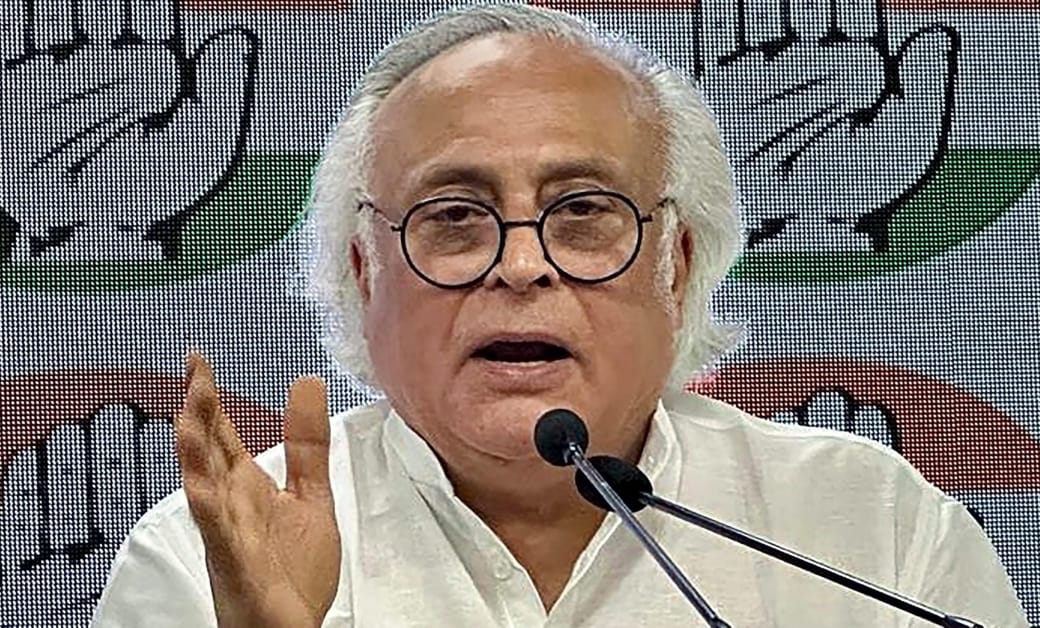
New Delhi (PTI): The Congress on Sunday said India's air pollution crisis is no longer just a respiratory issue but a full-blown assault on our brains and bodies, as it called for radically revising the National Clean Air Programme and urgently updating the National Ambient Air Quality Standards.
Congress general secretary in-charge communications Jairam Ramesh asserted that air pollution is a public health catastrophe and a national security threat to our society, healthcare system, and future workforce.
"India's air pollution crisis is no longer just a respiratory issue. It's now a full-blown assault on our brains and bodies," the former environment minister said on X.
In 2023, approximately 2 million deaths in India were linked to air pollution - a 43% jump since 2000, Ramesh pointed out.
Nearly 9 in 10 of these deaths were attributed to non-communicable diseases (NCDs) such as heart disease, lung cancer, diabetes and now even dementia, he said
India records around 186 air-pollution deaths per 100,000 people, over 10 times the rate in high-income countries (17/100,000), Ramesh said.
He further pointed out that air pollution accounts for about 70% of COPD (chronic obstructive pulmonary disease) deaths, about 33% of lung cancer deaths, about 25% of heart-disease deaths, and about 20% of diabetes deaths in India.
Exposure to fine particulate matter measured in micrograms per cubic metre (PM2.5) has now also been linked to brain damage and accelerated cognitive decline, and globally about 626,000 dementia deaths in 2023 were tied to air pollution, he said.
"Air pollution is a public-health catastrophe and a national-security threat to our society, our healthcare system, and our future workforce," Ramesh said.
"Our present standard for PM2.5 is 8 times the WHO guideline for annual exposure and 4 times the guideline for 24-hour exposure. Despite the launch of the National Clean Air Programme (NCAP) in 2017, PM2.5 levels have continued to rise and shockingly now every single person in India lives in areas where PM2.5 levels far exceeds the WHO guidelines," he said.
"We need to radically revise the NCAP and also urgently update the National Ambient Air Quality Standards (NAAQS) that were last promulgated after a careful exercise in Nov 2009," Ramesh said.
The Congress leader also shared on X the State of Global Air 2025 report which provides a comprehensive analysis of data for air quality and health impacts for countries around the world in 2023.
Let the Truth be known. If you read VB and like VB, please be a VB Supporter and Help us deliver the Truth to one and all.
Trump tells Fox News he's no longer sending Witkoff, Kushner to Pakistan for Iran talks
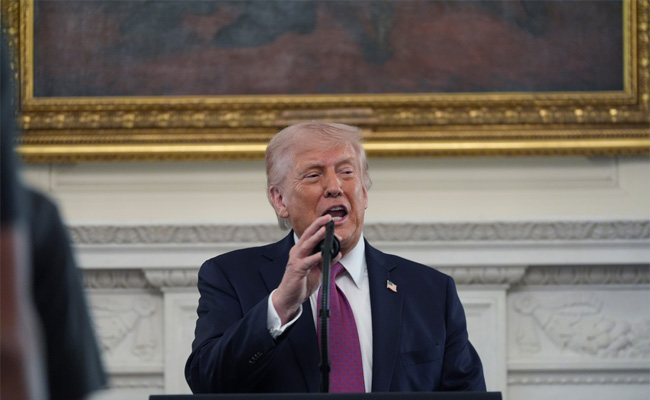
Islamabad (AP): President Donald Trump says he told top US envoys not to travel to Pakistan to negotiate with Iran, telling Fox News that "they can call us anytime they want.”
In a brief phone interview Saturday, Trump told Fox News that he told US negotiators Steve Witkoff and Jared Kushner “you're not going to be making any more 18 hour flights to sit around talking about nothing.”
Trump also said of the US side “we have all the cards.”
His comments came after the White House said Friday that Witkoff and Kushner would be heading to Pakistan for another round of negotiations with Iran.