India's August manufacturing output eases on lower demand: PMI
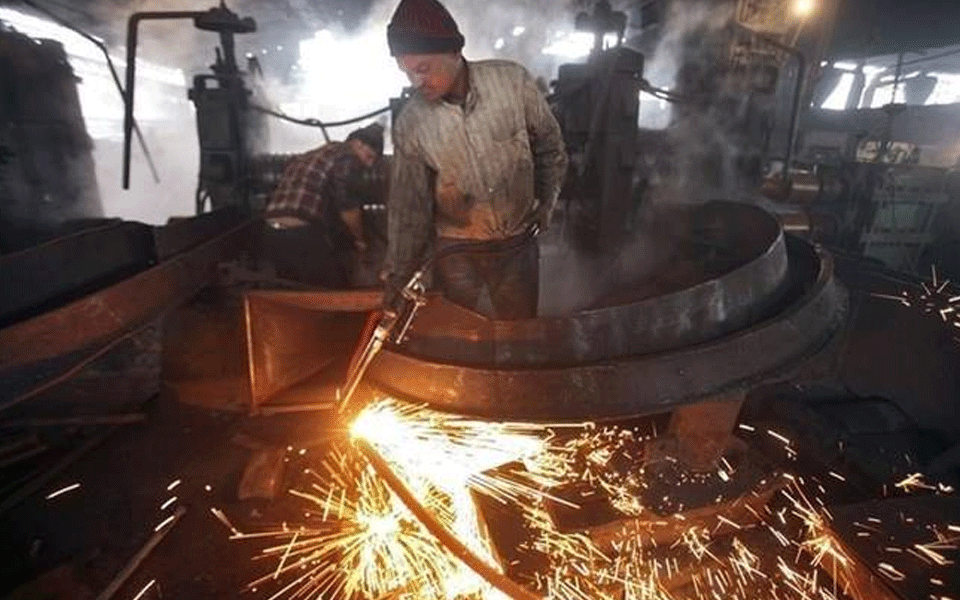
Mumbai, Sep 3 : A slower rise in demand further eased the pace of India's manufacturing sector output in August, as the economy continued to face headwinds, key economic data showed on Monday.
According to the Nikkei India Manufacturing Purchasing Managers' Index (PMI), the composite indicator of manufacturing performance declined to a three-month low of 51.7, from 52.3 in July and 53.1 in June.
An index reading of above 50 indicates an overall increase in economic activity, or growth, and below 50 an overall decrease.
Commenting on the Indian manufacturing PMI survey data, Aashna Dodhia, Economist at IHS Markit and author of the report, said: "Indian manufacturers retained positive projections for output over the next 12 months, but the level of sentiment eased in August.
"Indeed, some of the key headwinds facing the economy include high global oil prices, monetary policy tightening and capital outflows from emerging markets."
Although sub-indices tracking output and total orders touched three-month lows last month, foreign demand rose at the quickest pace since February despite global trade tensions.
"PMI data suggested that external demand for Indian goods was also robust, with new export orders rising at the fastest pace since February," Dodhia said.
"Following rises in domestic interest rates, manufacturing companies gained some breathing space as input cost inflation moderated to the weakest since May and further from June's multi-year peak.
"That said, the rupee depreciation against the US dollar continued to place strong upward pressures on input prices," she added.
The Indian rupee reversed all the gains made earlier on Monday to close at an all-time low of 71.21 per dollar, tracking a weak trend among its global peers amid concerns of a wider trade deficit for the country.
An upswing in manufacturing activity and revival of private investment, supported by strong consumer demand, accelerated India's GDP growth rate in the first quarter (April-June) to 8.2 per cent, official data showed last week.
Let the Truth be known. If you read VB and like VB, please be a VB Supporter and Help us deliver the Truth to one and all.
Real Madrid fines Valverde and Tchouaméni half a million euros each for altercation
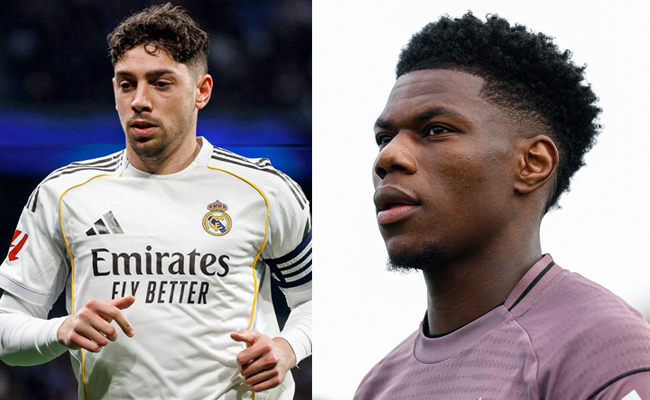
Barcelona (AP): Real Madrid slapped players Federico Valverde and Aurélien Tchouaméni with half-a-million-euro ($588,000) fines on Friday for their altercation during practice.
The massive fines came a day after the midfielders tussled when the team trained. Valverde said in a post on social media on Thursday that no punches were thrown. But Valverde knocked his head on a table and he suffered a small cut that required a brief hospital visit.
On social media, Valverde initially called it a “meaningless fight” with a teammate and said “everything has been blown out of proportion."
His employers, however, considered it a significant enough breach of team discipline to nail both Valverde and Tchouaméni with fines that bite even the bank account of a top soccer player. The half-a-million euro penalties reflect the reputational damage the club was enduring in a chaotic end to a disappointing season.
In a statement, the 15-time European champion said its disciplinary action was concluded after both players expressed to the club “their complete remorse for what happened and apologized to one another.”
Madrid added they also apologized to their teammates, the coaching staff and club supporters, as well as showing their willingness to accept whatever disciplinary action the club deemed “opportune.”
Tchouaméni was back training with Madrid on Friday, two days before they play at Barcelona in a clasico. Madrid has to win otherwise Barcelona will be crowned La Liga champion.
After being notified of the fine, he posted a public apology to the club and its fans on social media.
“What happened this week in training is unacceptable,” Tchouaméni wrote. "I say this while thinking about the example we are expected to set for young people, whether in football or at school.
“Above all, I am sorry for the image we projected of the club.”
Valverde was not at practice due to the head knock.
Both players are set to play in the World Cup next month, with Tchouaméni playing for France and Valverde for Uruguay.
Chaotic end to a poor season
===================
The run-in between the players, who for seasons have played side by side in Madrid's midfield, came after they argued this week in previous training sessions. But tempers boiled over on Thursday. Spanish media was rife with reports that the players previously disagreed over the club's decision to let coach Xabi Alonso go after just months on the job.
It was not the only altercation involving Madrid players during training this week. Álvaro Carreras confirmed he was in a “minor” incident with a teammate. Spanish media said he and fellow defender Antonio Rüdiger got into a scuffle.
Álvaro Arbeloa, the coach who was promoted from Madrid's reserve team when Alonso was fired in January, will face tough questions on what went wrong inside the changing room when he gives a press conference on Saturday ahead of the clasico at Camp Nou.
Madrid is facing a second consecutive campaign without a major trophy amid rumors in the Spanish media that club president Florentino Pérez is considering bringing back Jose Mourinho to straighten out his underperforming team.