India's climate for free expression severely deteriorated under Modi government: PEN International
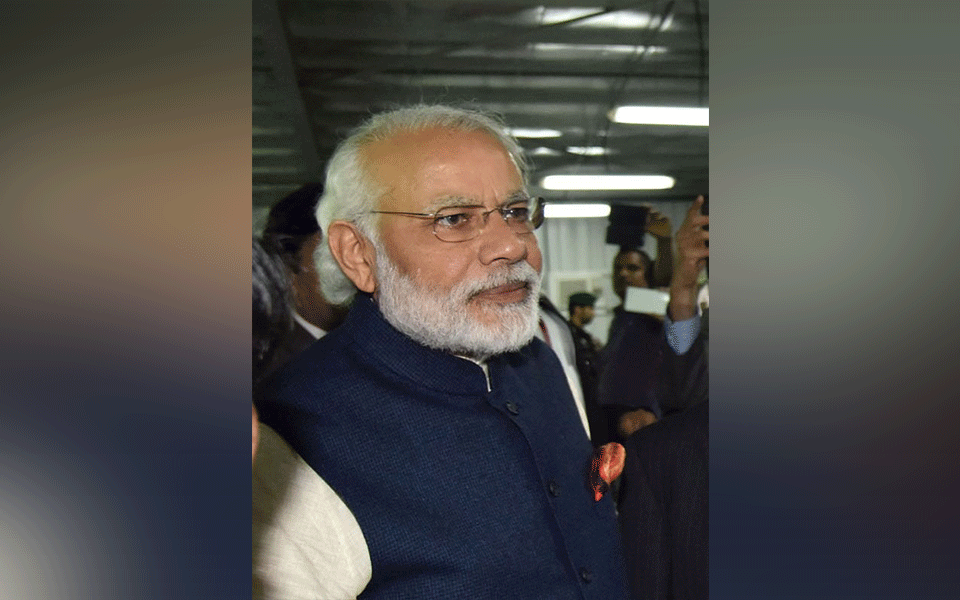
Pune/New Delhi, Sep 29 : India has witnessed a rising tide of violence, impunity, extended pre-trial detentions, and surveillance under the Prime Minister Narendra Modi-led NDA government, PEN International, said on Saturday as it wound up the 84th PEN International Congress with representation from 80 countries in Pune. The International writers body called upon the Indian government to safeguard freedom of expression in the country.
It released a report "India: Pursuing truth in the face of intolerance" that outlines how dissenting voices, by journalists, writers, academics or students "face intimidation, harassment, prosecution, online abuse, and physical violence."
The report brings together voices of writers, journalists, lawyers and academics, illustrating the varied ways in which critical voices are targeted and silenced.
It highlights "the use of overbroad laws; directed attacks online and offline; the systematic stifling of academic research and freedom; and the continued marginalisation of and hostility towards women's voices."
"Laws that stifle speech; an environment hostile to dissenting views; and emboldened critics online and in the real world have cast a chill over free expression in India. Journalists and writers have been sued, intimidated, threatened, and sometimes murdered. There is little political will to amend the laws that prevent free expression or to enforce laws that protect the writer," said Salil Tripathi, Writers in Prison Committee Chair.
PEN International said in an official statement that it "calls on the Indian authorities to protect its writers, journalists and all others exercising their right to free expression" and to "bring its legislation in line with its obligations under international law".
"While this gathering has been about the promotion of peace-building and celebrating the power of the written word, it is also about protecting free expression and remembering those of us who pay the ultimate price for exercising this fundamental right. Today we honour Gauri Lankesh, who was shot to death outside her home a year ago. Even though we welcome the progress that has been in the investigation, we're still waiting for justice. Unless the cycle of impunity is broken, those who want to use violence to silence will be embolden to do so," said PEN International President Jennifer Clement.
Asked about the views and findings of the PEN as far as worsening of situations under the Modi regime is concerned, Clement unequivocally said there has been "a rising tide of violence, impunity, extended pre-trial detentions, impunity and surveillance".
"We have quite a few recommendations to the Indian government. To ensure the safety of journalists and make sure that there is no impunity against them, to ensure that they are not harmed, as has been seen in several high-profile cases, train the police, launch public information campaign to inform citizens of their legal rights in the face of online harassment and threats," Clement told IANS over telephone from Pune.
She added that the PEN International felt "very strongly", especially in a country like India, as "the differences are what unites people and not what divides them".
"The government should be thinking about the things that bring people together and not tear them apart. I think what PEN is concerned about is that India has always been a country that one could uphold for being tolerant and being democratic. It used to be that India could be held as an example to the rest of the world. It's very sad to see this turn. What would the future of such a democracy look like," she asked.
The 15-page report "India: Pursuing truth in the face of intolerance" is highly critical of the Modi government and opens with a poster of the firebrand journalist-activist Gauri Lankesh.
The report contends that "future generations will likely look back at the Bharatiya Janata Party's (BJP) win in 2014 elections" as "the beginning of a drastically different era in independent India".
Notably, of the three new Vice Presidents, chosen for their "literary merit", two are dissenting voices from India: Tamil writer Perumal Murugan, who was himself hounded by right-wing activists, and Nayantara Sahgal, who has been at the forefront of protests by writers and intellectuals against the Modi government.
Let the Truth be known. If you read VB and like VB, please be a VB Supporter and Help us deliver the Truth to one and all.
SC refuses to adjourn hearing on pleas against EC law, says this matter is more important
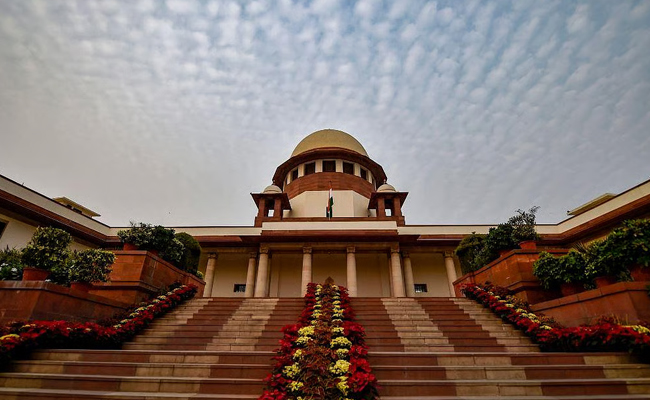
New Delhi (PTI): The Supreme Court on Wednesday refused to accede to the Centre's request to adjourn the hearing on pleas challenging the constitutional validity of a 2023 law that removed the CJI from a committee responsible for appointing the chief election commissioner and the deputies, saying the matter is "more important" than the Sabarimala case.
A nine-judge constitution bench headed by Chief Justice Surya Kant is currently hearing petitions regarding discrimination against women at religious sites, including the Sabarimala temple in Kerala, as well as the scope of religious freedom across various faiths.
A bench comprising justices Dipankar Datta and Satish Chandra Sharma turned down the request by Solicitor General Tushar Mehta, appearing for the Centre, to adjourn the hearing on the ground that he was currently occupied before a nine-judge bench in the Sabarimala reference case.
Referring to the gravity of the current challenge to the Chief Election Commissioner and Other Election Commissioners (Appointment, Conditions of Service and Term of Office) Act, 2023, Justice Datta said, "This matter is more important than any other matter."
"Let your (solicitor general's) associates take notes today. Let the petitioners start. All matters are important. We read in the newspapers that there is an observation that the PIL in Sabarimala should not have been entertained by the court. So, with due respect to the judges, nine judges are occupied in a matter where there is an observation that it should not have been entertained in the first place," Justice Datta said.
ALSO READ: Girl mauled to death by stray dogs in Punjab's Hoshiarpur
The bench then directed the petitioners to conclude their arguments by Thursday, allowing the Centre to present its submissions on a subsequent date. The bench then proceeded with the hearing which is underway.
Earlier on March 20, CJI Surya Kant recused himself from hearing the petitions. "I will be accused of conflict of interest. There is a conflict of interest," the CJI had said. The law, enacted by Parliament in December 2023, came months after a landmark verdict by which the apex court directed that election commissioners be appointed by a committee comprising the prime minister, the leader of the Opposition, and the chief justice of India.
The bench had said that the system will remain in force till a law is enacted.
Under the 2023 Act, the selection committee consists of the prime minister, a Union minister nominated by the prime minister and the leader of Opposition (or leader of the largest opposition party in the Lok Sabha).
The PILs said the exclusion of the CJI from the panel undermines the independence of the appointment process.
The law has been challenged by multiple petitioners, including Congress leader Jaya Thakur and the Association for Democratic Reforms.
Earlier, the Centre defended in the Supreme Court the appointment of two new election commissioners under the 2023 law that excludes the chief justice of India from the selection committee, saying the independence of the Election Commission does not arise from the presence of a judicial member on the committee.
In an affidavit filed in the apex court, the Union law ministry rejected the petitioner's claim that the two election commissioners were hastily appointed on March 14, 2024, to "pre-empt" the orders of the top court the next day, when the matters challenging the 2023 law were listed for hearing on interim relief.
The apex court also refused to stay the appointment of new election commissioners under the 2023 law.
A five-judge constitution bench had in March 2023 ruled that the chief election commissioner and election commissioners shall be appointed on the advice of a committee comprising the prime minister, the leader of the Opposition in the Lok Sabha and the chief justice of India.