India’s deadliest plane crashes: A look back at nation’s most tragic aviation disasters
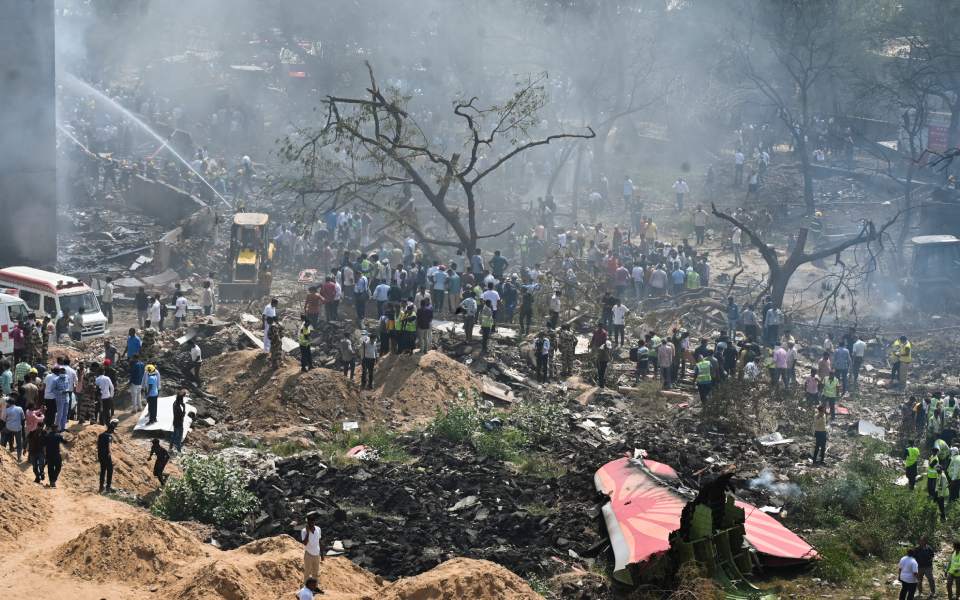
Ahmedabad: The horrifying Air India plane crash near Ahmedabad airport that claimed at least 133 lives has once again brought to the fore the fragility of air travel and the devastating impact of aviation accidents. As rescue teams continue to recover bodies and tend to survivors from Thursday’s tragedy, the incident joins a grim list of India’s most fatal air disasters. Here's a detailed look at some of the deadliest and most chaotic plane crashes that have occurred in India over the decades — each one etched deeply in the nation’s memory.
Mangalore Air Crash (2010)
Date: May 22, 2010
Flight: Air India Express Flight IX 812
Route: Dubai to Mangalore
Fatalities: 158
The crash at Mangalore International Airport remains one of the most tragic air disasters in Indian history. The Air India Express Boeing 737-800 was carrying 160 passengers and six crew members when it overshot the runway during landing at the table-top airport. Of the 166 people on board, only eight survived.
The aircraft, flying in from Dubai, touched down beyond the runway threshold. The pilot attempted to brake hard, but the plane could not be stopped in time. It plunged off the cliff-like edge of the table-top runway into a wooded gorge and burst into flames.
Reasons Identified:
The official investigation pointed to pilot error as the primary cause. The Serbian captain, who was reportedly asleep for most of the flight, misjudged the landing and ignored repeated warnings from the co-pilot. The aircraft landed too far down the runway, leaving insufficient space to halt safely.
The Mangalore crash raised serious concerns about pilot fatigue, communication in the cockpit, and the safety of table-top runways, which are elevated and offer little margin for error.
Charkhi Dadri Mid-Air Collision (1996)
Date: November 12, 1996
Flights Involved: Saudi Arabian Airlines Flight 763 and Kazakhstan Airlines Flight 1907
Fatalities: 349
This tragic accident near Charkhi Dadri, Haryana, is still remembered as the world’s deadliest mid-air collision.
Saudi Airlines Flight 763, a Boeing 747, had taken off from Delhi and was climbing out of Indian airspace when it collided with a descending Kazakhstan Airlines Ilyushin IL-76, which had been cleared to land at the same airport. The crash killed all 312 passengers on the Saudi flight and all 37 on the Kazakh aircraft.
Reasons Identified:
Investigations revealed that the Kazakh aircraft had descended below its assigned altitude due to miscommunication and limited English proficiency among the crew. At that time, India lacked secondary surveillance radar, and air traffic controllers relied heavily on pilot communication for separation. The tragedy led to the mandatory installation of airborne collision avoidance systems (ACAS) in Indian airspace and a renewed global focus on English proficiency among pilots.
Air India Flight 855 Crash (1978)
Date: January 1, 1978
Flight: Air India Flight 855
Route: Mumbai to Dubai
Fatalities: 213
On the first day of 1978, Air India Flight 855, a Boeing 747 named Emperor Ashoka, crashed into the Arabian Sea just minutes after takeoff from Mumbai’s Santacruz airport. All 213 people on board were killed.
Reasons Identified:
The official inquiry reported that the captain became disoriented due to a malfunctioning instrument that led him to believe the plane was banking when it wasn’t. He overcorrected, causing the plane to bank sharply to the left and spiral into the sea. Lack of proper coordination among the cockpit crew and spatial disorientation were also cited as contributing factors.
Indian Airlines Flight 491 (Aurangabad Crash, 1993)
Date: April 26, 1993
Flight: Indian Airlines Flight 491
Route: Aurangabad to Mumbai
Fatalities: 55
The Boeing 737 was on a domestic flight when it crashed shortly after takeoff from Aurangabad. As the aircraft attempted to lift off, it hit a truck crossing the runway, causing the wing to break off and the fuel tanks to ignite.
Reasons Identified:
The runway was not adequately secured, and the presence of vehicles on the airstrip indicated severe lapses in airport safety. Poor visibility and delayed rotation during takeoff further contributed to the crash.
Alliance Air Flight 7412 (Patna Crash, 2000)
Date: July 17, 2000
Flight: Alliance Air Flight 7412
Route: Kolkata to Delhi via Patna and Lucknow
Fatalities: 60
The aircraft, a Boeing 737 operated by Alliance Air, crashed while attempting to land at Patna airport. The plane crashed into a residential area near the airport, killing all six crew members and 54 passengers, along with several people on the ground.
Reasons Identified:
The aircraft stalled during a go-around maneuver due to a steep bank and loss of speed. Investigations blamed pilot error, inadequate training, and misjudged approach path as primary reasons.
Air India Flight 182 (Kanishka Bombing, 1985)
Date: June 23, 1985
Flight: Air India Flight 182
Route: Toronto to Mumbai via London and Delhi
Fatalities: 329
Although this crash did not occur on Indian soil, it remains the worst aviation disaster involving an Indian airline and was caused by an act of terrorism. The Boeing 747, known as Kanishka, exploded mid-air due to a bomb planted by Sikh separatists.
The aircraft exploded off the coast of Ireland, killing all 329 on board, including 268 Canadian citizens, many of whom were of Indian origin.
Reasons Identified:
Security lapses at Canadian airports allowed the bomb to be placed in checked luggage. The incident prompted a global overhaul of airport security, particularly for international flights.
Ahmedabad Plane Crash (2025)
Date: June 12, 2025
Flight: Air India Flight AI171
Route: Ahmedabad to London Gatwick
Fatalities: At least 133 confirmed (as of last update)
In the most recent addition to this list of aviation tragedies, Air India’s Boeing Dreamliner crashed just minutes after taking off from Ahmedabad airport. The flight was headed to London and carried 242 people, including two pilots and 10 crew members. The cause of the crash is still under investigation.
Reports suggest the plane crashed into a densely populated area near Meghaninagar. Massive plumes of smoke were visible from the crash site, and rescue operations are underway. Multiple hospitals in the city are on emergency alert, and an investigation team from the Aircraft Accident Investigation Bureau (AAIB) has been deployed.
Let the Truth be known. If you read VB and like VB, please be a VB Supporter and Help us deliver the Truth to one and all.
EC dismisses scope for wrongdoing at strongrooms; prohibitory orders around Kolkata counting centres
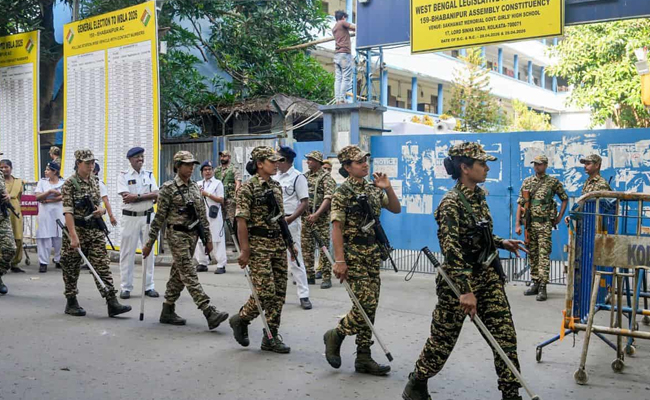
Kolkata (PTI): A day after West Bengal Chief Minister Mamata Banerjee spent hours at the EVM strongroom of her Bhabanipur constituency alleging possibilities of malpractices, Chief Electoral Officer (CEO) Manoj Agarwal on Friday asserted there is no scope for wrongdoing at the counting centres.
Following tensions around two counting centres in Kolkata late on Thursday, police clamped prohibitory orders on gatherings outside all seven strongrooms in the city.
Stating that round-the-clock CCTV monitoring of strongrooms was in place, Agarwal dismissed the allegations as "baseless".
TMC spokesperson and Beleghata constituency candidate Kunal Ghosh said that party workers and poll aspirants were keeping a strict vigil at the counting centres, where the EVMs are stored in strongrooms, upon directions of party supremo Mamata Banerjee.
"There is no scope for any wrongdoing given the arrangements made to secure the EVMs. The Centres have been kept under thorough CCTV coverage and their live-streamed footage can be seen from outside," Agarwal told reporters.
"One should have reason and evidence for making allegations," he said, maintaining that there were no grounds for levelling charges of EVM tampering or pre-counting malpractice.
Two counting centres in Kolkata witnessed high drama late on Thursday evening after TMC leaders alleged a lack of transparency and possible malpractice at the strongrooms housing sealed EVMs of the assembly polls, which concluded on April 29.
Mamata Banerjee herself landed up at the Sakhawat Memorial School counting centre and stayed put there for about four hours. She emerged from the premises past midnight and warned against any attempts to tamper with the counting process, demanding greater transparency.
TMC leaders and candidates Sashi Panja and Kunal Ghosh held a sit-in outside the Khudiram Anushilan Kendra counting centre on Thursday evening, alleging unauthorised activities inside the strongroom amid the absence of TMC agents.
Matters came to a head after a large number of supporters from both TMC and BJP camps gathered outside the venue, shouting slogans till they were dispersed by security forces.
The EC, however, dismissed the claim, clarifying that poll officials were engaged in the task of segregating postal ballots as per due process and the strongrooms remained secure, asserting all political parties for the mandatory segregation activity were duly notified.
On Friday, Kolkata Police imposed prohibitory orders under Section 163 of the BNSS around all seven designated strong rooms in the city.
As per the order issued by Police Commissioner Ajay Nand, the restrictions prohibited the assembly of five or more persons within a 200-metre radius of each strongroom, along with a ban on processions, demonstrations, and carrying of weapons or explosive materials.
The measure, which aims to prevent any breach of peace, violence, or disturbance during the storage of ballot papers and polled EVMs, will remain in force until the commencement of counting on May 4.
Besides the two counting centres in question, the prohibitory orders were also clamped around the Hastings House complex, APC Polytechnic College, St. Thomas Boys' High School, Ballygunge Government High School and the David Hare Training College counting premises.
A senior police officer said enhanced security arrangements have been made at Khudiram Anushilan Kendra, the counting centre for several assembly seats in north and east Kolkata housing EVM strong rooms.
"Additional CAPFs and armed police forces have also been deployed under the supervision of an additional commissioner and a deputy commissioner of police," Joint Commissioner of Police (Traffic), Kolkata, Rupesh Kumar, told reporters after visiting the area.
Expressing apprehension that unauthorised movements might occur when a section of postal ballots is brought in the evening, Kunal Ghosh said on Friday morning that the party's polling agents and candidates have been alerted about the matter.
Minister Shashi Panja, who also arrived at Khudiram Anushilan Kendra in the morning, maintained that "transparency" should be ensured for all strongroom activities.
Ghosh told reporters on Friday that though they had seen some movement in a strongroom that allegedly stored postal ballots, there was no such movement on Friday morning.
Meanwhile, Banerjee's challenger at Bhabanipur and BJP leader Suvendu Adhikari took a dig at the chief minister for her late-night visit to the counting centre.
"I want to reassure the people of Bhabanipur and of West Bengal that the TMC candidate and outgoing chief minister was prevented from taking any additional advantage. Despite her best intentions to the contrary, she wasn't allowed to act in violation of rules," Adhikari wrote on social media platforms, posting a picture of Banerjee sitting at what appeared to be an area outside the counting centre strong room.
"Till such time she was present there, my election agent, advocate Surjyanil Das personally positioned himself at the spot keeping a tight watch on her so that she isn't able to take recourse to improper means," he added.
Security forces kept a strict vigil in and around counting centres and strongrooms in Kolkata and other districts where EVM machines used in the state assembly elections are stored, an official said.
Sakhawat Memorial School in south Kolkata's Bhabanipur, which saw high drama till the early hours of Friday with the chief minister spending several hours at the counting centre, wore a peaceful look in the morning with security personnel guarding the area.