India's fishery sector loses USD 2.2 billion annually due to wastewater contamination: Study
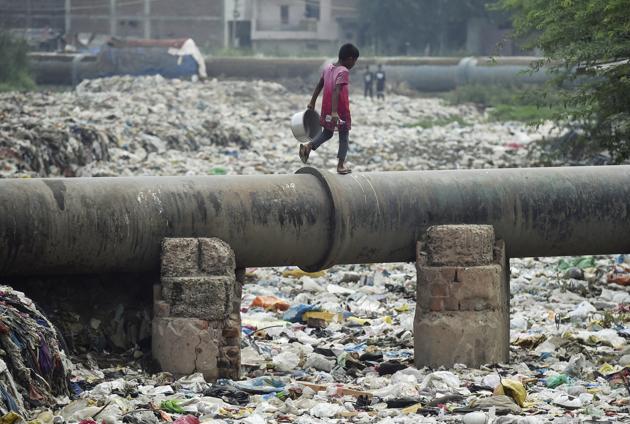
New Delhi (PTI): India's fishery sector loses over USD 2 billion due to untreated wastewater contaminating waterways, according to a study published on Wednesday.
It also said the country suffers an annual economic loss of USD 246 million from diarrhoea caused by contaminated drinking water due to poor wastewater management.
Launched at the World Ocean Summit in Japan by ocean health initiative Back to Blue and the Ocean Sewage Alliance, the study highlights the high cost of inaction in wastewater management in Brazil, India, Kenya, the Philippines and the United Kingdom.
Untreated or poorly treated wastewater is a major source of pollution and disease. When it enters rivers, oceans and drinking water supplies, the consequences are severe.
Among the five countries, India's fishery sector suffers the most, losing 5.4 per cent (USD 2.2 billion) of its economic value annually, followed by Kenya (5.1 per cent).
Since India is a major seafood supplier, this threatens both domestic food security and export markets.
Also, among the countries studied, India incurs the highest healthcare costs from diarrhoea linked to contaminated drinking water. With a wastewater treatment rate of just 21 per cent, nearly three times as many people are affected, resulting in annual costs of USD 246 million.
Brazil faces severe agricultural impacts as crops like soybeans are highly sensitive to soil salinity, worsened by irrigation with untreated wastewater.
India experiences lower proportional losses due to lower soil salinity but still suffers the highest absolute revenue loss (USD 1.2 billion), the study says.
Around 10 per cent of agricultural land in developing countries is irrigated with raw or partially treated wastewater, which often contains toxic heavy metals like zinc, chromium, manganese and iron. While wastewater nutrients such as nitrogen and phosphorus can initially boost crop yields, long-term use leads to soil salinisation and reduced yields.
Amelia Wenger, Conservation Scientist and Water Pollution Programme Lead at the Wildlife Conservation Society, said the cost of inaction is evident in India and beyond. "Investing in adequate sewage and wastewater infrastructure is the only viable solution," she said.
Where large-scale infrastructure is lacking, decentralised wastewater systems can offer practical alternatives and new high-tech innovations are emerging, she added.
Policymakers who look beyond infrastructure investment and focus on circularity can ensure wastewater is repurposed as organic fertiliser, biogas or even a source of renewable energy, Wenger added.
Like much of the developing world, India views wastewater pollution partly through the lens of water scarcity.
Asserting that expanding treatment capacity is key, Nitin Bassi, senior programme lead for sustainable water at the Council on Energy, Environment and Water (CEEW) said, "We need to improve both water quality and the usable quantity of water. If more wastewater can be captured, treated, and reused, it will reduce the pressure on our freshwater resources."
Let the Truth be known. If you read VB and like VB, please be a VB Supporter and Help us deliver the Truth to one and all.
Sujit Nair raises concerns over speculation of DMK-AIADMK understanding to block TVK
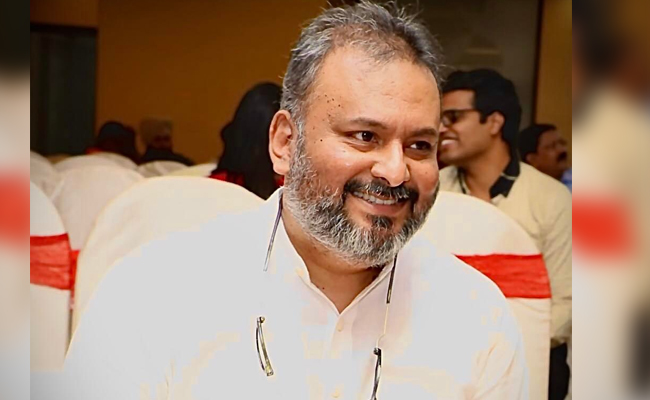
Chennai: Journalist and political commentator Sujit Nair has expressed concern over speculation that the Dravida Munnetra Kazhagam and the All India Anna Dravida Munnetra Kazhagam could explore a post-poll understanding to prevent Vijay-led Tamilaga Vettri Kazhagam from forming the government in Tamil Nadu.
In a social media post, Sujit Nair said the election verdict in Tamil Nadu reflected a clear public demand for political change and argued that the mandate should be respected irrespective of political preferences.
Referring to reports and political discussions surrounding a possible understanding between the DMK and AIADMK, he said he hoped such developments remained only speculative conversations and did not turn into reality.
Nair stated that if such an alliance were to take shape, it would raise serious questions about ideological politics in the country. He said TVK had emerged through a democratic electoral process and that the legitimacy to govern in a parliamentary democracy comes from the people’s verdict.
According to him, attempts to prevent an electoral winner from forming the government through unexpected political arrangements may be constitutionally valid, but many people could view them as politically opportunistic.
He further said that such a move could particularly affect the political image of the DMK, which has historically projected itself around ideology, social justice and opposition politics. Nair said that in ideological terms, the DMK appeared closer to TVK than to the AIADMK, and joining hands with its long-time political rival only to remain in power could weaken its broader political narrative.
He added that the same questions would apply to the AIADMK as well, as the party had spent decades positioning itself against the DMK and such an arrangement could create discomfort among its cadre and supporters.
Drawing a comparison with Maharashtra politics in 2019, Nair said he had expressed similar views when the Shiv Sena formed an alliance with the Indian National Congress and the Nationalist Congress Party after the Assembly elections.
He said post-poll alliances between long-standing political rivals often create a public perception that ideology and electoral mandates become secondary when political power equations come into play.
Nair also said such developments increase public cynicism towards politics and reinforce the belief among voters that ideology is often sidelined after elections.
He maintained that the Tamil Nadu verdict was emphatic and said respecting both the spirit and substance of the mandate was important for the credibility of democratic politics.