India's Gen Z is full of creativity, says PM Modi
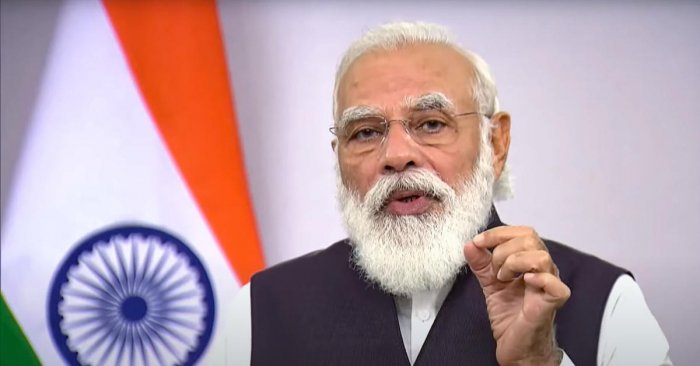
New Delhi (PTI): Prime Minister Narendra Modi on Monday said India's Gen Z is full of creativity and with innovative ideas, energy and purpose, the country's youth is at the forefront of nation-building.
Addressing the concluding session of Viksit Bharat Young Leaders Dialogue (VBYLD) here in which he interacted with youngsters from across India and abroad, Modi said this initiative, in a short span of time, has grown into a significant platform where young people actively engage in shaping the nation's direction.
"Every year on January 12, we celebrate the National Youth Day in honour of Swami Vivekananda, whose life and teachings continue to inspire us. Drawing inspiration from him, the Viksit Bharat Young Leaders Dialogue was established," he said.
Modi said the central government rolled out successive schemes with a clear focus on the youth and the startup revolution truly gathered momentum in India subsequently.
"With innovative ideas, energy and purpose, Yuva Shakti is at the forefront of nation-building," he said.
The prime minister said India is experiencing remarkable growth in the Orange Economy, rooted in culture, content and creativity.
"Over the past decade, the series of reforms we began has now turned into a Reform Express. At the heart of these reforms is our Yuva Shakti," he said.
The Viksit Bharat Young Leaders Dialogue is a national platform designed to facilitate structured engagement between India's youth and national leadership.
The dialogue, being held from January 9 to 12, has witnessed participation from over 50 lakh youth across the country at various levels.
The young leaders converging at the national-level championship have been selected through a rigorous, merit-based three-stage selection process, comprising a nationwide digital quiz, an essay challenge and state-level vision presentations.
Let the Truth be known. If you read VB and like VB, please be a VB Supporter and Help us deliver the Truth to one and all.
4 workers die after being buried under coal slurry in Jharkhand's Dhanbad
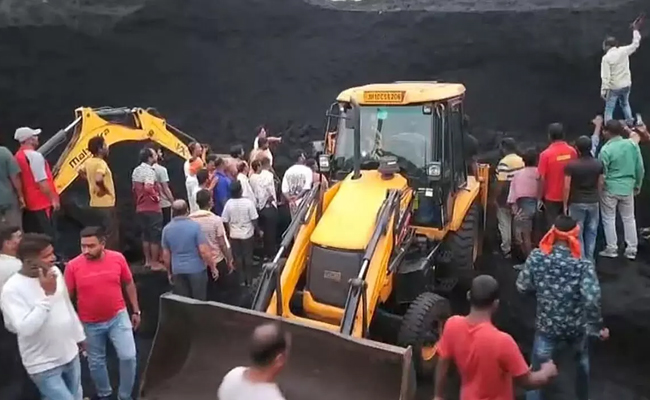
Dhanbad (Jharkhand) (PTI): At least four workers died after being buried under coal slurry in Jharkhand's Dhanbad district on Saturday, a police official said.
The incident took place at Moonidih coal washery in the command area of Bharat Coking Coal Limited (BCCL).
"Bodies of all four workers were dug out of debris during a rescue operation," Putki police station in-charge Waqar Hussain told PTI.
The incident took place when coal slurry was being loaded into trucks by workers, during which a large chunk of slurry fell and trapped several workers underneath, officials said.
The deceased have been identified as Manik Bauri, Dinesh Bauri, Deepak Bauri, and Hemlal Gope.
Meanwhile, the family members of the deceased and local villagers placed the bodies in front of the washery gate and began a protest.
They demanded compensation, jobs for dependents and action against those responsible for the incident.
Police and administration officials are trying to pacify the protesters, an official said.