India's manufacturing sector activity slips in May, heads towards stagnation: PMI
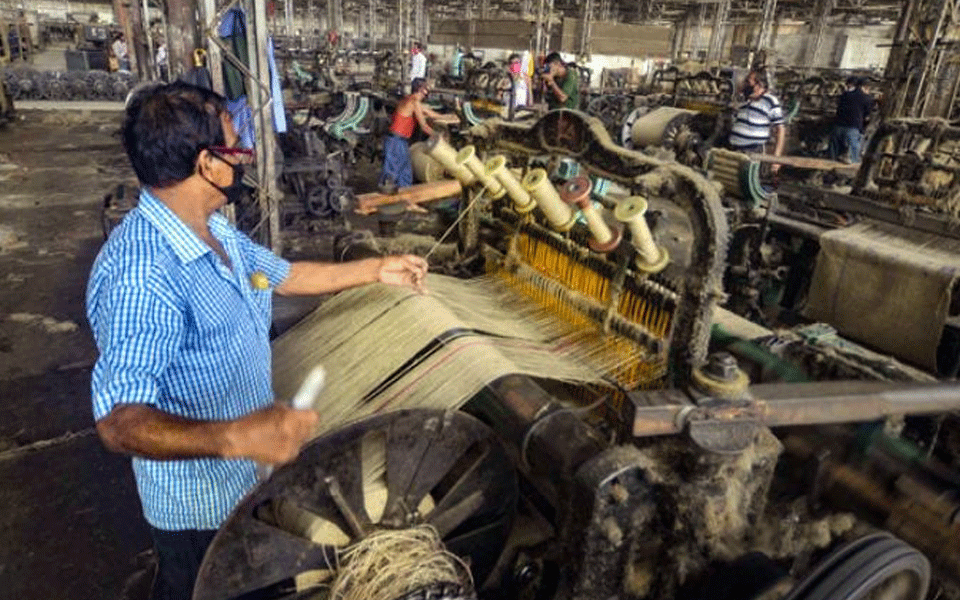
New Delhi: India's manufacturing sector activity witnessed a significant loss of growth momentum in May due to the intensification of the COVID-19 crisis and its detrimental impact on demand, a monthly survey said on Tuesday.
The seasonally adjusted IHS Markit India Manufacturing Purchasing Managers' Index (PMI), fell to 50.8 in May, down from 55.5 in April, as companies observed the slowest rises in new work and output in ten months amid intensification of the COVID-19 crisis.
In PMI parlance, a print above 50 means expansion while a score below 50 denotes contraction.
"The Indian manufacturing sector is showing increasing signs of strain as the COVID-19 crisis intensifies. Key gauges of current sales, production and input buying weakened noticeably in May and pointed to the slowest rates of increase in ten months. In fact, all indices were down from April," said Pollyanna De Lima, Economics Associate Director at IHS Markit.
Lima, however, noted that the detrimental impacts of the pandemic and associated restrictions seen in the manufacturing sector are considerably less severe than during the first lockdown when unprecedented contractions had been recorded.
"Growth projections were revised lower, as firms became more worried about the escalation of the pandemic and local restrictions. The overall degree of optimism towards the year-ahead outlook for output was at a ten-month low, a factor which could hamper business investment and cause further job losses," Lima said.
The growth of the manufacturing sector was curbed by the escalation of the pandemic and difficulties in securing raw materials, the survey said.
Concerns surrounding the pandemic restricted business confidence towards the year-ahead outlook for production, the survey said.
"Amid a lack of new work, goods producers reduced headcounts again, with the rate of job shedding quickening in May," Lima said.
On the marcoeconomic front, India's economy contracted by less-than-expected 7.3 per cent in the fiscal year ended March 2021 after growth rate picked up in the fourth quarter, just before the world's worst outbreak of coronavirus infections hit the country.
The next bi-monthly monetary policy review of the Reserve Bank of India (RBI) is scheduled to be announced on June 4. Experts believe, with the economic outlook remaining uncertain in light of the continuing pandemic, the monetary policy stance of RBI is likely to remain accommodative.
Let the Truth be known. If you read VB and like VB, please be a VB Supporter and Help us deliver the Truth to one and all.
Sujit Nair raises concerns over speculation of DMK-AIADMK understanding to block TVK
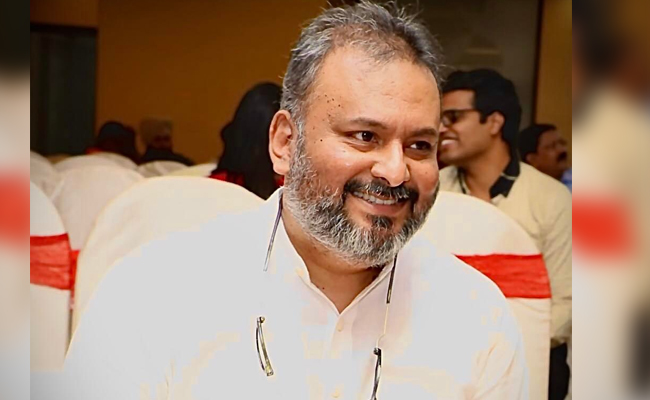
Chennai: Journalist and political commentator Sujit Nair has expressed concern over speculation that the Dravida Munnetra Kazhagam and the All India Anna Dravida Munnetra Kazhagam could explore a post-poll understanding to prevent Vijay-led Tamilaga Vettri Kazhagam from forming the government in Tamil Nadu.
In a social media post, Sujit Nair said the election verdict in Tamil Nadu reflected a clear public demand for political change and argued that the mandate should be respected irrespective of political preferences.
Referring to reports and political discussions surrounding a possible understanding between the DMK and AIADMK, he said he hoped such developments remained only speculative conversations and did not turn into reality.
Nair stated that if such an alliance were to take shape, it would raise serious questions about ideological politics in the country. He said TVK had emerged through a democratic electoral process and that the legitimacy to govern in a parliamentary democracy comes from the people’s verdict.
According to him, attempts to prevent an electoral winner from forming the government through unexpected political arrangements may be constitutionally valid, but many people could view them as politically opportunistic.
He further said that such a move could particularly affect the political image of the DMK, which has historically projected itself around ideology, social justice and opposition politics. Nair said that in ideological terms, the DMK appeared closer to TVK than to the AIADMK, and joining hands with its long-time political rival only to remain in power could weaken its broader political narrative.
He added that the same questions would apply to the AIADMK as well, as the party had spent decades positioning itself against the DMK and such an arrangement could create discomfort among its cadre and supporters.
Drawing a comparison with Maharashtra politics in 2019, Nair said he had expressed similar views when the Shiv Sena formed an alliance with the Indian National Congress and the Nationalist Congress Party after the Assembly elections.
He said post-poll alliances between long-standing political rivals often create a public perception that ideology and electoral mandates become secondary when political power equations come into play.
Nair also said such developments increase public cynicism towards politics and reinforce the belief among voters that ideology is often sidelined after elections.
He maintained that the Tamil Nadu verdict was emphatic and said respecting both the spirit and substance of the mandate was important for the credibility of democratic politics.