India’s Pension System among the lowest globally, says Mercer CFA Report
_vb_37.jpeg)
New Delhi: India’s pension system has been ranked among the lowest in the world, according to the Mercer CFA Institute Global Pension Index 2025. The country received a ‘Grade D’, placing it alongside Turkey, Argentina, and the Philippines - nations that, the report said, have “some desirable features but major weaknesses that need urgent attention.”
India’s overall index value slipped slightly from 44 in 2024 to 43.8 in 2025. The ranking evaluated 52 countries across three parameters, adequacy (40%), sustainability (35%), and integrity (25%). India received Grade E for adequacy, and Grades D and C for sustainability and integrity, respectively.
The report recommended the introduction of a minimum income floor for the poorest elderly citizens, expansion of pension coverage to informal sector workers, and a long-term strategy to build pension assets to improve India’s performance.
India’s low assets-to-GDP ratio was identified as a key concern. The Economic Survey 2024–25 noted that India’s total pension assets account for only 21% of the GDP, compared to over 80% in OECD countries.
In contrast, Singapore entered the top tier of the global pension index for the first time by earning Grade A. The Netherlands retained its position as the top-ranked country, followed by Iceland, Denmark, and Israel.
Let the Truth be known. If you read VB and like VB, please be a VB Supporter and Help us deliver the Truth to one and all.
India achieves major milestone in wind energy; capacity now 56 gigawatts: PM Modi
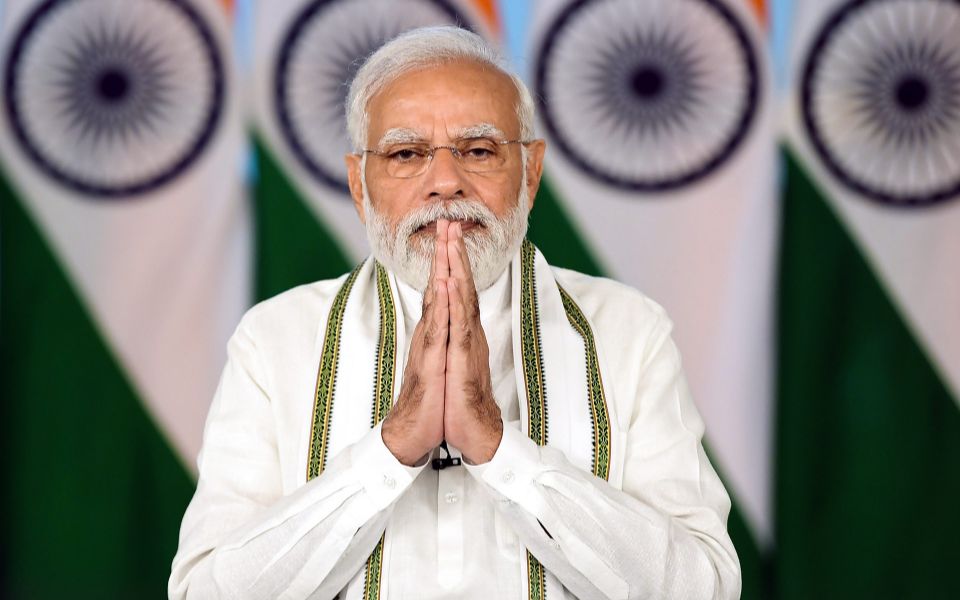
New Delhi (PTI): India has achieved a major milestone in wind energy, with the country's wind energy generation capacity exceeding 56 gigawatts, Prime Minister Narendra Modi said on Sunday.
In his monthly radio address 'Mann Ki Baat', Modi also said the country must save electricity and adopt clean energy.
“India recently achieved a major milestone in wind energy. India's wind energy generation capacity has now exceeded 56 gigawatts. In just the past year, nearly 6 gigawatts of new capacity have been added,” he said.
Underlining that solar and wind energy are essential for India's development, Modi said, “It is not just about the environment; it is about securing our future, and we all have a role to play in it.”
On April 22, Union Minister for New and Renewable Energy, Pralhad Joshi, said that India has recorded its best-ever year in wind energy capacity addition, with a historic 6.1 GW added during 2025-26.
India currently ranks fourth globally in wind energy, with more than 56.1 GW installed capacity and an additional 28 GW under implementation.
Emphasising the vast untapped potential of the sector, Joshi highlighted that India's wind energy potential at 150 metres hub height is estimated at nearly 1,164 GW.
He expressed confidence that with sustained efforts, the country will achieve 100 GW wind capacity by 2030 and 156 GW by 2036, contributing significantly to the net-zero target by 2070.
Joshi also underlined that wind energy plays a critical role in stabilising India's energy system, particularly due to its peak generation during evening and night hours, which aligns with high demand periods.
He noted that nearly 45 per cent of wind power generation occurs during peak demand hours, making it a vital complement to solar energy.