India's population to stabilise by 2080 due to dip in fertility rate: IASP
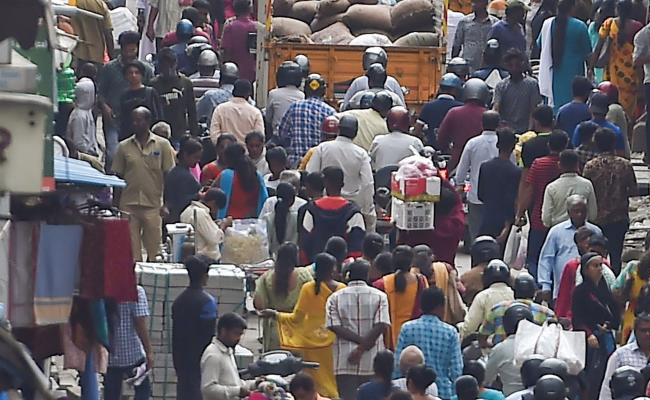
Kolkata (PTI): India's population is expected to stabilise by 2080 at 1.8 or 1.9 billion due to dipping total fertility rate, which is currently below the replacement level at 1.9, an official said.
India is undergoing a rapid demographic transition, with the birth rate dropping sharply over the past two decades, he said.
"In 2000, our TFR was 3.5 and today it stands at 1.9. This is a drastic decline," Indian Association for the Study of Population (IASP) general secretary Anil Chandran told PTI.
He said India's population is expected to peak at 1.8 or 1.9 billion by 2080, when growth is expected to stabilise.
"All estimates show that India's maximum population will remain below two billion," Chandran added.
He attributed the fall in fertility primarily to increasing development and education levels. Increased female literacy, he said, has directly shaped decisions around marriage and childbearing, leading to smaller families.
Greater use of contraceptives and wider access to birth control have further accelerated the decline, he said.
"Couples today are better informed and exercise greater control over when and how many children to have," Chandran said.
He said that late marriages and growing economic opportunities -- especially for women pursuing careers -- have also significantly influenced reproductive choices.
"Development is inversely proportional to birth rates. Illiterate groups still have fertility levels above three, but among the educated, TFR ranges between 1.5 and 1.8," he said.
Citing Kerala's example, Chandran said the state achieved replacement-level fertility (2.1) between 1987 and 1989 and now has a TFR of around 1.5.
West Bengal's fertility rate has also seen a sharp fall. According to the Sample Registration System (SRS) Statistical Report 2023, the state's TFR has dropped to 1.3, down from 1.7 in 2013 -- a decline of nearly 18 per cent and well below the replacement level of 2.1. West Bengal now ranks among the lowest in the country, on par with Tamil Nadu and just above Delhi, while recording the lowest urban TFR and the second-lowest rural TFR nationally, he said.
The demographer noted that while birth rates are falling, life expectancy continues to rise due to improvements in healthcare.
"More people are living beyond 60, and this brings new challenges of elderly care, especially as younger people migrate for work," he said, adding that solutions such as elderly day-care facilities are increasingly being discussed.
IASP, founded in 1971 and comprising around 1,100 demographers and population scientists, regularly deliberates on such issues with support from bodies including UNFPA, the Population Council and the Population Foundation of India.
Let the Truth be known. If you read VB and like VB, please be a VB Supporter and Help us deliver the Truth to one and all.
CM Siddaramaiah alleges ‘criminal conspiracy’ in Sringeri recount, vows legal action
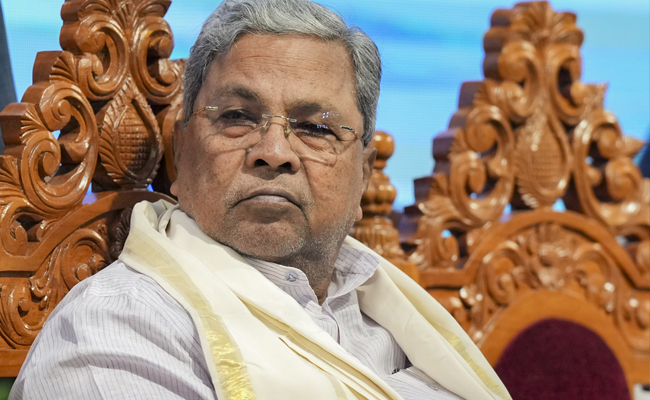
Bengaluru (PTI): Alleging a “criminal conspiracy” by BJP candidate D N Jeevaraj in the Sringeri Assembly poll recounting, Karnataka CM Siddaramaiah on Tuesday said the outcome was manipulated after valid postal ballot votes in favour of Congress leader T D Raje Gowda were tampered with during the recounting process.
Following a Karnataka High Court order on an election petition filed by Jeevaraj, challenging Raje Gowda’s election, the reverification and recounting were conducted on Saturday.
After the reverification and recount of postal ballots for the Sringeri Assembly constituency, votes polled in favour of Raje Gowda were reduced by 255, the returning officer said.
A report on the matter has been submitted to the Election Commission of India for further action, the officer added.
Congress leader Raje Gowda had won the 2023 Assembly polls from Sringeri by 201 votes, defeating his nearest rival Jeevaraj.
Addressing a press conference in Bengaluru, Siddaramaiah said the High Court had directed the recounting of postal ballots and that irregularities were noticed during the exercise conducted on May 2.
“This is a clear case of criminal conspiracy,” Siddaramaiah said, alleging that valid votes cast in favour of Raje Gowda were altered after being accepted by counting agents of all parties, including Congress, BJP, and JD(S).
He claimed that during the recounting of postal ballots, 255 votes were initially accepted as valid by all agents but were later tampered with by subordinate officials.
“There is a second mark on the votes polled in favour of Raje Gowda. They had accepted these as valid votes. Subsequently, another mark was made by officials. This is a clear case of criminal conspiracy,” he said.
When asked who was behind the alleged conspiracy, the CM replied, “It was hatched by Jeevaraj and others. It is planned.”
Siddaramaiah further alleged that the returning officer acted improperly by declaring the result despite the presence of an Election Commission observer during the recounting.
“Immediately after the counting, the returning officer announced the result. He should not have done so; this is against the law,” he said.
He pointed out that Raje Gowda had originally won by 201 votes, but after the recounting, the BJP candidate was declared the winner by 52 votes.
“The BJP has committed a criminal act of conspiracy. This is not vote chori but vote dacoity,” he alleged.
The CM said a police complaint had already been filed by Raje Gowda’s election agent, Sudhir Kumar, and emphasised the need for electoral integrity.
“We want transparency and free and fair elections. That is what our Constitution mandates,” he added.
Stating that the government would pursue legal remedies, Siddaramaiah said, “We are preparing an appeal challenging the returning officer’s announcement in a court of law.”
Responding to a separate query on elections in other states, the CM said there appeared to be an anti-incumbency factor in West Bengal, while results in Tamil Nadu were “surprising,” adding that Vijay’s party was emerging as the largest there.
Following the victory of party candidates in Bagalkote and Davanagere South, Siddaramaiah expressed confidence about future electoral prospects in Karnataka.
“Even in 2028, we will win the Assembly elections. We will come back,” the CM said.
Siddaramaiah added that he would order a forensic examination into the alleged tampering of postal ballots.