India's top 1% grew its wealth by 62% since 2000: G20 report
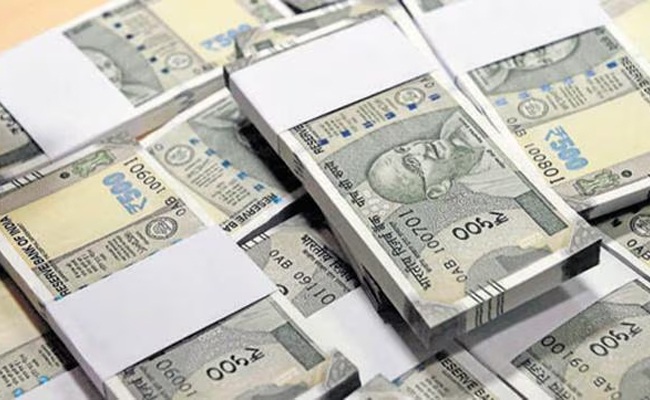
New Delhi (PTI): India's richest 1 per cent expanded its wealth by 62 per cent between 2000 to 2023, according to a report commissioned by the South African Presidency of the G20.
The study, led by Nobel laureate Joseph Stiglitz, warns that global inequality has reached "emergency" levels, threatening democracy, economic stability, and climate progress.
The G20 Extraordinary Committee of Independent Experts on Global Inequality, which includes economists Jayati Ghosh, Winnie Byanyima, and Imraan Valodia, found that the top 1 per cent globally captured 41 per cent of all new wealth created between 2000 and 2024, while the bottom half of humanity received just 1 per cent.
The report said the intercountry inequality, broadly measured, appears to have reduced because of the rise in per capita incomes in some very populous countries like China and India, which brought down the share of high-income countries in global GDP somewhat.
The report said that between 2000 and 2023, the richest 1 per cent increased their share of the wealth in over half of all countries, which contain 74 per cent of the global.
"In India, the top 1% have grown their share of wealth by 62% over this period (2000-2023); this figure is 54% in China," the report said.
"Extreme inequality is a choice. It is not inevitable and can be reversed with political will. This can be greatly facilitated by global coordination, and in this regard, the G20 has a critical role," it said.
The report proposes the creation of an International Panel on Inequality (IPI), modelled on the Intergovernmental Panel on Climate Change (IPCC), to monitor global trends and guide policymaking.
The body, to be launched under the South African G20 Presidency, would provide governments with "authoritative and accessible" data on inequality and its drivers.
Countries with high inequality are seven times more likely to experience democratic decline than more equal countries, the report said.
"Since 2020, global poverty reduction has slowed almost to a halt and reversed in some regions. 2.3 billion people face moderate or severe food insecurity, up by 335 million since 2019.26 and half the world's population is still not covered by essential health services, with 1.3 billion people impoverished by out-of-pocket health spending," the report said.
Let the Truth be known. If you read VB and like VB, please be a VB Supporter and Help us deliver the Truth to one and all.
Madhu Kishwar booked over misleading content on social media
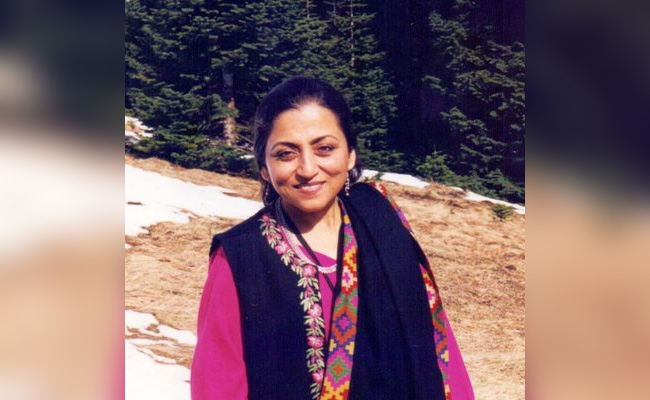
Chandigarh (PTI): Madhu Kishwar has been booked following a complaint by a Chandigarh resident over the alleged circulation of forged and misleading content on social media.
An FIR has been lodged against Kishwar and some other social media users under relevant sections, including 196 (criminalises acts that promote enmity, hatred, or ill-will between groups based on religion, race, language), 336 (1) (forgery) and 356 (criminal defamation) of Bharatiya Nyaya Sanhita and the IT Act at Police Station Sector-26 here.
According to an official statement issued by the Chandigarh police on Monday, a city-based complainant on April 19 alleged that some forged and misleading social media posts and video clips with obscene text and content were being circulated by various social media users, misidentifying the person in the video.
Further investigation into the matter is underway.
As per the complainant, it is a deliberate act of creating a false electronic record using obscene words and phrases, having knowledge and sufficient reason to believe that the posts are misleading and false, with the intent to cause damage or injury.
The video, which circulated with the intent to cause harm to the reputation of a constitutional authority and to disturb public peace and tranquility, should be investigated, and appropriate action should be taken, according to the complainant.
As per the complainant, the person seen in the video is a travel vlogger whose wife regularly posts updates about their activities on social media. The original video was shared from her social media account.
"As per the statement of the woman, she disclosed that the person in the video shared from her account is her husband. Statements of her husband and another lady in the video have also been recorded during preliminary investigation," said police in the statement.
Meanwhile, Kishwar, in a social media post, said a team of Chandigarh police had visited her late Monday night to serve her notice regarding the FIR registered against her.
"Since the law forbids the police to visit or arrest women after dark and before sunrise, I spoke on phone to the leader of the delegation. She told me that their team has come to serve notice regarding an FIR registered against me in Chandigarh. I insisted that they go by the law and come in the morning," she wrote on X.