India's top health experts question WHO report on excess Covid deaths, term it untenable
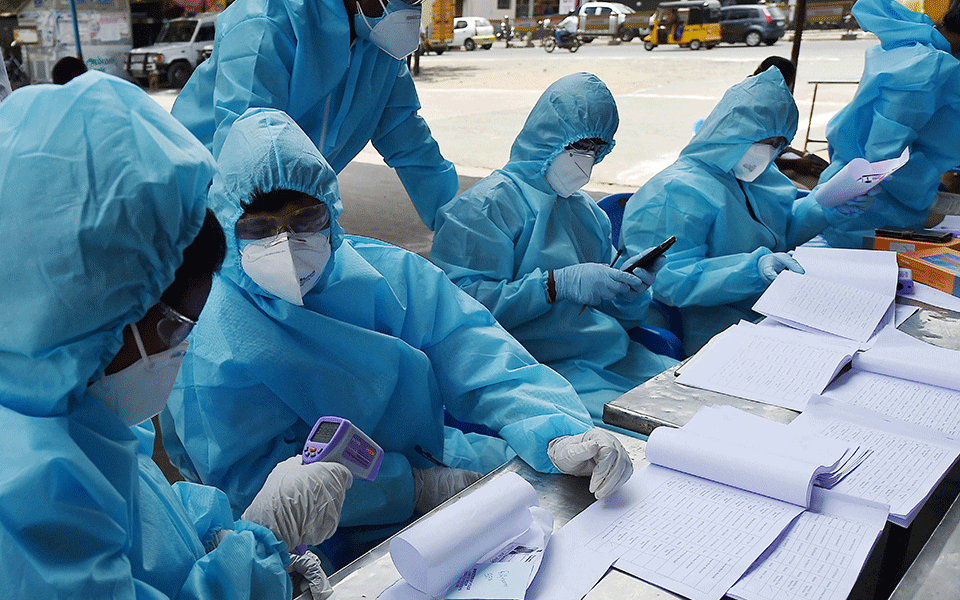
New Delhi(PTI): Questioning the modelling methodology used by WHO to estimate 4.7 million deaths in India due to Covid or its impact, top health experts have expressed disappointment over the global health body's "one-size-fits-all" approach to arrive at the figure.
ICMR Director General Balram Bhargava, NITI Aayog Member (Health) V K Paul, AIIMS Director Randeep Guleria and NTAGI's COVID-19 Working Group Chairman Dr N K Arora on Thursday rejected the WHO report as "untenable and unfortunate".
In its report released on Thursday, WHO estimated that nearly 15 million people were killed either by the coronavirus or by its impact on the overwhelmed health systems in the past two years, more than double the official death toll of six million.
Most of the fatalities were in Southeast Asia, Europe and the Americas.
According to the report, there were 4.7 million Covid deaths in India -- 10 times the official figures and almost a third of Covid deaths globally.
Rejecting it, Dr V K Paul said India has been telling WHO with all humility through diplomatic channels along with data and rational reasoning that it does not agree with the methodology that has been followed for the country.
They have used a methodology for several nations which is based on a systematic collection of data on deaths.
"We have a similar system, a robust Civil Registration System (CRS). We released that report yesterday (Wednesday) and we have an actual count of deaths for 2020... the 2021 numbers will also come up," he said.
The Civil Registration System of India provides accurate estimates emanating from the ground, certified and validated by the district and the state administration.
"We want them to have used these numbers. Unfortunately, despite our emphatic writing and communication at the ministerial level, they have chosen to use the numbers that are based on modelling and assumptions," Paul said.
"Modelling is a one-size-fits-all kind of assumption and you may apply it where the systems are poor. But to apply assumptions based on a subset of states and on reports that come from websites and media, and then you come out with an exorbitant number is not tenable. We are disappointed with what WHO has done," he stated.
These kinds of assumptions used for a nation of India's size "to put us in poor light is not desirable," Paul added.
Assuring the country that the government has nothing to hide, Paul said there is still an active process by which Covid deaths are being reconciled.
"Our numbers are there and we have a robust system from the ground. We, therefore, do not accept these numbers, we reject them," he said.
On what would be India's next step, Paul said, "We will communicate our stance systematically. We have a rebuttal by way of educating people and the public at large through our press release.
"We will go back to WHO to explain this and at the same time we would like to make sure that our stand is put forth around the world."
The NTAGI's COVID-19 Working Group Chairman, Dr N K Arora, described the WHO report as very unfortunate.
"India has performed unexpectedly well in COVID-19 management. In fact, many prestigious journals in the world had predicted doom for India," he said.
"They thought India will just collapse both as a nation as well as an economy and as a health system. But it never happened because we as a country came together and managed it very well"
Dr Arora said India's mortality per million is among the lowest compared to many advanced nations.
"I think people should now learn how to digest that they can learn even from India how to manage pandemics... I think the time has come that we should be more confident in ourselves and the way we are doing it. In fact, the world has a lot to learn from us," he said.
Dr Balram Bhargava said there was no definition of Covid deaths.
"Even WHO did not have any definition for death... So, we looked at all the data that we had and we concluded that 95 per cent of the deaths that occurred after testing positive for COVID-19 were occurring in the first four weeks. So a 30-day cut-off was given for the definition of death," he said.
"This robust definition that I think only the NHS in the UK and we have used it. Many countries don't have this definition because this is dependent on giving compensation and other issues.
"We used this definition based on data.... all that is systematically collected. Once we have systematic data, we do not need to rely on modelling, extrapolations and press reports and using them to put into a modelling exercise," Dr Bhargava said.
Dr Randeep Guleria also raised objections to the WHO report.
"I'll give three broad reasons for that. One is that India has a very robust system of birth and death registration and that data is available. WHO has not used that data.
"The second important issue is the data that WHO used is more hearsay evidence or what has been there in the media or from unconfirmed sources. That data itself is questionable. To do modelling on that data is not correct and it's not scientifically the right, especially when you have data," he said.
Another issue is that India has been very liberal in offering compensation to people who have died from COVID-19 and that has been there in a very open manner, Dr Guleria said.
"So, even if there were excess Covid-related deaths, they would have been recorded because people would have come forward for compensation," he added.
Let the Truth be known. If you read VB and like VB, please be a VB Supporter and Help us deliver the Truth to one and all.
Petrol, diesel price hike 'Modi's gift', country has come to 'tragic situation': Shivakumar
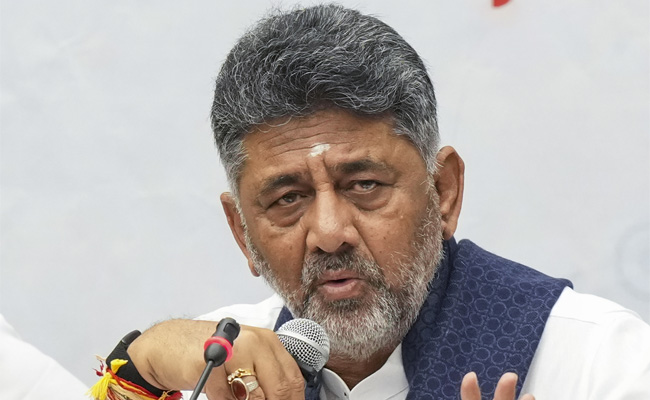
Bengaluru (PTI): Terming the petrol and diesel price hike as Prime Minister Narendra Modi's "gift", Karnataka Deputy Chief Minister D K Shivakumar on Friday said the country has come to a "tragic situation."
He also criticised the PM's call for fuel saving, postponement of gold purchases, among other measures to spend wisely.
Petrol and diesel prices were hiked by Rs 3 per litre each on Friday, the first rate increase in more than four years, amid mounting losses of fuel retailers due to surging global crude prices in the wake of the West Asia conflict.
The increase comes 16 days after Assembly elections concluded in Assam, Kerala, Tamil Nadu and West Bengal.
"Petrol and diesel price hike is Modi's gift. He has failed in international relationships. He has not maintained a good relationship with anyone in the neighbourhood. Now he is asking people of the country to limit the petrol use, not to purchase gold, minimise edible oil consumption. How can it be stopped or limited," Shivakumar asked.
Speaking to reporters here, he said, "It cannot be done. The country has come to a tragic situation. We have to save and protect this country."
People earn, and lead their lives accordingly. "No one can be controlled. It should be ensured that people lead their lives smoothly with whatever they have," he further said.
Emphasising that the Centre is trying to shield people from the adverse impact of the conflict in West Asia, PM Modi on Sunday called for judicious use of fuel, postponement of gold purchases and foreign travel, among other measures, to strengthen the economy.
Alleging Modi has failed in international relationships, the Deputy CM said, "He could not manage well, he could not help. That's the reason he has made a certain appeal to people, like he did during the Covid to light the lamp, ring the bell. It is not possible. How can I stop consumption of oil in my house? How can I stop using vehicle?"
"The Prime Minister might have reduced his security to two vehicles, fine. Let others do it across the country," he said, adding, "How can you say people should not travel outside? It is their pleasure their earnings. People travel with their earnings. It is very unfortunate (to ask people not to travel outside)."
Further noting that every woman wants to have at least a gold chain for their Mangalya or Mangalsutra, Shivakumar asked how they can be stopped from buying gold for a Mangalya chain. "It is not fair."