IndiGo cancels over 180 flights from 3 major airports

Mumbai (PTI): Domestic carrier IndiGo has cancelled over 180 flights from three major airports on Thursday, as the Gurugram-based airline struggles to secure the required crew to operate its flights in the wake of new flight-duty and rest-period norms for pilots.
"IndiGo has cancelled over 180 flights on Thursday at three airports-Mumbai, Delhi and Bengaluru," a source told PTI.
While the number of cancellations at Mumbai airport stands at 86 (41 arrivals and 45 departures) for the day, at Bengaluru, 73 flights have been cancelled, including 41 arrivals, the source said.
Besides, it had cancelled as many as 33 flights at Delhi Airport for Thursday, the source said, adding, "The number of cancellations is expected to be higher by the end of the day."
The airline's On-Time Performance (OTP) nosedived to 19.7 per cent at six key airports -- Delhi, Mumbai, Chennai, Kolkata, Bengaluru and Hyderabad -- on December 3, as it struggled to get the required crew to operate its services, down from almost half of December 2, when it was 35 per cent.
ALSO READ: IndiGo cancels over 100 flights on crew woes; DGCA probes situation, seeks mitigation plans
"IndiGo has been facing acute crew shortage since the implementation of the second phase of the FDTL (Flight Duty Time Limitations) norms, leading to cancellations and huge delays in its operations across the airports," a source had told PTI on Wednesday.
DGCA has already said it is investigating IndiGo flight disruptions and has asked the airline to submit the reasons for the current situation, as well as its plans to reduce flight cancellations and delays.
It may be mentioned here that the pilots' body Federation of Indian Pilots (FIP) has alleged that IndiGo, despite getting a two-year preparatory window before the full implementation of new flight duty and rest period norms for cockpit crew, "inexplicably" adopted a "hiring freeze."
FIP said it has urged the safety regulator, DGCA, not to approve airlines' seasonal flight schedules unless they have adequate staff to operate their services "safely and reliably" in accordance with the New Flight Duty Time Limitations (FDTL) norms.
In a letter to the Directorate General of Civil Aviation (DGCA) late Wednesday, FIP urged the DGCA to consider re-evaluating and reallocating slots to other airlines, which have the capacity to operate them without disruption during the peak holiday and fog season if IndiGo continues to "fail in delivering on its commitments to passengers due to its own avoidable staffing shortages."
Let the Truth be known. If you read VB and like VB, please be a VB Supporter and Help us deliver the Truth to one and all.
Congress using hijab issue to pacify minority anger, alleges Karnataka LoP R Ashoka
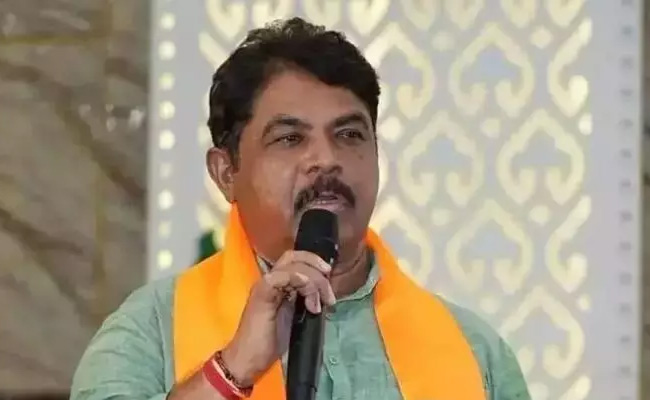
Bengaluru: Leader of Opposition in the Assembly R. Ashoka has accused the Congress government of using the hijab issue to placate what he described as discontent among minority voters after the Davanagere by-election.
In a post on X on Wednesday, Ashoka alleged that the state government, instead of addressing issues such as price rise, corruption, farmers’ distress and law and order, was attempting to retain its minority vote base by reviving the hijab issue.
Referring to the 2022 dress code introduced by the BJP government, which prohibited hijab in schools and colleges, Ashoka said the Karnataka High Court had upheld the policy and emphasised the importance of discipline in educational institutions.
He questioned the Congress government’s move to revisit the issue and asked whether setting aside the court-backed policy to benefit one community could be described as secularism.
Ashoka further alleged that while the government was willing to permit hijab, it continued to prohibit saffron shawls.
He accused the government of dividing students on religious lines rather than treating schools and colleges as spaces of equality.
Drawing a comparison with Mamata Banerjee’s government in West Bengal, Ashoka claimed that excessive appeasement politics had harmed the state and warned that the Congress in Karnataka could face a similar political response.
He said voters in Karnataka would teach the Congress a lesson for what he termed “vote-bank politics” and for compromising constitutional and judicial principles.