Indore collector draws flak for visiting RSS office; Cong calls him ‘BJP worker’
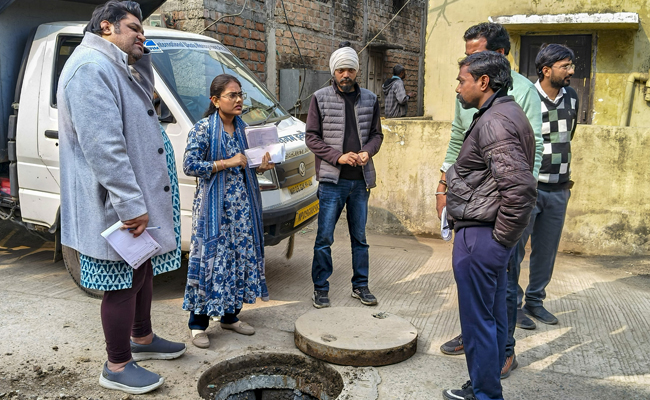
Indore (PTI): The Congress has criticised the collector of Indore for visiting the local office of the Rashtriya Swayamsevak Sangh, dubbing him a “BJP worker.
Indore, Madhya Pradesh’s commercial capital and the country’s cleanest city for almost a decade now, is in the news for seven deaths due to water contamination in its Bhagirathpura area.
Collector Shivam Verma is “working like a BJP worker”, MP Congress president Jitu Patwari said on Thursday.
Verma, along with Indore Mayor Pushyamitra Bhargav, had visited the “Sudarshan” office in Pant Vaidya Colony here on Wednesday night and discussed various issues, including the Bhagirathpura contaminated water tragedy, with RSS Malwa prant pracharak Raj Mohan Singh, claimed Patwari.
Pictures and videos of the visit went viral on social media.
“Bhargav took Verma to the RSS office. The collector has shown he is not an administrative officer. He is working as a BJP member. If you go to the offices of political parties while on duty, remember, Congress workers will correct your working style,” Patwari said while addressing his colleagues in Sanwer.
“The collector should be working in his office, meeting with the chief secretary, and discussing matters with ministers and officials. People are dying in Indore, there is contaminated water everywhere, and the level of corruption is unimaginable. However, the collector is not working. He is going to the RSS office to mark his attendance for the BJP,” Patwari alleged.
Verma could not be contacted for comments despite repeated attempts.
Amid claims by residents that 17 persons died due to water contamination, the MP government distributed compensation to 18 affected families on Tuesday.
Patwari himself had put the death toll at 20 in an X post.
Meanwhile, state minister Kailash Vijayvargiya, who sparked a row with his remarks on the water contamination deaths, on Thursday held discussions with the BJP’s organisation general secretary Hitanand Sharma at the party office here.
Vijayvargiya did not speak to reporters after the discussion with Sharma.
Some leaders said Vijayvargiya had come to the state office as part of the regular programme for ministers to listen to the problems of party workers. Vijayvargiya also listened to the problems of the workers under this programme, they added.
Vijayvargiya, the state urban development minister, had landed in controversy for using objectionable language on camera regarding the Indore water-related incident.
After facing sharp criticism, he had expressed regret for his remarks. Bhagirathpura is part of Vijayvargiya's Indore-1 assembly constituency.
Let the Truth be known. If you read VB and like VB, please be a VB Supporter and Help us deliver the Truth to one and all.
4 workers die after being buried under coal slurry in Jharkhand's Dhanbad
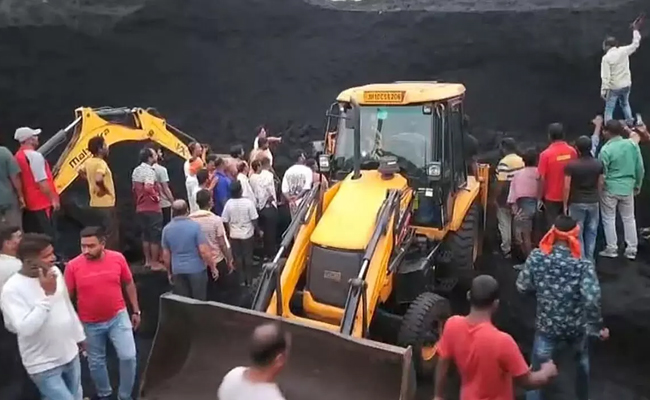
Dhanbad (Jharkhand) (PTI): At least four workers died after being buried under coal slurry in Jharkhand's Dhanbad district on Saturday, a police official said.
The incident took place at Moonidih coal washery in the command area of Bharat Coking Coal Limited (BCCL).
"Bodies of all four workers were dug out of debris during a rescue operation," Putki police station in-charge Waqar Hussain told PTI.
The incident took place when coal slurry was being loaded into trucks by workers, during which a large chunk of slurry fell and trapped several workers underneath, officials said.
The deceased have been identified as Manik Bauri, Dinesh Bauri, Deepak Bauri, and Hemlal Gope.
Meanwhile, the family members of the deceased and local villagers placed the bodies in front of the washery gate and began a protest.
They demanded compensation, jobs for dependents and action against those responsible for the incident.
Police and administration officials are trying to pacify the protesters, an official said.