Interpretation of Constitution has to be pragmatic: CJI
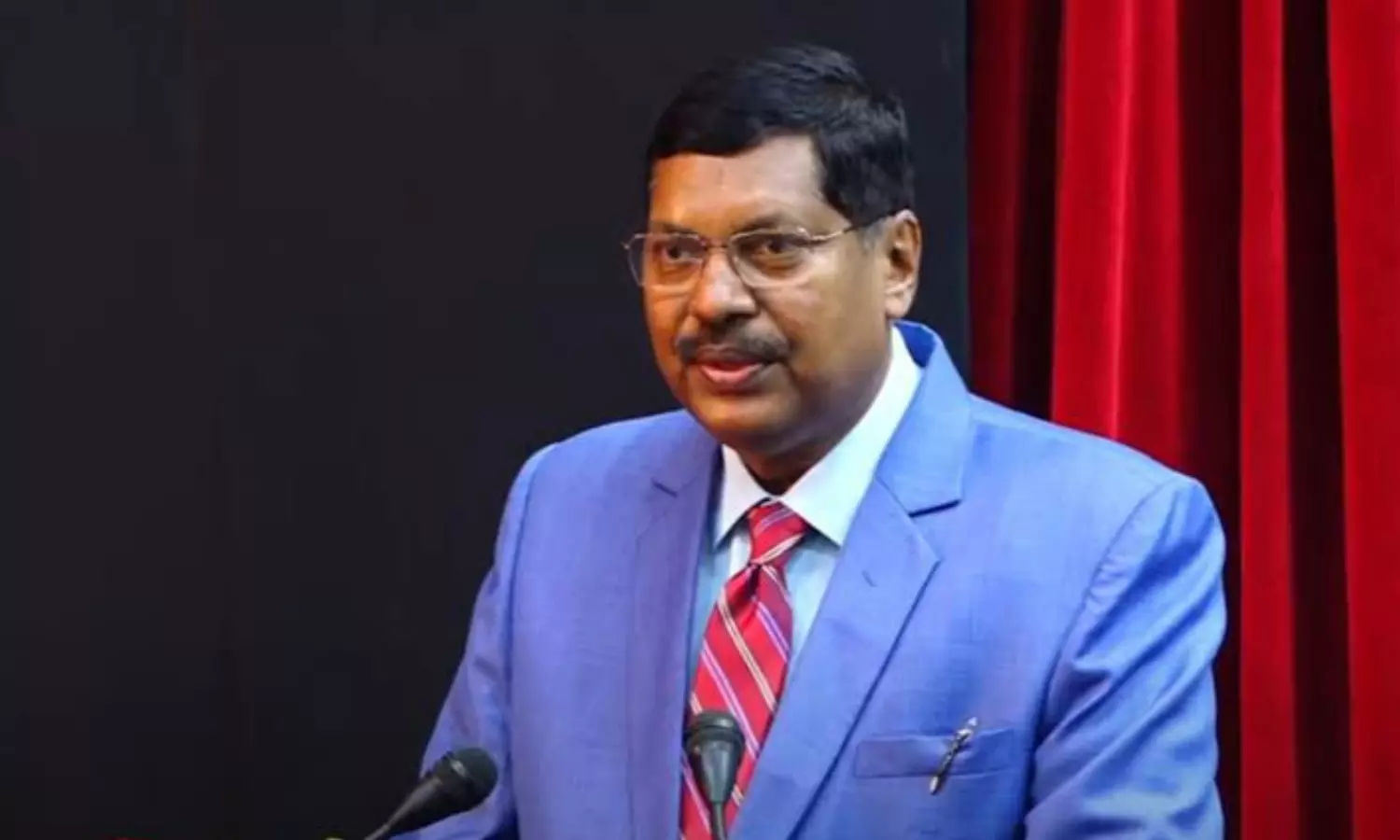
Mumbai (PTI): Chief Justice of India Bhushan Ramkrishna Gavai has said the interpretation of law or the Constitution has to be "pragmatic" and in a way that suits the needs of society.
Speaking at a felicitation organised for him by the Bombay High Court here on Saturday, he also said he recently received complaints about the rude behaviour of "some of the colleagues", and urged judges to protect the institution's reputation.
Citing a past Supreme Court judgement, CJI Gavai said any law or the Constitution has to be interpreted in the context of "problems faced by the present generation."
"The interpretation has to be pragmatic. It has to be one that suits the needs of society," he added.
Judges are expected to work as per their conscience, the oath of office and law, but "should never be perturbed once the matter is decided," he said.
A judge should cut off his mind from the matter and forget what happens to it thereafter, he said.
Talking about the appointment of judges, the CJI asserted that "at no cost the independence of judiciary shall be compromised".
While making appointments either to the Supreme Court or high courts, the collegium ensures merit is maintained while there is diversity and inclusiveness, he said.
CJI Gavai complimented the Bombay High Court -- where he once practised as a lawyer and served as a judge -- for its work, and said he feels proud when people appreciate its judgements.
He also said that lately he has been "receiving a lot of complaints about the rude behaviour of some of the colleagues."
"Being a judge is not a 10 to 5 job, it's an opportunity to serve the society. It is an opportunity to serve the nation," he stressed, and urged the judges to be "true to their oath and commitment."
"Please do not do anything which brings disrepute to this august institution, whose reputation has been so laboriously built by the devotion and dedication of generations of lawyers and generations of judges," he said.
Speaking at another felicitation ceremony later on Saturday evening, the CJI said the Constitution works for every last citizen of the country, be it a judge, lawyer, an executive or a parliamentarian.
"Let us dedicate our lives to the eradication of all differences, let us give it ourselves to upholding constitutional values, let us give it ourselves towards the fulfilment of our constitutional promises," he added.
Let the Truth be known. If you read VB and like VB, please be a VB Supporter and Help us deliver the Truth to one and all.
Man arrested with Rs 2.54-crore heroin in Mumbai

Mumbai (PTI): Police have arrested a man and seized over 500 grams of heroin worth Rs 2.54 crore in the illicit market from him in Mumbai, officials said on Friday.
The police's Anti-Narcotics Cell (ANC) made the drug seizure in Santacruz in the western suburbs. The operation was conducted by the Kandivali unit of the ANC on Thursday as part of a special crackdown against drug trafficking in the area, they said.
Acting on specific inputs, an ANC team conducted a raid in Santacruz (East) and intercepted a man. During a search, the team recovered 508 grams of high-grade heroin from his possession, an official said.
The seized contraband, a highly addictive, opioid drug derived from morphine, is estimated to be worth Rs 2.54 crore in the international market, he informed.
Following the seizure, a case was registered against the man under relevant sections of the Narcotic Drugs and Psychotropic Substances (NDPS) Act, 1985, and he was formally placed under arrest in the early hours of Friday.
The police are currently investigating the source of the drug and trying to identify the intended recipients of the consignment, he said.