Investigation raises questions on zoo transfers of exotic animals to Reliance-run Vantara
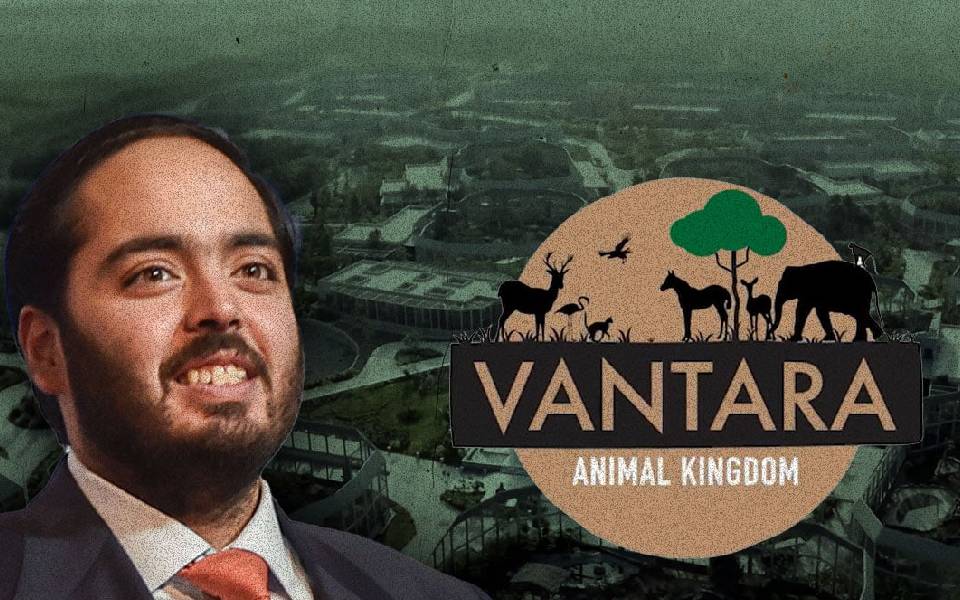
New Delhi: A recent investigative report published in Himal Southasian magazine has highlighted the issue of exotic wildlife smuggling into India through the porous borders of the northeast region. The report, authored by M. Rajshekhar, reveals that while many consignments of trafficked wildlife have been intercepted by law enforcement agencies and relocated to zoos, a significant number have found their way to Vantara, an initiative by Reliance Industries aimed at the 'rescue' and sheltering of wildlife.
Situated within the premises of the Jamnagar petrochemical complex, Vantara gained media attention during the pre-wedding festivities of Anant Ambani and Radhika Merchant in early March 2024.
According to the report, the dynamics of wildlife trade have evolved over time. While until 2018, most of the trade originated in India and was directed towards countries like Myanmar, China, and Vietnam, the trend has reversed. Presently, new supply chains are facilitating the influx of exotic species, including kangaroos, reptiles, birds, and primates from South-East Asia and Latin America into India.
Upon interception, the smuggled birds and animals are typically transferred to the nearest state-owned zoos in cities like Guwahati or Aizawl. However, a recent shift has been observed, as a significant number of these 'rescued' animals are subsequently relocated to Jamnagar from the zoos in Assam.
The report highlights the exponential growth of Vantara over the past four years, with a substantial collection of endangered species and a workforce of 2,700 individuals managing the facility. According to the Greens Zoological, Rescue, and Rehabilitation Centre's annual report for 2022–23, which collaborates with the Radhe Krishna Temple Elephant Welfare Trust, Vantara houses 3,889 birds and animals representing 134 species.
Questions raised by the Himal report also pertain to the transfer of wildlife to Vantara from other zoos. For instance, the Sakkarbaug Zoo in Gujarat's Junagadh reportedly transferred 101 leopards to Jamnagar between March 2021 and March 2023, with unclear reasoning behind such a substantial transfer, as noted in the report.
In the fiscal year 2022–23, Greens documented a total of 160 transactions involving the receipt of wildlife. Some of the birds originated from state zoos located in Tamil Nadu, Gujarat, Uttarakhand, Madhya Pradesh, Delhi, Assam, Uttar Pradesh, Manipur, Karnataka, West Bengal, Maharashtra, and Nagaland.
Let the Truth be known. If you read VB and like VB, please be a VB Supporter and Help us deliver the Truth to one and all.
Advocate found dead in car on Nainital court premises

Nainital (PTI): A 55-year-old advocate allegedly died by suicide after shooting himself inside his car at the Nainital district court parking lot here on Monday, police said.
According to the police, Puran Singh Bhakuni, a resident of Mallital, was found in the rear seat of his vehicle with a gunshot wound to his temple.
Police recovered a licensed pistol from his hand and a suicide note from the car’s dashboard. The note stated that Bhakuni was unwell and suffering from depression.
"We received information through lawyers around noon. The deceased was lying in the back seat with a pistol in his hand and blood near his ear," Circle Officer Anjana Negi said.
Forensic teams and ballistic experts reached the spot to collect evidence, as no witness reported hearing the gunshot.
Government counsel Sushil Sharma stated that Bhakuni left home at 9 am and was found dead at 9.30 am.
Sharma raised concerns over the circumstances, noting that the body was in the rear seat, and demanded a thorough probe to rule out foul play. Bhakuni, who worked as a notary, had married six months ago, he said.
Police took the body into custody and sent it for a postmortem to confirm the cause of death.
The forensic laboratory will examine the suicide note and the ballistics of the weapon, the police said, adding that the investigation is ongoing.