Israeli PM Netanyahu calls PM Modi; briefs on Gaza Peace Plan status
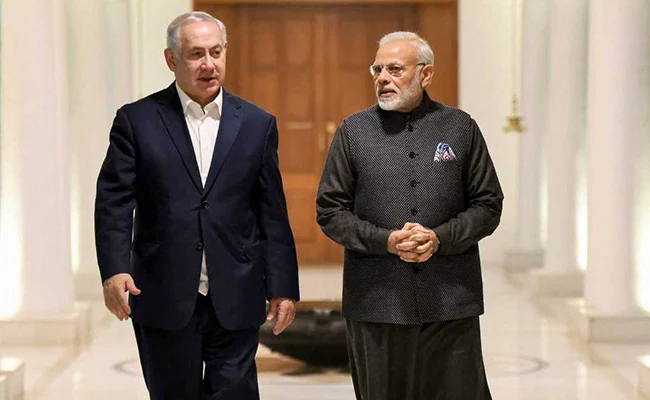
New Delhi (PTI): Prime Minister Narendra Modi on Wednesday received a phone call from his Israeli counterpart Benjamin Netanyahu, who shared an update on the Gaza Peace Plan and reaffirmed their shared resolve to fight terror.
"The two leaders warmly exchanged New Year greetings and wished the people of both countries peace and prosperity," a statement from the prime minister's office said.
It said Netanyahu briefed the prime minister on the implementation of the Gaza Peace Plan.
"The Prime Minister reaffirmed India's consistent support for efforts towards a just and durable peace in the region," the statement said.
ALSO READ: Two killed in boiler explosion at sugar factory in Karnataka
Modi and Netanyahu identified shared priorities to further strengthen the India-Israel Strategic Partnership in the year ahead, guided by shared democratic values, deep mutual trust and a forward-looking vision.
"They reiterated their zero-tolerance approach towards terrorism in all its forms and manifestations and reaffirmed their commitment to fight this menace," the statement said.
Modi and Netanyahu also exchanged views on regional and global issues of mutual interest and agreed to remain in touch.
In a post on X, Modi said they also reaffirmed their shared resolve to fight terrorism with greater determination.
"Glad to speak with my friend, Prime Minister Benjamin Netanyahu and convey New Year greetings to him and the people of Israel," Modi said.
"We discussed ways to further strengthen the India-Israel Strategic Partnership in the year ahead," he said.
Let the Truth be known. If you read VB and like VB, please be a VB Supporter and Help us deliver the Truth to one and all.
Child rape-murder: Hundreds protest on Mumbai-Bengaluru highway in Pune; traffic hit

Pune (PTI): Hundreds of people blocked the Mumbai-Bengaluru highway in Pune to protest the rape and murder of a four-year-old girl, leading to traffic disruption on the busy route for about four hours.
The girl's family members and other demonstrators placed the body on the road in the Navale Bridge area on Saturday evening and demanded stringent punishment for the 65-year-old man arrested in the case.
Several videos surfaced showing a huge traffic jam on the highway.
Later, the victim's last rites were performed at the Vaikunt crematorium here shortly after midnight amid tight police security.
The accused man, who works as a labourer and has a criminal record, allegedly lured the girl with the promise of food on Friday in the Bhor tehsil of Pune district. He then took her to a cattle enclosure where he allegedly sexually assaulted her and later killed her by hitting her with a stone, according to the police.
He was arrested based on CCTV footage from a private residence, which captured him with the child.
A case was registered against him under the relevant provisions of the Bharatiya Nyaya Sanhita and the Protection of Children from Sexual Offences (POCSO) Act and he has been remanded in police custody till May 7.
Maharashtra Deputy Chief Minister Sunetra Pawar on Saturday met the family of the victim, assuring them of strict action against the accused and a fast-track trial.
Describing the incident as "shocking" and a "blot on humanity", Pawar said the government stands firmly with the victim's family and will ensure justice.
She also spoke to Chief Minister Devendra Fadnavis and sought a fast-track court trial so that the accused receives the harshest punishment.
Deputy CM Eknath Shinde directed Pune rural police to gather concrete evidence to build a watertight case and conduct the trial in a fast-track court.
Efforts should be made to ensure the accused gets the death penalty, a statement quoted Shinde as saying.