ISRO to put first astronaut on Moon by 2040
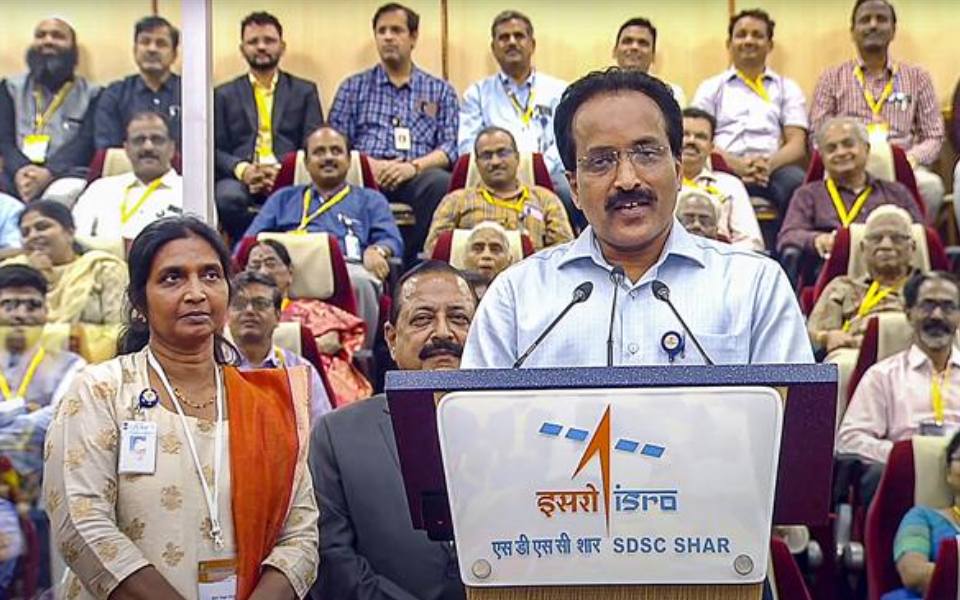
Thiruvananthapuram, Dec 12: After the historic success of its Chandrayaan-3 lunar mission, ISRO is going full throttle with its plans to send Indian astronauts for the first time to the Moon by 2040, ISRO Chairman S Somanath said.
The Bengaluru-based space agency is currently working on the country's maiden manned mission, 'Gaganyaan', which aims to send astronauts into Low Earth Orbit and bring them back safely to earth.
Four pilots from the Indian Air Force who were selected for the mission are undergoing training at the Astronaut Training Facility in Bengaluru, the top scientist said.
In an exclusive article for Manorama Yearbook 2024, the Secretary of Department of Space said, "Looking ahead, ISRO aims to take the next step in space exploration with the Gaganyaan programme, planning to launch a crew of 2 to 3 Indian astronauts into Low Earth Orbit (LEO) for up to three days before safely returning them to a predefined site in Indian waters."
The inaugural manned mission involves developing critical technologies, including a human-rated (capable of safely transporting humans) launch vehicle (HLVM3), an Orbital Module comprising a Crew Module (CM) and Service Module (SM), and life support systems.
Two identical un-crewed missions (G1 & G2) besides Integrated Air Drop Test, Pad Abort Test, and Test Vehicle flights will precede the manned mission.
CM is a habitable space with an Earth-like environment in space for the crew and is designed for safe re-entry. Safety measures also include a Crew Escape System (CES) for emergencies, a statement issued by Malayala Manorama said.
The first development flight of Test Vehicle (TV-D1) was launched on October 21, 2023, and it successfully demonstrated in-flight abort of the Crew Escape System, followed by Crew Module separation and its safe recovery from the Bay of Bengal by the Indian Navy.
"The success of this test flight was crucial for subsequent unmanned missions and the ultimate human space mission, expected to be launched in 2025," said Somanath, who is also Chairman of the Space Commission.
Aditya L1, which is India's maiden solar exploratory mission, is also an important mission of the ISRO, he noted.
It will study the sun from the unique vantage point of Lagrange Point 1, showcasing the country's prowess in both lunar and solar research.
Launched on September 2, Aditya L1 is poised for a five-year mission.
The spacecraft is on its intended path towards Sun-Earth Lagrange Point 1(L1), approximately 1.5 million km from Earth, where it will be inserted into a Halo orbit in January 2024, he explained.
On the success of the Chandrayaan-3 mission, he termed it as a 'historic achievement', leading to the declaration of August 23 (landing near the lunar south pole) as National Space Day in India' by the Prime Minister.
In the mission life of 14 earth days, it yielded valuable lunar data, discovering aluminium, calcium, iron, chromium, titanium, sulphur, manganese, silicon, and oxygen in lunar soil.
Referring to some ambitious ongoing and upcoming missions, he said these include Small Satellite Launch Vehicle (SSLV), Reusable Launch Vehicle (RLV) programme, X-ray astronomy mission XPOSAT (X-ray Polarimeter Satellite), Space Docking Experiment, and LOX-Methane engine.
"Together, these transformative initiatives define a new space saga in India's pursuit of space exploration, fostering scientific progress and an ever-expanding cosmic horizon."
Elaborating, he said SSLV, a three-stage launch vehicle, can launch 500 kg satellite into 500 km planar orbit, and can accommodate multiple satellites.
It has launch-on-demand feasibility, minimal launch infrastructure requirements and low cost. With two flights in the recent past, SSLV is at the stage of transition from developmental flights to operational flights.
Somanath further said the Prime Minister has set ambitious goals such as commissioning Bharatiya Antariksha Station' (Indian Space Station) by 2035, and embarking on interplanetary exploration, featuring a Venus Orbiter Mission and a Mars Lander, to further solidify India's presence on the global space stage.
Exuding confidence that India's space programme will reach new heights in the coming years, he said, "with every mission launched and every discovery made, ISRO reaffirms its position on the global stage as a force to reckon with, instilling national pride and expanding India's technological feat."
Let the Truth be known. If you read VB and like VB, please be a VB Supporter and Help us deliver the Truth to one and all.
Karnataka rolls out climate action plan to tackle global warming: Minister Khandre
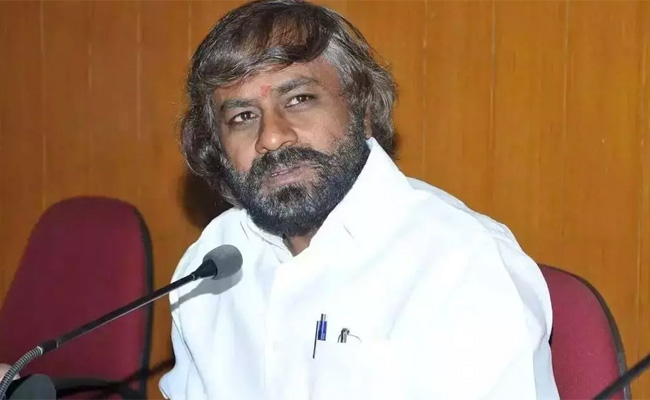
Bengaluru (PTI): Minister Eshwar Khandre on Tuesday said that a Karnataka state action plan on climate change has been formulated to mitigate the impact of global warming and climate change, and directions have been issued to ensure its proper implementation.
Speaking after presiding over a seminar on extreme heat and its impact on Bengaluru, organised by the Karnataka Media Academy, he said the Environmental Management and Policy Research Institute (EMPRI), which comes under the environment department, has taken steps to implement the action plan in coordination with various state government departments.
He said training programmes are being organised in cooperation with zilla panchayat offices for district officials and other related institutions regarding the implementation and progress of the Karnataka state action plan on climate change.
The Forest, Ecology and Environment minister said such programmes will be conducted in all 31 districts of Karnataka.
According to a statement issued by the minister’s office, in terms of climate resilience, Khandre said a dedicated radio programme, “Havamaana Mitra” (weather friend), was launched in April 2025 to share information on best practices, and 24 programmes have so far been broadcast on Akashvani.
ALSO READ: Passenger held at BLR airport with hydroponic ganja worth Rs 1.28 crore
He said these efforts aim to create public awareness.
Khandre emphasised that due to global warming and climate change, even seasons are changing today.
“Keeping this in mind, after becoming Forest Minister, I have been making every effort to increase green cover, especially in Bengaluru city,” he said.
He noted that during the last three years, about 11 crore saplings have been planted in the state, and information on their survival rate has been made available on the Forest Department website.
According to him, encroachments on about 250 acres of forest land worth around Rs 10,000 crore in several parts of Bengaluru, including Kothanur, Kadugodi, B M Kaval, and Turahalli, have been cleared.
Thousands of saplings have been planted and groves created on the cleared land, thereby preserving lung spaces essential for Bengaluru city.
The minister also recalled that more than 400 acres of forest land in Peenya plantation had earlier been allotted to the central government-owned HMT for industrial purposes.
He said HMT had sold 160 acres of this land, while 280 acres remain, and a decision has been taken to reclaim it for the department to preserve an essential lung space for Bengaluru. A legal battle is underway, and the case is currently in the Supreme Court.
In addition, he said 444 acres in the Jarakabande area had been allotted to the Indian Air Force. Under the Forest (Conservation) Act, 1980, forest land cannot be diverted without due process. Hence, in 2017, the then Deputy Commissioner cancelled the land allotment.
“Steps are now being taken to reclaim this forest land and preserve the green space,” he said.
Khandre also highlighted that the Yelahanka Air Force Station in Gantiganahalli, where the international air show is held once every two years in Bengaluru, is on forest land.
He said 159 acres in Gantiganahalli village is classified as a reserved forest area.
“If the Air Force submits a proposal for diversion and provides alternative land, this area may be considered for transfer; otherwise, steps will be taken to reclaim it for the forest department,” he said.
“The Indian Air Force is presently using this area as a runway. However, the RTC and mutation records are in the name of the Forest Department, and the land has not been legally converted. Hence, this forest land will be reclaimed,” he said.
He added that the government has resolved to construct a major biological park on 153 acres at Madappanahalli in Bengaluru North taluk, and cabinet approval has been obtained.
“The CM will lay the foundation stone next month. This will be the largest park after Lalbagh and Cubbon Park. It would not be incorrect to call this an achievement of the century,” he said.