ISRO's first launch in 2022: PSLV-C52 successfully launches earth observation and 2 small satellites
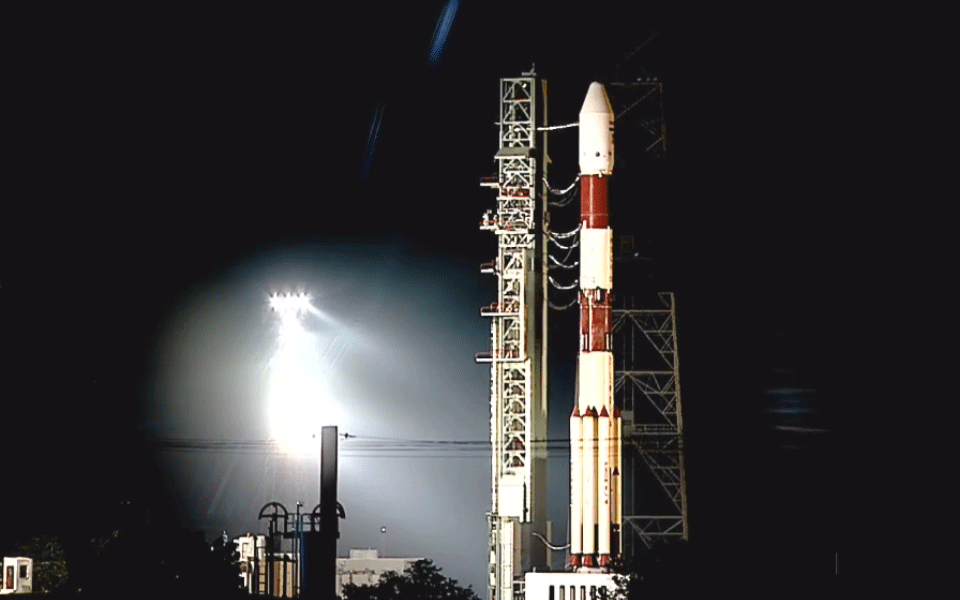
Sriharikota (AP) (PTI): Marking the first launch mission of the year 2022, Indian Space Research Organisation's earth observation satellite EOS-04 and two small satellites were successfully placed into the intended orbit by the PSLV-C52 rocket on Monday, a feat described by the ISRO as a "marvellous accomplishment".
The space agency's workhorse launch vehicle, PSLV, placed the three satellites into the intended orbit, after blasting off at 5.59 am from here amid dark, early morning skies.
After a flight of about 19 minutes, the vehicle injected the satellites into its intended orbit, drawing instant cheers and applause from the scientists who were closely monitoring the year's maiden mission. ISRO, in a tweet, said EOS-04 was placed into an intended sun synchronous polar orbit of 529 km altitude at 6.17 am.
After first injecting EOS-04, the two small satellites INSPIREsat-1 and INS-2TD were also put into their orbits respectively.
"The mission of PSLV-C52/EOS-04 has been successfully accomplished. The primary satellite EOS-04 has been put into a very precise orbit by PSLV-C52, and along with that, co-passenger satellites INSPIREsat-1 and INS-2TD also have been placed into right orbit," ISRO Chairman S Somanath said after the successful launch.
Incidentally, today's launch also happens to be the first mission after Somanath took over as the Secretary, Department of Space and Chairman, Space Commission, recently.
Thanking everyone for making the mission possible, he said, "this spacecraft is going to be one of the biggest assets for us to serve the country."
Mission Director SR Biju said "what we have accomplished today is really marvellous." Earlier, the 25.30-hour countdown for today's launch had commenced at 04:29 am on Sunday.
EOS-04, weighing 1,710 kg and with a mission life of ten years, is a Radar Imaging Satellite designed to provide high quality images under all weather conditions for applications such as Agriculture, Forestry and Plantations, Soil Moisture and Hydrology and Flood mapping.
INSPIREsat-1 is from Indian Institute of Space Science and Technology (IIST) in association with Laboratory of Atmospheric and Space Physics at University of Colorado Boulder, while INS-2TD is a technology demonstrator satellite from ISRO. This is a precursor to the India-Bhutan Joint Satellite (INS-2B).
Two scientific payloads on INSPIREsat-1, with a mass of 8.1 kg and mission life of one year, are aimed at improving the understanding of ionosphere dynamics and the sun's coronal heating processes.
INS-2TD, with a mass of 17.5 kg, has a mission life of six months.
Having a thermal imaging camera as its payload, the satellite benefits the assessment of land surface temperature, water surface temperature of wetland or lakes, delineation of vegetation (crops and forest) andcthermal inertia (day and night).
Monday's was the 54th flight of PSLV and 23rd mission using PSLV-XL configuration with six PSOM-XLs (strap-on motors).
Let the Truth be known. If you read VB and like VB, please be a VB Supporter and Help us deliver the Truth to one and all.
Congress using hijab issue to pacify minority anger, alleges Karnataka LoP R Ashoka
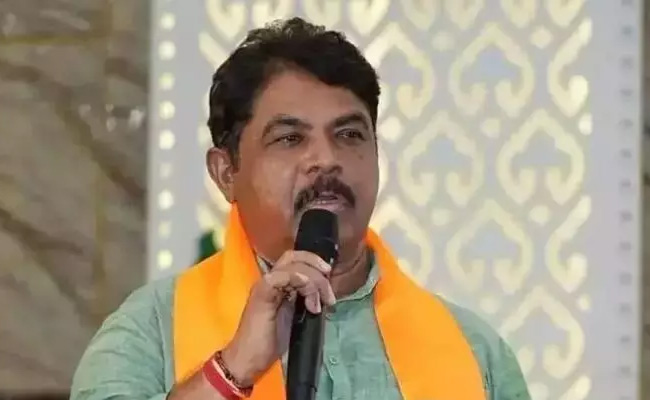
Bengaluru: Leader of Opposition in the Assembly R. Ashoka has accused the Congress government of using the hijab issue to placate what he described as discontent among minority voters after the Davanagere by-election.
In a post on X on Wednesday, Ashoka alleged that the state government, instead of addressing issues such as price rise, corruption, farmers’ distress and law and order, was attempting to retain its minority vote base by reviving the hijab issue.
Referring to the 2022 dress code introduced by the BJP government, which prohibited hijab in schools and colleges, Ashoka said the Karnataka High Court had upheld the policy and emphasised the importance of discipline in educational institutions.
He questioned the Congress government’s move to revisit the issue and asked whether setting aside the court-backed policy to benefit one community could be described as secularism.
Ashoka further alleged that while the government was willing to permit hijab, it continued to prohibit saffron shawls.
He accused the government of dividing students on religious lines rather than treating schools and colleges as spaces of equality.
Drawing a comparison with Mamata Banerjee’s government in West Bengal, Ashoka claimed that excessive appeasement politics had harmed the state and warned that the Congress in Karnataka could face a similar political response.
He said voters in Karnataka would teach the Congress a lesson for what he termed “vote-bank politics” and for compromising constitutional and judicial principles.