It will be a full-fledged IPL most likely in the UAE: IPL Chairman
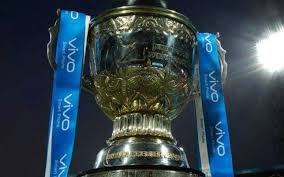
New Delhi: With the T20 World Cup's postponement clearing the decks for a full-fledged IPL, the glitzy event's Governing Council will meet in a week or 10 days' time to plan its next course of action, eyeing UAE as the host this year.
An IPL between September and early November has been made possible by the ICC's decision on Monday to postpone the T20 World Cup in Australia, scheduled for October-November, due to the COVID-19 pandemic.
"The IPL GC will meet within a week or 10 days and all decisions (including final schedule) will be taken there. As of now, the plan is to have a full fledged IPL comprising 60 games and most likely in the UAE," Brijesh Patel told PTI.
Asked about the main challenges in conducting the event in current scenario, Patel added: "Just the operational side of it. Whether you do it here or outside, it doesn't matter (with no crowds)."
The franchisees had already been working on their plans for the IPL even before the ICC announcement.
With majority of the Indian players not having access to grounds amid the pandemic, teams will need at least three to four weeks to get them match ready.
Foreign players will fly in directly to the UAE from their respective countries.
"Our players will need at least three to four weeks of training, if not more. We will finalise all our plans once the BCCI announces the dates. It looks like the IPL will be in the UAE and we are ready for that," a team owner told PTI.
Since India tour Australia for a four-Test series right after the IPL, training of the Test players is also an important issue.
Test specialists like Cheteshwar Pujara and Hanuma Vihari, who are not part of the IPL, are likely to train for the eagerly-awaited series in a bio-secure environment at the newly-renovated Motera Stadium in Ahmedabad during the time of the IPL.
A few fringe players are expected to join them at Motera along with the Indian team's support staff, which is free during the IPL.
Work from home has become the norm amid the pandemic, therefore, there is a possibility that IPL commentary will happen from the comfort of the living room, a safer and cost effective-option considering the likes of Sunil Gavaskar, who is 71, are involved.
The viewership is expected to be a record one with people craving for live cricket, something KXIP co-owner Ness Wadia has said.
However, it remains to be seen how much the broadcasters and teams are able to attract from the sponsors in the current financial climate.
More moot points and questions ahead of the IPL GC meeting:
1) More double headers expected (original schedule had only five double headers).
2) BCCI will need to provide a Standard Operating Procedure to IPL teams even though they will have their own SOPs in place.
4) Will the BCCI compensate teams for not being able to generate gate money this year?
7) Will there be virtual commentary from Star Sports? It was seen in the recent 3TC event in South Africa with the likes of Aakash Chopra, Deep Dasgupta and Irfan Pathan commentating from home.
Let the Truth be known. If you read VB and like VB, please be a VB Supporter and Help us deliver the Truth to one and all.
AI, IndiGo, SpiceJet seek ATF price relief; say airline industry on verge of 'stopping operations'
Mumbai (PTI): Air India, IndiGo and SpiceJet have told the government that the country's airline industry is under extreme stress and on the verge of "stopping operations", as they sought revision in ATF pricing and financial support.
The West Asia turmoil has pushed up oil prices, and airspace restrictions have increased airlines' operating costs, especially on long-haul routes. Aviation Turbine Fuel (ATF) accounts for around 40 per cent of a carrier's operational expenses.
Against this backdrop, the Federation of Indian Airlines (FIA) has written to the civil aviation ministry, seeking steps to extend the same fuel pricing mechanism uniformly across both domestic and international operations as was done in the past with the establishment of the crack band.
ALSO READ: Tharoor junks Rijiju's claim that he agreed Cong is 'anti-women'; hails his party
With an unprecedented rise in jet fuel prices and exorbitant crack/differential between crude and ATF, the federation said the operation of airlines is being challenged in totality.
"... any ad hoc pricing (domestic vs international) and/or irrational increase in the price of ATF will result in unsurmountable losses for airlines and will lead to grounding of aircraft, resulting in cancellation of flights," the federation, which represents Air India, IndiGo and SpiceJet, said.
"In order to survive, sustain and continue operation, we request your urgent intervention for immediate and meaningful financial support to tide over the current situation," it said in a letter on April 26.
Also, the airlines have sought temporary deferment of excise duty on ATF, which is at 11 per cent.
"With the abnormal increase in ATF prices from the pre-crisis period, adding rupee depreciation to the increased prices, the 11 per cent excise duty also increases manifold for the airlines and adds to the ATF price as a big impact on airlines," they said.
Last month, the government limited the hike in ATF price to Rs 15 per litre for domestic operations, but for international operations, the price rose by Rs 73 per litre.
The airlines said the situation has practically made international operations, along with domestic operations, completely unviable and resulted in significant losses for the aviation sector in April.
Seeking urgent intervention on the current ATF ad hoc pricing, FIA said the current situation is creating a severe imbalance in domestic and international operations and rendering airline networks unviable and unsustainable.
"The airline industry in India is under extreme stress and is on the verge of closing down or of stopping its operations."
The federation has pitched for a transparent pricing framework under the crack band mechanism (USD 12–22/BBL) that was implemented in October 2022, saying there was a fair and reasonable margin for Oil Marketing Companies (OMCs).
According to FIA, the country's largest aviation hub Delhi has the second-highest value-added tax (VAT) of 25 per cent on jet fuel, while the highest rate is 29 per cent levied in Tamil Nadu.
"The other major aviation cities, viz. Mumbai, Bangalore, Hyderabad, and Kolkata range between 16 per cent and 20 per cent. These 6 cities cover more than 50 per cent of airlines' operations within India," the federation said.