'It's a revolution': Indian officials deliver public services at people's doorsteps
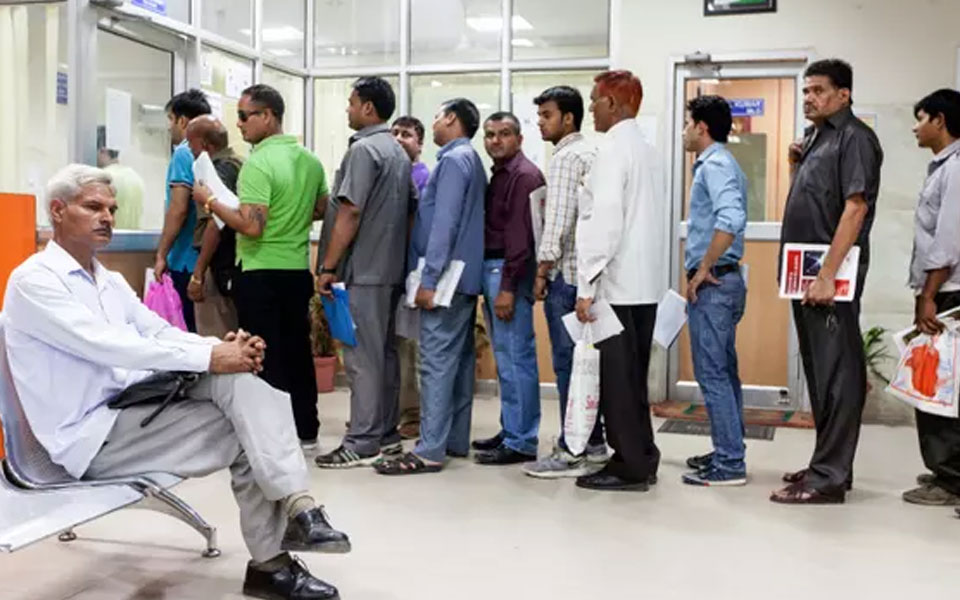
New Delhi : For weeks, Sudesh Kumar had been having a sinking feeling. His driving licence was about to expire. He knew the misery that lay ahead: taking time off his property rental business to queue for hours in the muggy heat, facing the chaos in the squalid government office, and finally capitulating to the tout who promised to push through his application – for a price.
This time, it turned out to be as easy as ordering pizza.
Kumar dialled 1076 and booked an appointment for a person from the Delhi government to come to his home. The two men sat on the sofa of Kumar’s small house in Chattarpur while the representative took down Kumar’s details on a tablet, filled out a form, uploaded his ID card and photograph and took his biometric data. Kumar paid the fee with his credit card.
“It was over in 15 minutes. I couldn’t believe how easy it was. In a few days’ time, my new driving licence will come through the post. Dealing with the government has turned from hell into heaven,” said Kumar.
Other residents of the Indian capital are equally stunned. The Delhi government, ruled by the Aam Aadmi (Common Man) party, has rolled out a radical scheme, at a cost of 150m rupees (£1.57m), to free the city’s 18 million residents from having to visit government offices – and reduce corruption.
Forty services including applications for driving licences, marriage certificates, pensions, and water connections are now being delivered to people’s doorsteps. A battalion of young male and female foot soldiers (“mobile sahayaks”), armed with tablets and cameras, carry out the appointments, whizzing around the city on scooters. The fee is set deliberately low, at 50 rupees (50p), and the service is available from 9am to 9pm, seven days a week. In three months’ time, the list of services will be extended to 100. A private company, VFS Global, which handles visa and passport services, has been hired to run the project.
Delhi’s chief minister, Arvind Kejriwal, called the project a “revolution in governance”. His deputy, Manish Sisodia, said the aim was to ease the life of the common citizen.
“Usually the citizen goes to the government,” said the minister for administrative reforms, Kailash Gahlot. “We wanted to reverse this and take the government to the citizen. People waste so much time to get simple documents.”
On day one, the helpline received 21,000 calls. Of these, only 2,728 were answered, and about 370 home visits were made. The government reacted to what it called the “enormous response” by increasing the number of telephone operators from 40 to 150 and the number of lines from 50 to 200 in two days.
Some critics worry that the 50-rupee fee is simply too low to sustain the scheme. Gahlot said that if the costs turned out to be unviable for VFS Global, the government would make up the difference, to ensure the project’s long-term viability.
There have been teething problems. Trilok Sharma, a marketing agent in Janakpuri who wanted to apply for a new water connection, found his mobile helpers could have done with more training. “They didn’t seem familiar with the software or the options it kept showing, nor with government rules. I would have preferred more experienced people to handle it. It would be quicker. That said, it’s a wonderful thing to have happened to the city,” said Sharma.
Internet problems are also common. When mobile helper Pankaj Khanna turned up at the home of commerce student Riddhima Gauba in Saket to take her application for a learner’s licence, the signal was so poor they had to leave the living room and stand on the balcony. Even then, it took him some time to upload Gauba’s application and credit card payment. And even when the internet is working, the government server can be slow.
For Sanjeev Oberoi, a technical manager with a US multinational, visiting a government office was synonymous with torture. It often entailed waiting for hours and reaching the counter only to find the official had gone to lunch or left for the day. But when he applied for a duplicate driving licence sitting in his Greater Kailash home this week, the experience, he said, “was a dream”.
Oberoi is one of those who fears the low fee will make the operation unsustainable. “They should charge more so that they can sustain it long term. It’s too good to endanger. It’s a great revolution in our lives and must be protected,” he said.
courtesy : theguardian.com
Let the Truth be known. If you read VB and like VB, please be a VB Supporter and Help us deliver the Truth to one and all.
CM Siddaramaiah alleges ‘criminal conspiracy’ in Sringeri recount, vows legal action
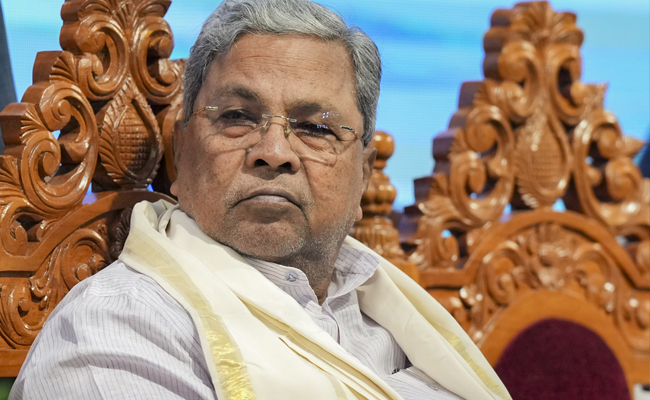
Bengaluru (PTI): Alleging a “criminal conspiracy” by BJP candidate D N Jeevaraj in the Sringeri Assembly poll recounting, Karnataka CM Siddaramaiah on Tuesday said the outcome was manipulated after valid postal ballot votes in favour of Congress leader T D Raje Gowda were tampered with during the recounting process.
Following a Karnataka High Court order on an election petition filed by Jeevaraj, challenging Raje Gowda’s election, the reverification and recounting were conducted on Saturday.
After the reverification and recount of postal ballots for the Sringeri Assembly constituency, votes polled in favour of Raje Gowda were reduced by 255, the returning officer said.
A report on the matter has been submitted to the Election Commission of India for further action, the officer added.
Congress leader Raje Gowda had won the 2023 Assembly polls from Sringeri by 201 votes, defeating his nearest rival Jeevaraj.
Addressing a press conference in Bengaluru, Siddaramaiah said the High Court had directed the recounting of postal ballots and that irregularities were noticed during the exercise conducted on May 2.
“This is a clear case of criminal conspiracy,” Siddaramaiah said, alleging that valid votes cast in favour of Raje Gowda were altered after being accepted by counting agents of all parties, including Congress, BJP, and JD(S).
He claimed that during the recounting of postal ballots, 255 votes were initially accepted as valid by all agents but were later tampered with by subordinate officials.
“There is a second mark on the votes polled in favour of Raje Gowda. They had accepted these as valid votes. Subsequently, another mark was made by officials. This is a clear case of criminal conspiracy,” he said.
When asked who was behind the alleged conspiracy, the CM replied, “It was hatched by Jeevaraj and others. It is planned.”
Siddaramaiah further alleged that the returning officer acted improperly by declaring the result despite the presence of an Election Commission observer during the recounting.
“Immediately after the counting, the returning officer announced the result. He should not have done so; this is against the law,” he said.
He pointed out that Raje Gowda had originally won by 201 votes, but after the recounting, the BJP candidate was declared the winner by 52 votes.
“The BJP has committed a criminal act of conspiracy. This is not vote chori but vote dacoity,” he alleged.
The CM said a police complaint had already been filed by Raje Gowda’s election agent, Sudhir Kumar, and emphasised the need for electoral integrity.
“We want transparency and free and fair elections. That is what our Constitution mandates,” he added.
Stating that the government would pursue legal remedies, Siddaramaiah said, “We are preparing an appeal challenging the returning officer’s announcement in a court of law.”
Responding to a separate query on elections in other states, the CM said there appeared to be an anti-incumbency factor in West Bengal, while results in Tamil Nadu were “surprising,” adding that Vijay’s party was emerging as the largest there.
Following the victory of party candidates in Bagalkote and Davanagere South, Siddaramaiah expressed confidence about future electoral prospects in Karnataka.
“Even in 2028, we will win the Assembly elections. We will come back,” the CM said.
Siddaramaiah added that he would order a forensic examination into the alleged tampering of postal ballots.