'Jaladhare' aimed at supplying quality drinking water to villages to be launched soon: Kumaraswamy
Bengaluru, October 02: Chief Minister HD Kumaraswamy said that a detailed project report (DPR) was being prepared to launch ‘Jaladhare’ project aimed at supplying the quality drinking water to all villages in the state.
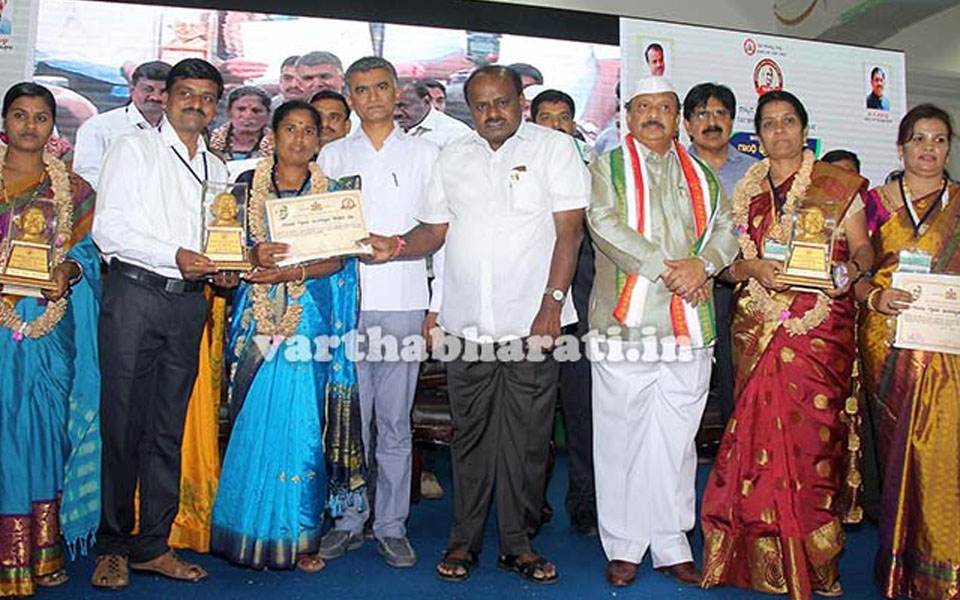
Inaugurating the Gandhi Gram Puraskar presentation programme organized by the Rural Development and Panchayati Raj department at the Banquet Hall at Vidhana Soudha here on Tuesday, the CM said that the Jaladhare programme would require more than Rs 60,000 crore and the project was aimed at providing quality drinking to the houses of each village in the state through taps from river water sources. Shortly, the details of the project would be placed before the people, he said.
The credit of introducing the decentralization of power to the nation should go to Karnataka. In 1984-85, then Panchayat Raj Minister Nazeer Saab in the chief minister Ramakrishna Hegde government had introduced decentralisation of power. Noticing that, then Prime Minister Rajiv Gandhi had amended the Constitution and applied that system to the entire country, he added.
Then Rural Development and Panchayat Raj minister in the erstwhile Congress government, HK Patil had started Gandhi Gram Puraskar from 2014 to honour the presidents and officers of the gram panchayats which work honestly and the coalition government has continued the award, the CM said.
The gram panchayats which have got the Gandhi Gram Puraskar during the 150th year Gandhi Jayanti would retain special memory. More than zilla and taluk panchayats, the gram panchayats would have more scope to develop the villages. The gram panchayats in and around Bengaluru would have more than Rs 5 crore revenue and they could do what the state government could not do. The gram panchayats have scope to reach the benefits to the people directly, the CM said.
Priority should be given to cleanliness in villages and gram panchayat presidents and PDOs have more responsibility. Desilting of tanks, clearing of encroachments, increasing the water storage capacity and other works to develop the villages, he said recalling the service of former prime minister Lal Bahadur Shastri.
Rural Development and Panchayat Raj Minister Krishna Byre Gowda said that each gram panchayat was like a government on the line of central and state governments. Identifying the best gram panchayats would inspire others to work more efficiently. For the drinking water schemes, the central government should give 70 per cent funds. But for the last four years, the centre has given just 12 per cent and remaining 88 per cent was being borne by the state government, he said.
MLA R Roshan Baig presided over the programme in which, Rural Development and Panchayat Raj Department Principal Secretary LK Atheek, Secretary Savithri, Director Kempe Gowda and others were present.

Let the Truth be known. If you read VB and like VB, please be a VB Supporter and Help us deliver the Truth to one and all.
Gold, silver soar as US-Iran deal hopes lift bullion demand
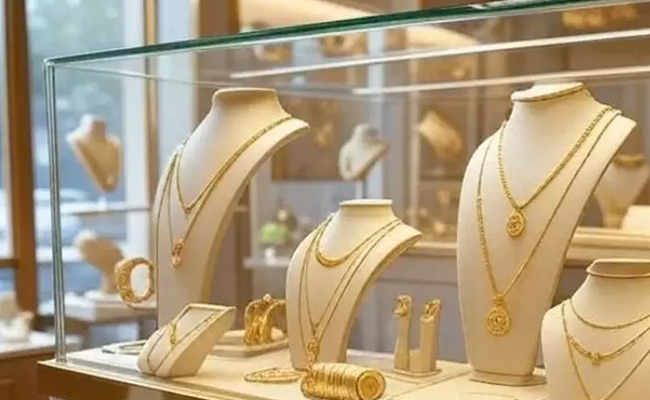
New Delhi (PTI): Gold prices rebounded by Rs 2,900 to Rs 1.55 lakh per 10 grams in the national capital on Wednesday, while silver climbed to Rs 2.54 lakh per kilogram as easing geopolitical tensions triggered a pullback in oil rates, boosting demand for precious metals.
According to the All India Sarafa Association, the yellow metal of 99.9 per cent purity jumped by Rs 2,900, or nearly 2 per cent, to Rs 1,55,400 per 10 grams (inclusive of all taxes) from Tuesday's closing level of Rs 1,52,500 per 10 grams.
Traders attributed the surge in bullion prices to reports that Washington and Tehran are close to finalising a framework agreement to end months of conflict, raising the prospects of smoother flows through the Strait of Hormuz and easing inflation concerns tied to energy markets.
"Gold rallied strongly on Wednesday as easing geopolitical tensions triggered a sharp reversal in key macro drivers that had recently pressured precious metals," Saumil Gandhi, Senior Analyst - Commodities at HDFC Securities, said.
Silver prices also advanced for the third straight session by rising Rs 3,500, or 1.4 per cent, to Rs 2,54,500 per kg (inclusive of all taxes). The metal had settled at Rs 2,51,000 per kg in the previous session, as per the Association.
"The prospect of a diplomatic breakthrough triggered a steep decline in oil prices and the US dollar, easing concerns about inflation while boosting demand for precious metals," Gandhi said.
Globally, spot gold increased by USD 106.15, or 2.33 per cent, to USD 4,663.70 per ounce while silver gained USD 3.40, or 4.68 per cent, to USD 76.24 per ounce.
"Gold witnessed a sharp rally as markets reacted positively to reports that the US and Iran are moving closer to a one-page agreement framework aimed at ending the conflict," Jateen Trivedi, VP Research Analyst - Commodity and Currency, LKP Securities, said.
Despite strong international gains, rupee strength limited the upside in domestic gold prices. The market is now highly focused on final confirmation and execution of the proposed deal, he added.
Any negative surprise or breakdown in negotiations could trigger a sharp sell-off in gold, while a successful agreement and sustained ceasefire could push the bullion prices higher in the near-term, Trivedi said.