Jammu and Kashmir: Cattle trader killed, another injured in Army firing, police file FIR
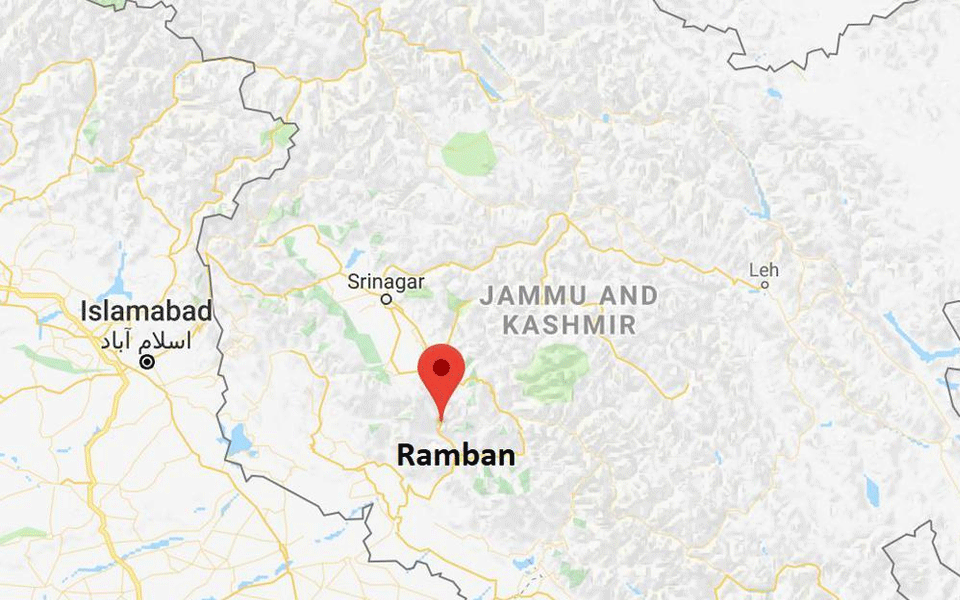
Jammu and Kashmir, Aug 05: A cattle trader was killed and another injured in firing by Army personnel in Jammu and Kashmir’s Ramban district on Sunday, the police said. Police have filed a First Information Report against the Army personnel involved at Dharamkund police station, Senior Superintendent of Police Mohan Lal told PTI.
Mohammad Rafiq Gujjar, 28, and 30-year-old Shakeel Ahmad, both residents of Gool, were fired upon by soldiers of the 58 Rashtriya Rifles when they were leaving Kohli village around 4 am, PTI reported. While Gujjar died on the spot, Ahmad was injured and was shifted to a hospital.
The Army, however, claimed it had retaliated after coming under fire, Greater Kashmir reported. “On August 5, an operation was launched by Army based on specific intelligence inputs in Kohli area of Gool, Ramban,” said Jammu-based defence spokesperson Lieutenant Colonel Devender Anand. “At 3.45 am, the Army patrol saw some suspicious activity. The suspected individuals were challenged by the Army as per standard operating procedure. On being challenged, the suspected individuals opened fire upon the Army patrol. The Army patrol retaliated effectively.”
The Tribal Research and Cultural Foundation, which represents Gujjars in the state, demanded a judicial inquiry into the incident. The organisation has also written to Defence Minister Nirmala Sitharaman. “The community demanded that a strong directive must be issued to security forces so that more such incidents do not occur in tribal areas any more,” the foundation said in a statement.
Separatist leader Mirwaiz Umar Farooq also condemned the incident. “Is it part of the Muslim killing under the garb of ‘cow protection’ or Kashmiri killing under the garb of ‘anti-national’ we wonder?” he asked.
Courtesy: scroll.in
Let the Truth be known. If you read VB and like VB, please be a VB Supporter and Help us deliver the Truth to one and all.
Double-decker electric bus gutted in fire at Kurla BEST depot
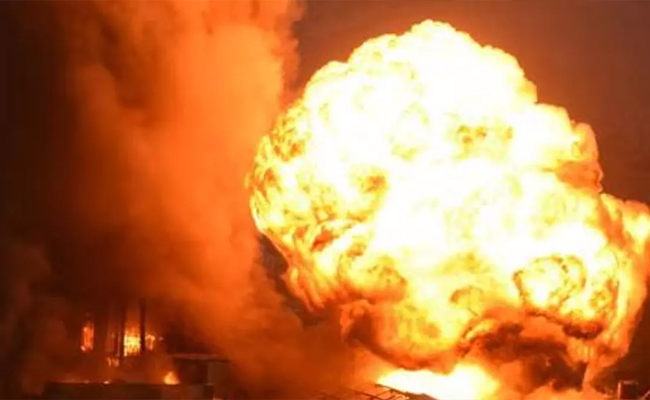
Mumbai (PTI): An empty double-decker electric bus was gutted in a fire during servicing at a BEST depot in Mumbai's Kurla area on Sunday, officials said, adding that nobody was injured.
The blaze broke out inside the Kurla BEST bus depot near Kanakia Building at 4.14 pm, according to preliminary information from the Mumbai Fire Brigade.
The parked bus was unoccupied at the time of the incident.
Fire brigade personnel rushed to the spot and brought the blaze under control. The exact cause of the fire was yet to be ascertained, they said.
No injuries were reported in the incident, officials added.
The Brihanmumbai Electricity Supply and Transport (BEST) Undertaking has hired 50 electric double-decker buses from Switch Mobility in its fleet of around 2,700 buses.